

 Apr 2021
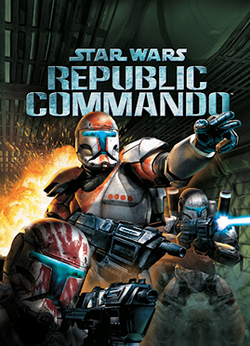

Republic Commando is that rare Star Wars title that asks you to stop thinking like a lone Jedi movie hero and start thinking like a squad leader who hasn't slept since boot camp on Kamino. The PS4 version is an enhanced port of the 2005 LucasArts classic, and while the presentation has been touched up, the thing that really matters remains: it's a game designed to make you earn every inch, every revive, and every turret activation with tactics, timing, and teamwork. If you like your shooters with a side of planning, orders, and the constant background hum of someone telling you to move to the next objective, this is the galaxy for you. This review will zero in on the challenge elements and the skills the game demands. Consider it less of a nostalgia trip and more of a field manual: how Republic Commando tests you, what it teaches (whether you asked for it or not), and why Delta Squad's brand of difficulty still feels rewarding on modern hardware.
Republic Commando is a tactical FPS that forces you to manage more than aim. You play as RC-1138, "Boss," and rather than being a one-man wrecking ball you're the smartphone-wielding node of a four-man commando team. The game's core mechanical challenge is squad command: every encounter is not only about shooting but about reading the environment, assigning roles, and exploiting your teammates' specialties. The HUD is presented as Boss's tactical visor, which is neat cosmetically and genuinely useful for situational awareness - highlighted interactables tell you where to breach, where to hack, and where a teammate can take a sniper or demolition role. Skills required: tactical planning, spatial awareness, timing, and the ability to micro-manage NPC teammates under pressure. You'll need to memorize or quickly interpret the icon-based prompt system so you can issue the correct command in the heat of combat: synchronized breaches for sealed doors; "slice" commands for consoles; positioning orders for anti-armor or sniper stances. Playing recklessly works sometimes, but the game rewards players who slow down long enough to set up ambushes, place teammates in cover, and combine a grenade launcher shot with a sniper interruption. A major twist in the game's challenge lies in its damage/incapacitation system. Rather than an immediate death screen when you get overwhelmed, your squadmates can revive you - but only if they can reach you and only so many times. This creates a tension that's different from typical health bars: it's about positioning and redundancy. Send your squad into a chokepoint and you'll have backup; split them for objective-specific tasks and you'll be operating alone and vulnerable. Certain missions deliberately separate members of Delta Squad so that failure is absolute if you, operating solo, get incapacitated. Those missions are where the game's tension is at its most ruthless and its most rewarding. Weapon and loadout tactics also present their own micro-challenges. Your baseline weapons are the DC-17 (which converts between assault, sniper, and grenade launcher modes) and an unlimited-ammo blaster pistol. That limited starting kit nudges you toward adaptive thinking: are you turning the DC-17 into a long-range rifle to support Sev's sniping, or a grenade launcher to force droid clusters out of cover? Picking up enemy weapons is often situationally smart, but the real skill is using your squad's roles: tell Scorch to handle explosives, Fixer to take technical approaches, and Sev to hold overwatch. The AI is competent enough that it will generally take preferred roles, but not flawless - so you must still give explicit orders and react when a teammate gets pinned down. Environmental interaction is another layer of challenge. Many objects light up for context-sensitive orders, which turns exploration into a tactical puzzle. Hacking consoles, setting up sniper nests, and initiating coordinated breaches are all performed by pressing the right contextual command. This makes the game feel like a series of micro-plans: approach, set up, execute - rinse and repeat. Enemy variety (battle droids, Trandoshan slavers, MagnaGuards in late-game encounters) forces you to switch strategies; what worked against clanker hordes won't work against heavy units that shrug off a few bullets. Expect to re-evaluate your approach mid-fight and to use your teammates as force multipliers rather than expendable bullet magnets. Difficulty spikes can be sudden, particularly on missions where you must defend static objectives, man turbolasers, or fight on cramped ship interiors. The missions' pacing leans toward short, intense bursts rather than slow, methodical sieges, which keeps you on your toes and rewards quick tactical thinking. The PS4 port's patching history smoothed some performance hiccups that initially dulled this experience, but the core challenge - squad management, split-team vulnerability, and clever use of the DC-17 - remains the star of the show.
Graphically, the PS4 enhanced port polishes a mid-2000s game without turning it into a next-gen shrine. Textures, lighting, and frame stability were improved over the original Xbox/PC release, and the HUD presentation as a clone helmet visor still sells the immersion hard: it's functional, readable, and helps you parse combat information quickly. The environments - Kamino's wet spires, Geonosis' sandy trenches, the claustrophobic interior of the Prosecutor - still read well because of strong level design choices rather than flashy fidelity. Skill-wise, the visuals are a support system: enemy cues are often visual (droid groupings, sniper lines), so clear draw and readable models help you make split-second tactical decisions. When patched, the PS4 rendition removes enough rough edges that the graphical layer doesn't interfere with the game's strategic demands. If you're looking for photorealism, this isn't Battlefield 2042, but if you want clarity that aids tactical gameplay and helmsman-style HUD feedback that makes issuing squad orders feel like command and not guesswork, it does the job neatly. A few minor things to note: early on the PS4 port had some performance oddities that hurt precise timing (think input lag when you need to issue a quick revive order). Those were patched, but they're worth remembering because the game's difficulty often punishes a half-second hesitation. Overall, the visual language is functional and focused on helping you play smart, not just look smart.
Republic Commando is a focused, tactical FPS that teaches you to think like a team leader instead of a lone gunslinger. The challenge comes from managing human (well, clone) resources, making the right micro-decisions, and setting up fights rather than winning them with twitch reflexes alone. You'll find yourself getting better at reading prompts, predicting enemy movement, and using the DC-17's configurations as part of a broader strategy - all skills that feel earned. The PS4 enhanced port brings the game to modern consoles with sensible fixes, and despite a lower Metacritic score for the port it retains the core experience that earned the original a cult following. If you enjoy tactical shooters that demand planning, adaptation, and tight squad control, this is a must-play; if you're strictly after long campaigns or high-end visual spectacle, you might want something else. For anyone who likes being responsible for four lives instead of one, Republic Commando on PS4 is a sharp, challenging trip down the Clone Wars' darker corridors - and it'll make you appreciate how much skill goes into being a good squad leader (and how miserable it feels when you forget to tell Sev to move to cover).
 Lego Star Wars II: The Original Trilogy on PS2
 Angry Birds Star Wars on PS3
 Angry Birds Star Wars on PS4
 Warhammer 40,000: Boltgun 2 on Xbox Series X/S
 PixelJunk Shooter 2 on PS3
 Tom Clancy's Rainbow Six: Vegas on PS3
 Commandos: Strike Force on PS2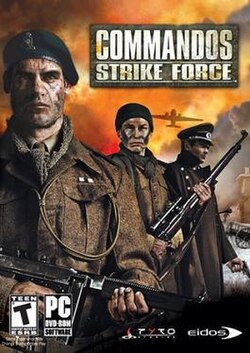










 Another SquareThought Site