

 Mar 2016
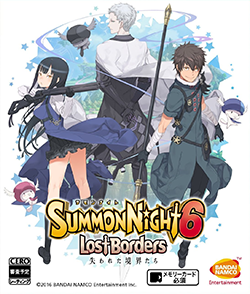

Summon Night 6: Lost Borders is a tactically-leaning JRPG that arrived on PlayStation platforms as the sixth numbered entry in a series that has long been more niche than mainstream. The PS4 release represents the most visible window to western players thanks to Gaijinworks' translation effort, which Victor Ireland described as the equivalent of translating five novels - roughly 50% larger than the already hefty script of Summon Night 5. For anyone who treats a game's script size like a flex, that statistic alone tells you this is dense, conversation-heavy software. Technically it's a strategic/tactical RPG with visual-novel interludes and multiple mini-games, and for better or worse it wears both influences openly: expect long narrative beats alternated with level-based, grid-adjacent encounters. If you care about how a game is constructed under the hood - pacing, localization scale, platform choices, and how a studio bridle a Vita-origin title for PS4 display - this is the entry that rewards that curiosity.
At its mechanical core, Summon Night 6 is faithful to the blueprint of tactical JRPGs: battlefield engagements presented in discrete scenarios, a roster of characters you deploy, and a heavy emphasis on party composition and unit roles. The documentation emphasizes the series' signature hook - every person in the world of Fillujah has a flying companion creature - which functions as both narrative flavor and a gameplay motif. The title centers on three primary protagonists (Raj, Amu, and Ist) and leans into its legacy by bringing in characters from previous entries, effectively expanding the usable roster and the combinatorial possibilities of party construction. What distinguishes Lost Borders from leaner strategy titles is the volume and placement of its visual-novel segments. These are not throwaway cutscenes; the script size implies multi-page dialogue trees and relationship-building that impact how often and which units you'll use. From a technical design perspective, that introduces a rhythm problem inherent to hybrid games: long narrative blocks punctuate combat, which is welcome for role-players but can hamper momentum for players seeking continuous tactical gameplay. The implementation of mini-games is also worth noting: their presence suggests design choices aimed at breaking combat fatigue and providing mechanical variety, but they also require designers to maintain consistent input responsiveness and UI affordances across very different gameplay loops. The translation and localization are technical feats in their own right. Gaijinworks started translation in January 2016 and processed a script reportedly the size of five novels. That scale affects not just writing consistency but QA cycles, text overflow handling, voice/localization sync (if present), and menu/layout adjustments for western languages. In a multi-platform context - Vita and PS4 - layout constraints differ considerably: the Vita's smaller display forces tighter UI, while the PS4 release needed to accommodate larger screens and differing font/line-length expectations. Victor Ireland's decision to publish on PS4 explicitly to reach a wider audience was both a marketing and a technical choice: the PS4 gives more headroom for text-heavy presentation and fewer limits on physical release logistics in North America. From a systems perspective, the game's design philosophy is conservative. It doubles down on tactical staples rather than reinventing them, favoring accessible encounter design and a large cast over risky mechanical experiments. That choice improves approachability and reduces the risk of brittle systems, but it also means that players seeking cutting-edge tactical twists might find the systems comfortably familiar. Combat pacing, enemy AI complexity, and balance adjustments are areas where the game does the job without being revolutionary: the experience is serviceable, polished in expected ways, and clearly guided by series conventions. It is also important to flag longevity and post-launch considerations. Sales were modest relative to earlier entries: combined first-week sales across Vita and PS4 were about 56,826 units in Japan, roughly half of prior releases. The PS4 version has since been removed from the PlayStation Store for unknown reasons, which affects discoverability and long-term access. From a technical stewardship standpoint, a delisted digital version is a risk for preservation and for players who might pick it up after hearing about its large script or series cameos.
Visually, Summon Night 6 keeps to a JRPG aesthetic that favors anime-style character illustrations, colorful sprite/2D tableau work, and stage-based environments. The base information confirms the title released on Vita and PS4, suggesting the PS4 build represents an upscaling or refinement of resources originally crafted for handheld hardware. That presents both opportunities and constraints: assets designed for a Vita's resolution typically require retouching for console presentation to avoid blurriness on large displays, and UI/UX elements need recalibration for controller navigation rather than touchscreen input. Because the series has historically prioritized character portraits, expressive dialogue boxes, and sprite-based or lightly 3D battlemaps, the technical demands are different from cutting-edge polygonal open worlds. The art pipeline here trades photoreal fidelity for clarity of expression and readable battle information. On PS4 that means the strengths - crisp character art and legible combat icons - tend to show well, while any low-resolution textures or UI elements originally intended for smaller screens can look dated if not properly reworked. The game's presentation is competent: it conveys the story and combat clearly, prioritizes readability in tactical situations, and leans on a stable, anime-inspired visual language rather than expensive rendering tricks. For players who care more about animation fluidity, dynamic camera work, or shader complexity, this is not the title to benchmark a PS4 GPU against. For those who prioritize readability, character expression, and a consistent UI during long play sessions, the choices made here favor durability over flash.
Summon Night 6: Lost Borders is a workmanlike tactical RPG with a huge amount of narrative baggage - and I mean that in the best possible way if you like dialogue and cast-heavy stories. Technically it is interesting less for flashy engine work and more for the decisions around localization scale, UI adaptation across platforms, and pacing trade-offs between story-driven visual-novel segments and tactical encounters. The PS4 release is the version western players should target for the comfort of larger displays and the physical North American release, though the game's removal from the PlayStation Store complicates future access. If you value a large, translated script, comfortable tactical combat, and the pleasure of seeing legacy series characters interact, Summon Night 6 delivers and rewards patience. If you care primarily about mechanical innovation, cutting-edge visuals, or uninterrupted tactical flow, this one plays it safe. In short: technically competent, narratively dense, and recommended for fans of story-first strategy games. Scorewise, it sits around a solid 7.1/10 - a competent, occasionally charming niche title that shows its ambition in text size rather than shader complexity.
 Night Trap: 25th Anniversary Edition on Switch
 One Night Stand on Switch
 Rainbow Moon on PS4
 TwinBee RPG on PlayStation
 Warhammer 40,000: Chaos Gate - Daemonhunters on Xbox Series X/S
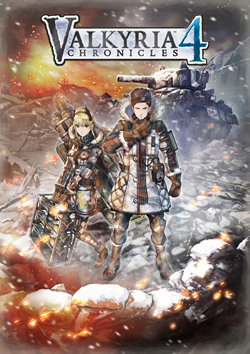
 Valkyria Chronicles 4 on Switch
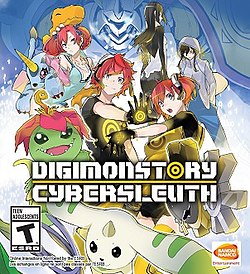
 Digimon Story Cyber Sleuth: Complete Edition on Switch
 Digimon Story: Time Stranger on PS5
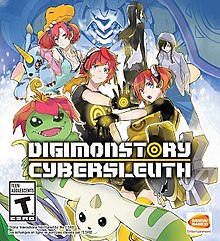
 Digimon Story: Cyber Sleuth on PS4
 Rapid Reload on PlayStation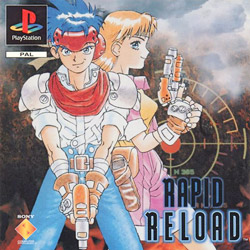










 Another SquareThought Site