

 Oct 2021
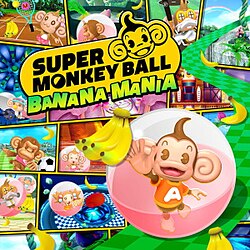

Super Monkey Ball: Banana Mania is a technical love letter to tilt-based precision platforming, rebuilt as a 20th anniversary remake of the first three console entries in the series. Ryu Ga Gotoku Studio rebuilt 300 stages from Super Monkey Ball, Super Monkey Ball 2 and Super Monkey Ball Deluxe using the Unity engine, then wrapped that kinetic core in modern accessibility, online leaderboards, photo mode and a Points economy for cosmetic unlocks. Banana Mania is not trying to be a revolutionary platformer; it's trying to be a faithful, more approachable, and serviceable technical restoration, and that shows in both the design choices and the engineering compromises.
At its mechanical core, Banana Mania preserves the original series' fundamental control loop: you don't move the monkey, you tilt the world. From a systems perspective this is elegant because the input->output mapping is intentionally indirect. The player manipulates a stage's pitch and yaw, and the ball's motion is an emergent result of gravity, friction, and the collision geometry baked into each level. That makes the game less about direct character animation and more about physics fidelity, numerical stability, and predictable collision response. The remake preserves all 300 original stages and offers two parallel stage rule-sets: a rebalanced, accessibility-friendly default and an "Original Stage Mode" that restores the older, sharper difficulty. The decision to rebalance levels while retaining the originals is a smart technical compromise - it reduces cognitive jump for newcomers without forcing veterans to abandon the quirks they expect. Rebalancing often means tuning timers, banana placement and checkpoint leniency rather than rewriting collision geometry, which keeps the physics model intact while shifting the failure envelope. Banana Mania adds several mechanical and QoL features that materially affect how the physics system gets used. The jumping mechanic (from Banana Blitz) gives players an additional axis of control and allows new traversal tech and recovery options; from an engineering standpoint, adding jump alters the optimal control policy without changing the base physics solver. The "slow-motion" button and extended time limits are explicit accessibility levers that change temporal granularity for human input, allowing the same physics to be sampled more effectively by players who need it. New challenge modes - Golden Banana, Reverse, Dark Banana - are essentially constraint layers on existing stage geometry: they change objectives, invert start/goal vectors, or add forbidden zones. This is an efficient design: instead of authoring new levels, the devs created procedural difficulty variants using the same collision meshes and physics parameters. Time Attack, online leaderboards and an optimal path guide round out the competitive features; leaderboards introduce infrastructure for deterministic timing windows, so performance consistency and minimal desync between client and server (for ghost runs or recorded times) are important backend considerations. The Points system and Points Shop are a progression and retention mechanic. Players earn Points by clearing stages and completing missions, and they can spend those on characters, modes and cosmetics. This monetization-free (base-game) currency loop is a low-friction way to gate content without affecting mechanical balance. DLC characters and premium packs existed at launch but have been delisted, which complicates the long-term availability of those assets and speaks to the lifecycle management problems of external licensing. Character handling remains simple: six main playable characters are available for all modes, with additional unlockables. Because characters are essentially skins atop a shared physics profile, character selection affects player expression and UI feedback more than it affects core physics. This simplifies QA and tuning since only one ball behavior needs to be validated against 300 stages and dozens of mission permutations. From a development perspective, the team started in March 2020 and built Banana Mania remotely during the COVID-19 pandemic, which likely influenced the toolchain choices (Unity makes iterative remote collaboration easier) and the reliance on existing assets and stage geometry rather than wholesale redesign. The result is a technically conservative, but robust package that prioritizes fidelity, accessibility and replay systems over experimental mechanical changes.
Graphically, Banana Mania is a remaster not a full rebuild. The Unity engine provides a flexible renderer and cross-platform tooling the team used to modernize asset pipelines and lighting without altering the readable silhouette of the original levels. Character models and stage textures have been updated for higher resolution displays and the camera system benefits from stabilized framing, but the visual language intentionally keeps the colorful, toy-like aesthetic of the originals. The technical trade-off here is obvious: the team prioritized gameplay fidelity and asset retrofitting over photorealism. Updated models and shaders make collisions and depth cues clearer - an important playability improvement when millimeters matter - while keeping the cartoon palette to maintain identity. The game also includes a "Classic Soundtrack" option and cosmetic packs; audio fidelity changes like that are low-cost toggles that enhance nostalgia without modifying the runtime simulation. On PlayStation 4 the implementation is pragmatic. Unity's cross-platform renderer and the game's modest geometric complexity allow consistent performance on last-gen hardware. Review aggregates for PS4 are in the high 70s, indicating the remake hit the expected performance and presentation marks for the platform. The photo mode is a nice touch from a tech standpoint: it exposes camera, exposure and post-process controls that let players manipulate the same rendering pipeline parameters used during gameplay.
Banana Mania is a technically meticulous remaster: it respects the original physics and level geometry, wraps them in modern accessibility options, and adds competitive features like leaderboards and time attack without compromising the series' core identity. Its engineering choices are conservative by design - Unity for cross-platform development, reuse of original stage meshes, and a single, validated physics profile for all characters - which both speeds development and reduces the risk of introducing regressions in 300 stages. If you're chasing raw novelty or a next-gen graphical showcase, this won't be your moonshot. If you care about predictable, high-fidelity tilt-and-roll physics, thoughtful accessibility options (jump, slow-motion, optimal path guides), and an enormous catalog of levels with leaderboards and missions to chew through, Banana Mania delivers. On PS4 it's a reliable package with generally favorable reception and a clean technical foundation; just be aware that certain DLC characters had a transient storefront life, which is a reminder that tangential licensing choices can complicate the otherwise tidy engineering story. Overall: a polished, mechanically faithful remaster that nerds who love precise physics will appreciate, and casual players will find approachable thanks to the many control and timing assist features.
 Dragon Ball: Sparking! Zero on PS5
 Pinball on PS2
 Lego Party on PS4
 Quiplash 2 on PS4
 Super Mario Party Jamboree – Nintendo Switch 2 Edition + Jamboree TV on Switch 2
 We Dare on PS3
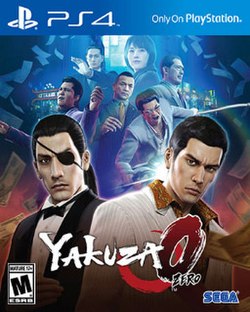 Like a Dragon: Infinite Wealth on Xbox Series X/S
 Yakuza: Like a Dragon on PS5
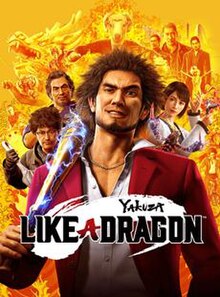 Yakuza: Like a Dragon on Xbox Series X/S
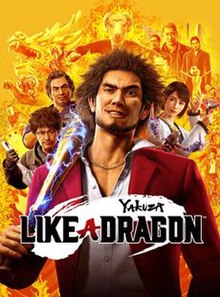 Like a Dragon: Infinite Wealth on PS5
 Yakuza 4 on PS3










 Another SquareThought Site