

 Feb 2017
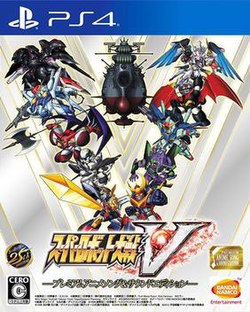

Super Robot Wars V arrives on PS4 wearing a trench coat of nostalgia and a pocketful of anime licenses. It's part crossover shrine, part turn-based spreadsheet with giant robots punching through dialogue boxes. For players who care about the technical plumbing behind a tactical RPG - the engine choices, the UI ergonomics, the animation pipeline and audio routing - SRW V is more interesting than its 'fan-service' headlines suggest. B.B. Studio builds on the graphical and animation improvements from 3rd Super Robot Wars Z while introducing a 3D isometric battlefield and several new systems (Skill Program, Extra Action/Order, and cross-save/Remote Play). This review looks at how those technical decisions affect gameplay clarity, performance headroom, and long-term systems balance on the PS4, while not forgetting that the soundtrack was mixed by Dan Rudin and the music composed by Salamander Factory, so the game at least sounds like someone poured amps into an anime festival.
Super Robot Wars V adheres to the classic SRW loop: staged scenarios, turn-based movement and attacks, intermission maintenance and unit upgrades. That baseline is very deliberate - the series' decisions are optimized for a specific audience - but the devil in V is in the systems added around that loop. From a mechanical design perspective, the two most consequential changes are the Skill Program/Skill Route and the pair Extra Action / Extra Order. Skill Program trades a rigid promotion tree for a more open allocation of Tactical Points. Technically this is a shift from deterministic growth toward player-driven optimization: pilots become vectors of custom stat and ability builds instead of fixed archetypes. On PS4 this simplifies save scumming and experimentation because the Skill Program consumes a single currency accumulated across playthroughs; it reduces the penalty of testing builds and consequently changes the pacing of difficulty. The Tactical Point economy is the game's throttle: if players can farm ExC and TP reliably, the curve flattens - which explains some criticisms about the title's challenge level. Extra Action grants units stage-bound ExC points to buy micro-advantages (extra movement, guard breakers, etc.). Implementationally, ExC is a stage-limited resource rather than a per-unit cooldown, which has interesting implications for both UI and pathfinding. The game needs to present remaining ExC and potential extra moves cleanly, and for the most part V does: the HUD overlays and pop-up menus keep ExC use explicit. Extra Order, driven by battleship units, acts as a global buff system - a single object can modulate many units' stats. That design reduces micromanagement in some respects but also centralizes decision-making to battleship positioning and timing, adding a meta-layer: protect the buff provider and cadence your buffs around enemy phases. Mechanically, Spirit Commands persist as a pilot-level skill slot system. Their reuse is good for clarity, but the sheer number of crossover units and combination attacks means the camera, animation, and sequencing code must juggle dozens of bespoke VFX routines mid-battle. On PS4 the tradeoff is visible: animations are pretty and dramatic, but at the cost of longer turn resolution times. Combination attacks bring spectacle and are implemented with sync routines that lock camera and UI while the sequence plays; this is great for fan satisfaction but hampers speedrunners. Designers also reintroduced Beginner's Mode, which functions as an automated difficulty filter. From a systems perspective, this is a toggleable input modifier that changes enemy AI aggression and resource availability. The inclusion of Remote Play and cross-save between Vita and PS4 is technically considerate; save format parity and asset scaling are non-trivial problems, and SRW V handles it by restricting capture features on both platforms and standardizing progression. The screenshot/recording lock is a frustrating byproduct of licensing and probably a DRM/rights decision rather than a technical limitation, but it's a polish sore point for content creators. DLC and included franchises affect gameplay indirectly. Introducing new mecha and pilots with distinct stat curves and weapon arcs expands the build combinatorics and increases QA surface area. The Skill Program and Tactical Point systems mitigate the balancing chaos by giving players agency to reforge problematic units into useful roles rather than forcing rigid counters. Overall, the gameplay systems emphasize customization and audiovisual spectacle over punishing tactical depth, which will please fans who want a variable toolkit but frustrate players seeking tight, chess-like encounters.
Graphically, SRW V is a mixed bag that favors 2D animation quality wrapped in a 3D isometric shell. The engine lineage is explicit: it reuses the animated attack assets and enhanced animations from 3rd Super Robot Wars Z, but now places them on a 3D isometric map. This hybrid approach has pros and cons. Pros: hand-drawn and studio-quality 2D cut-ins and attack animations retain clarity and personality; mecha designs from Eiichi Shimizu, Hajime Katoki and Kazutaka Miyatake pop when showcased in these high-frame cut-scenes. Cons: the integration between 3D terrain and 2D attack overlays occasionally feels like two teams high-fiving mid-air - depth sorting and occlusion can be awkward when a 2D effect is supposed to pass behind a 3D mountain. The game mitigates by using fixed camera angles during major animations, but that also limits environmental dynamism. Performance on PS4 is generally stable for the scope of the game. SRW V is not GPU-bound like AAA open world titles; its bottlenecks are animation streaming, shader switching for overlaid effects, and the memory footprint of multiple character portraits and voice assets being swapped rapidly during intermission. The PS4 handles that workload comfortably, but you notice longer load and battle-resolution times when many combination attacks chain. Lighting is functional rather than experimental - most scenes use basic direct lighting and emissive effects for beam weapons - but the art direction covers up technical economy with strong character and mecha designs. Audio production values are a plus-knit in the technical profile. Salamander Factory's score and JAM Project's theme are mixed by Dan Rudin; the hallmarks of professional mixing - separation, punch, and dynamic range preservation - are present. That matters because long battles with repeated animations can become sonically fatiguing; a well-mixed soundtrack reduces masking and keeps combat intelligible. PS4's audio pipeline is used effectively to place VO and SFX without muddiness, which is an underrated technical win for a text-and-voice-heavy SRPG.
Super Robot Wars V on PS4 is a technical compromise that tilts toward spectacle and customization rather than brutal tactical purity. Its engine reuse and 3D isometric integration are pragmatic: the game keeps what worked visually in the series and extends it, introducing modern convenience features like cross-save and Remote Play. New systems such as the Skill Program, Extra Action and Extra Order provide genuine design flexibility, but they also dilute difficulty if you prefer a knife-edge strategic challenge. Performance and audio polish are solid on PS4, and the animation work is genuinely impressive even if it comes with longer turn-resolution times. If you love mecha, franchise crossovers, and tinkering with pilot builds - and you don't mind slower turns and a generally forgiving difficulty curve - SRW V is a technically competent, well-crafted entry. If you're chasing hardcore SRPG rigor, be prepared to impose your own self-restraints or mod your playstyle; the game is happy to feed you power until the challenge gets bored and leaves the battlefield.
 Super Robot Wars 30 on Switch
 Super Robot Wars OG: The Moon Dwellers on PS4
 Power Pro Kun Pocket 10 on DS
 Utawarerumono: Itsuwari no Kamen on PS3
 Combat Elite: WWII Paratroopers on PS2
 Rainbow Moon on PS4
 Valkyria Chronicles on Switch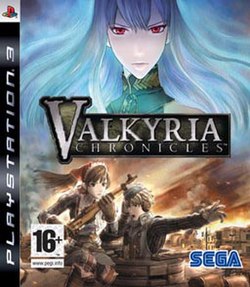
 Super Robot Wars X on Switch
 Dragon Quest X Offline on Switch
 Dragon Quest X Offline on PS4










 Another SquareThought Site