

 Jul 2020


Superliminal sells itself on one neat, mildly disorienting trick: your perspective determines the size of objects. Pick up a box at waist height, look up, drop it, and suddenly you have a boulder the size of your regrets. Look down, drop it, and you have a paperweight appropriate for holding down a passive-aggressive Post-it. This PlayStation 4 port of the indie puzzle game from Pillow Castle Games plants you inside a dream-therapy test chamber and slowly convinces you that physics has been taking coffee breaks. The setup is absurdly simple - dream patient trapped in layers of dream, narrated by the soothingly off-kilter Dr. Glenn Pierce - and the core mechanic is refreshingly clever. If you like Portal's 'why didn't I think of that' epiphanies but prefer them without portals and with more optical trickery, Superliminal will give you several very tidy ones. It will also be over sooner than you might hope, and it will occasionally hand you a narrative stapler and tell you to get philosophical with it.
Gameplay is built almost entirely around forced perspective and the delightful ways it breaks your spatial assumptions. Most puzzles are room-based and modestly seductive: the exit is somewhere you cannot reach unless you invent stairs, bridges, or inconveniently large hammers by manipulating the scale of everyday props. The game's interaction model is embarrassingly elegant. You pick up an object and the game remembers how big it looked to you and how far away it seemed. Move your head, change your angle, drop the object at the new point in space, and the object scales to match your previous viewpoint. This lets you shrink a cube to the size of a walnut or expand a tiny model house into a full-sized platform. It also lets you do the kind of thing that sound designers dream about - making a tiny rubber duck scream like it's been given a mortgage. As you progress, the puzzles layer in variations rather than replacing the main idea. Trompe-l'œil illusions become a thing: pieces of two-dimensional art sit on walls and surfaces and only resolve into grab-able objects when viewed from the exact right angle. Later rooms demand more patience and sleight-of-hand: stacking scaled objects to create a staircase, using long shadows and optical continuity to trick the game into handing you a usable item, or discovering that the solution is really just to stop thinking encyclopedically and start thinking like someone who has been awake for 48 hours. The designers wisely avoid bloating the toolbox; instead they introduce twists on the same mechanic so that every new area feels like a fresh chapter in a small book about perception. Controls on PS4 are clean and responsive. There is no jumping; instead the game allows you to mantle ledges, which is a clever design choice born from playtesting. Because objects resize wildly, jumping would have made traversal predictably chaotic. Mantling gives players a reliable way to climb the very things they invent. The narrative frame - you're a test subject who can't wake up and must navigate deeper dream-layers while Dr. Pierce tries to reassure you over the radio - provides intermittent commentary that ranges from helpful hints to existential post-it notes. The story is intentionally thin in places and occasionally leans into mildly pretentious therapy clichés, but it's never so heavy-handed that it derails the puzzles. If you came for a long, sprawling campaign, Superliminal will humbly disappoint you. The game is concise, designed to elicit several 'aha' moments rather than to stretch into a marathon session. It received praise for its core mechanic across the board and criticism for its brevity and story, a fair summary: the mechanics consistently delight, the narrative occasionally flirts with profundity and then gets distracted by a box of cereal. Post-launch updates introduced multiplayer modes and Challenge maps on other platforms, meaning you can later race strangers or co-op through rooms if competitive insomnia is your jam. The PS4 experience, at launch, still centers on single-player puzzle craft and the joy of tricking your own senses.
Superliminal isn't trying to be photorealistic; it's trying to be coherent enough that your brain can be fooled without getting bored. The art direction favors clean, clinical environments early on - comfortable for a therapy facility - that gradually tilt toward surreal and minimalistic as you go deeper into the dream. Textures are tidy, lighting is functional, and object models are crisp where they need to be. The visual illusions rely on camera placement and smart composition rather than brute-force fidelity, so the game's stylistic restraint actually helps the puzzles. On PS4 the game runs smoothly, with no major framerate tantrums to ruin a neat trick. There are occasional moments when the game wants you to accept that a cardboard cutout is actually a solid object and you have to surrender your trust in polygon honesty, but that's the point. The interface keeps out of the way - no HUD clutter, no constant reminders of your oxygen level - leaving you alone in a room with a cube and a conscience.
Superliminal is a short, exceptionally clever puzzle toy that rewards curiosity and mild stubbornness. Its primary mechanic - scaling objects by manipulating perspective - is one of those ideas that seems inevitable in hindsight and magical in the moment. The PS4 version faithfully delivers the experience, with tidy controls, solid performance, and the same succession of well-designed rooms that made the original PC release notable. The narrative is pleasant company, never intrusive enough to spoil a puzzle and never substantial enough to be the main course. If you want a long, sprawling adventure, this isn't it; if you want a compact string of smart, surprising puzzles that will make you feel like a visual conspiracy theorist for a few hours, Superliminal is a neat little heist of perception. Score-wise, it's comfortably an 8/10: inventive, polished, occasionally wistful, and mercifully efficient with your time. Keep an open mind and a closed distance between you and anything you plan to pick up - the last thing you need is a lampshade the size of a bus.
 Superliminal on PS5
 Puzzle by Nikoli 4: on PS4
 Twinbee Taisen Puzzle Dama on PlayStation
 Tokimeki Memorial: Taisen Puzzle-Dama on PlayStation
 Professor Layton and the Last Specter on DS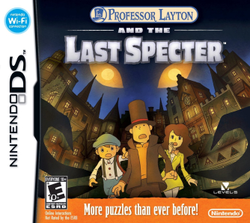










 Another SquareThought Site