

 Oct 2020
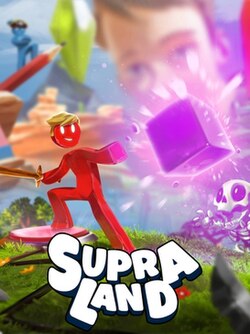

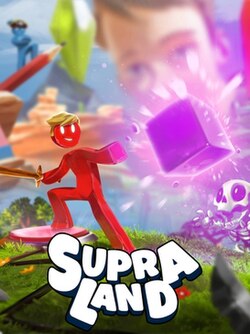
Supraland dresses itself in primary colors and sandbox-sized feelings, but underneath the plastic sheen it stages a surprisingly human soap opera starring toys. On PS4 you guide a tiny Red Prince through a sandbox world where politics, sibling rivalry, and parental secrets get just as much screen time as puzzle boxes and rocket jumps. The game's setup reads like a children's storybook written by someone who binge-watched classic adventure games: water runs out, accusations fly, and a quest unspools across themed areas in a child's sandbox. This review is intentionally theatrical - we are doing an in-depth look at character arcs, which means treating cracked plastic kings and volcanic monsters like they have emotional beats worthy of a Season 2 cliffhanger. If you've ever wanted to psychoanalyze a figurine, congratulations: you and I are on the same weird page.
Supraland's mechanics are the narrative's best supporting cast. The Red Prince's progression - from a sword-wielding kid who takes orders to an improvising problem-solver armed with the Force Cube and a special gun - isn't just a gameplay ladder. Each new tool is a plot beat. Gaining the Force Cube marks a shift from reaction to agency: puzzles cease to be mere obstacles and become arguments between player and world. That tactile, Portal-adjacent puzzle design gives the Prince room to grow; puzzles are not only about getting past a gate, they're the Prince learning how to think, adapt, and make choices beyond a father's command. The game's first-person lens places you directly in the Prince's helmet-less head, which amplifies the coming-of-age arc. Without a map, navigation becomes a metaphor for figuring out who you are: you must scan horizons, pick landmarks, and decide which rumor in the sandbox is worth following. The lack of hand-holding mirrors narrative uncertainties - Red Town doesn't have the answers, so neither do you. Landmarks that double as objectives force players to interpret the world the same way the Prince does: by curiosity and stubbornness. Characters enter and exit the mechanical stage with motivations that feed gameplay loops. King Pavo, the Prince's father, functions narratively as a classic monarch archetype - protective and authoritative - but his presence is more orchestral than solo. He gives the Prince purpose, and his expectations are the cracks from which the story flows. Fanny, the Prince's mother, is a surprisingly direct catalyst. Her decision to leave King Paul for Pavo sets up the family feud, and her later confrontation with Paul is an emotional boss fight dressed as a diplomatic scene. Fanny's arc is less about redemption and more about competence: she is the adult who refuses to accept performative excuses, and sending the Prince into the volcanic region is her way of delegating trust and testing her child's mettle. King Paul and the Blue Ville arc plays out like a tragedy of pride. Paul spread rumors and let shame silence him instead of seeking help when Blue Ville's water failed - his arc is the classic one of misguided ego. Gameplay reflects this: when the Prince is ambushed by his blue cousin and stripped of gear, it is less a punitive sequence and more a narrative device that forces recomposure. Retrieving gear becomes a rite of passage; it is the Prince reclaiming identity after being temporarily reduced to a figurine without agency. Mr. Miracle's reveal as a Purple recluse and ultimately the father of both kings is the game's guilty-pleasure soap twist. Within the sandbox, his seclusion and theatrical barriers read as someone who believes intervention would spoil the game. The Prince meeting him is less a tutorial and more a therapy session. Mr. Miracle explains the bizarre solution to the water crisis - orange attracts flies that will eat the 'Farting Meat Bag' - and this absurd, biological deus ex machina is Juul-level weird and oddly touching. The climax does more than resolve a river: it exposes how childish stubbornness and hidden shame created a systemic failure, and how a small, creative intervention can restore flow - both literal and political. Enemies and boss encounters (Rattle Hag, volcanic creatures) function as externalizations of interior obstacles. The Rattle Hag is the guardian of fear and momentum; beating her is akin to learning to sprint past your doubts. The volcanic monsters that dry Blue Ville's water read as forces of nature that reflect the towns' inability to cooperate. Combat-heavy encounters and environmental puzzles alternate so that the Prince's emotional development parallels mechanical variety: when the player masters a new trick, the narrative confirms it with a scene where the Prince is one step closer to understanding adult complications. Where Supraland truly shines is how its design choices support story beats. The sandbox setting is not just a visual gag: a child's world is built of rules that can be tinkered with. The Prince's growth is literally about building and rebuilding - combining items, experimenting with physics, and turning orange a giant monster so flies will eat it. The game's humor - deadpan and often absurd - keeps character arcs from becoming melodramatic. It never pretends that figurines' politics are more than plastic yet somehow manages to make those small stakes feel meaningful.
Stylistically, Supraland bets on a cartoonish, low-fi charm that can feel intentionally modest. The PlayStation 4 port translates the bright reds, blues, and toy-like textures cleanly; the sandbox aesthetic is a constant reminder that this is play-acting on a heroic scale. Characters are less about facial animation and more about silhouette and posture: King Pavo's regal blockiness, Fanny's decisive stance, Paul's shame-shrunken pose - these read instantly even without Oscar-worthy expressions. Critics have pointed out underwhelming production values for character visuals, and that's fair: the emotional depth comes from writing and level design rather than photorealism. The environments are where the art budget has the most fun. Themed regions - from grassy hills to volcanic rifts - are designed like elaborate dioramas, full of oversized props that double as landmarks. Unreal Engine 4 handles scale well, and the horizon cues used for navigation are both practical and narrative: distant toys and giant objects act as memory anchors, a visual trick that reinforces the Prince's internal maps. Performance on PS4 is generally stable; any compromises are forgiven because the visual language is consistent with the game's toybox fable.
Supraland on PS4 is a rare indie that pairs tight, tactile Metroidvania-puzzle gameplay with surprisingly earnest character work. The Red Prince's arc - from obedient royal puppet to inventive problem-solver - is bolstered by compact but meaningful performances from Fanny, King Pavo, Paul, and the delightfully enigmatic Mr. Miracle. The sandbox world and the design decisions (first-person perspective, no map) are not just stylistic stunts; they reinforce the idea of growing up by testing your curiosity and refusing shortcuts. The game leans into absurdity - turning a creature orange to invite flies is the kind of resolution that makes you laugh and think at the same time - and it trusts players to find the humanity in plastic politics. If you want polished character faces, Supraland might not show them, but if you enjoy character arcs delivered through actions, objects, and environmental beats, this is a delightful miniature saga. On PS4 it runs smoothly, preserves the sandbox charm, and offers a satisfying arc of discovery. It's the kind of game that reminds you: even in a world built from a child's imagination, people (and toys) learn to own their mistakes, apologize clumsily, and fix the plumbing. That, oddly enough, feels like emotional growth worth a high five - or at least a well-timed cube shove.
 Puzzle by Nikoli 4: on PS4
 Twinbee Taisen Puzzle Dama on PlayStation
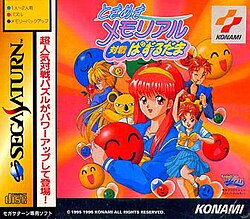
 Tokimeki Memorial: Taisen Puzzle-Dama on PlayStation
 Professor Layton and the Last Specter on DS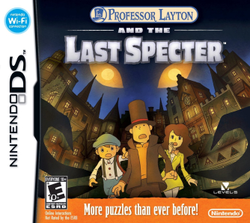










 Another SquareThought Site