

 Feb 2021
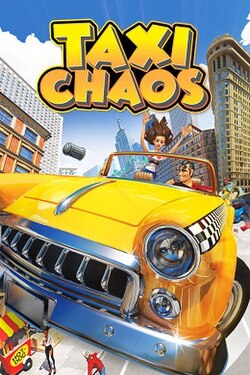

Taxi Chaos is a neon-splattered, roof-jumping dash through New Yellow City where the primary narrative ambition appears to be: get people from A to B before the timer eats your dignity. On paper the game markets itself as a spiritual successor to Crazy Taxi, and on paper it offers two named protagonists - Vinny and Cleo - which sounds promising if you enjoy the idea of character-driven taxi drama. In practice the title is mostly a wake-up call: giving two cabbies personalities does not automatically yield a compelling story arc, especially when the rest of the game is busy encouraging you to loop through the same five-minute adrenaline hit on repeat. This review treats Taxi Chaos like a short, confused buddy comedy written by a GPS unit: affectionate, occasionally funny, and ultimately interested in editing itself out of the story as quickly as possible.
Gameplay is where Taxi Chaos tries to do most of its talking, and where Vinny and Cleo are meant to do most of their living. The city - New Yellow City, a thinly veiled tribute to NYC - is a playground of ramps and rooftops, where you leap over alleys and snipe taxi fares like a caffeinated pigeon. You play as one of the two drivers and swap between a handful of unlockable cabs, with three modes: Arcade (a timer-based score chase with an arrow to guide you), Pro (same objective without the arrow, demanding memory and map mastery), and Freeroam (a relaxed sandbox that nudges exploration with a few fetch-quests). Mechanics are straightforward: pick up customers, race the clock, and hope your passengers don't rate you like a fast-food review. If Vinny and Cleo were movie characters, Vinny would be the 'grizzled local' who learned the ropes from a city that smelled like burnt coffee and optimism. He lives for tight turns and old-school swagger; he yearns for leaderboard immortality and respects a good ramp. Cleo would play the foil: nimble, showy, and flush with that modern confidence that enjoys social validation. The game allows you to inhabit both identities but never commits to letting either one grow. Their arcs are a promise of rivalry and camaraderie - imagine two cabbies pushing each other to become better drivers and better people - but the present material gives you a lot of sass and very little transformation. The modes affect how much personality you feel. Arcade encourages repeat performances and, by design, strips away context: every fare feels like an audition, not a chapter. Pro mode hints at a deeper city knowledge, and for a player willing to memorize streets and shortcuts there's a sense of mastery akin to character development. Freeroam is where the game almost allows Vinny and Cleo to breathe; a handful of customers ask you to track down scattered items, which could have been used to build small personal stories (lost keys that tie to a character's backstory, a mixtape that reveals taste, or a rival's business card tucked under a bench). Team6 tossed in those crumbs but didn't bake a cake: these side missions encourage exploration but never resolve into meaningful arcs. Dialogue and passenger interactions are a major missed opportunity. Customers blurt repetitive lines that only pretend to reveal the city's personality or the drivers' responses. A handful of amusing quips could have become running jokes defining Vinny and Cleo's chemistry, but instead the script loops like a stuck meter. This repetition works against any arc progression - at no point does either driver face a challenge that feels personal. Glitches and goofy physics occasionally add accidental charm, and some reviewers even said the bugs are so ludicrous they almost become character - a car phasing through a lamppost is like narrative surrealism - but that's a backhanded compliment. By design, Taxi Chaos excels at short bursts of mobility-based fun; by omission, it fails to give its two named protagonists anything like a satisfying journey.
Visuals in Taxi Chaos are a mixed bag that reads like a fridge full of takeout: some items look tempting, others are regretful leftovers. The cabs themselves pop with personality - bright liveries, satisfying bumper-to-bumper animations, and that pleasing sense that your vehicle is an extension of Vinny or Cleo's ego. Beyond the taxis, the cityscape suffers from an identity crisis. Some reviewers praised the aesthetic - Kotaku liked the graphics - but many found the world oddly lifeless and inconsistent. Buildings, props, and pedestrian models sit in uneven harmony: a few cartoonishly bold colors clash with attempts at realism, creating a visual stew that never quite settles. Performance on PS4 is another sore point. Critics noted resolution and framerate issues that chip away at the sense of speed - the very thing the game promises to deliver. Environments can feel empty; pedestrians and traffic are sparse enough that the city's nickname should be New Yellow Echo. Team6 has acknowledged the problem and hinted at patches to populate streets and add ambiance, which would be the equivalent of giving Vinny and Cleo co-stars other than pigeons. The soundtrack is serviceable but forgettable, and the repetitive passenger audio loops further hollow out the atmosphere. When everything lines up - a clean jump, an unbroken combo, a ridiculous physics moment - Taxi Chaos looks and feels arresting for a few seconds. Those flashes of charm, however, are too thinly spread across an otherwise patchy package.
If you want a game to act like a sugar rush and then leave you where you started, Taxi Chaos will cheerfully take your fare. Vinny and Cleo are fun ideas trapped in a game that prioritizes speed over meaning. Their potential arcs - rivalry turning into mutual respect, a local teaching a bright newcomer the ethics of street-level heroism, or a pair of drivers learning to care about the city beyond fares - all exist more readily in my head than in the game itself. Critics were blunt: the PS4 version received generally unfavorable reviews on Metacritic (44/100), and its reception ranged from 'admirable but flawed' to 'shameless clone' depending on how forgiving a reviewer felt that day. The bugs and empty cityscapes undercut any attempt at narrative richness, while the repetitive dialogue and thin soundtrack erased opportunity for emotional stakes. There's a place for Taxi Chaos: short sessions of rooftop launches, ridiculous combos, and that five-minute thrill where you briefly feel like the king or queen of New Yellow City. For those who crave character-driven stories, though, the paper-thin arcs of Vinny and Cleo will be frustrating. Consider this title a palette cleanser rather than a main course: entertaining in small doses, disappointing as a deeper experience. If Team6 patches the emptiness and spruces up the audio and AI, a future update could expand Vinny and Cleo from archetypes into actual characters with arcs worth caring about. Until then, I'd recommend renting a cab for an afternoon of chaotic joy and then politely dropping the meter when the conversation turns to 'story.'
 Just Cause 2 on PS3
 Stranger of Paradise: Final Fantasy Origin on PS5
 Roary the Racing Car on DS
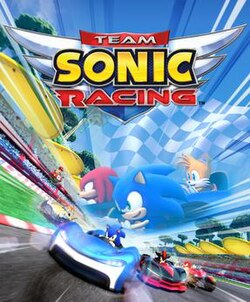
 Team Sonic Racing on Switch
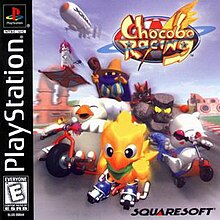
 Chocobo Racing on PlayStation
 Michael Schumacher Racing World Kart 2002 on PlayStation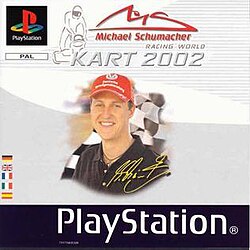
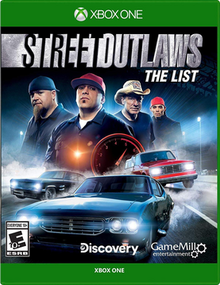 Monster Jam: Crush It! on Xbox One
 Monster Jam: Crush It! on Switch
 Road Rage on PS4










 Another SquareThought Site