

 Nov 2017


In a decade when polygon budgets ballooned and magazines still smelled faintly of ink and pizza, a title promising a spiritual nod to a beloved bike-brawling relic would have been greeted with either cautious optimism or the sort of cynicism reserved for sequels with too many apostrophes. Road Rage arrives carrying the name of Road Rash in its pocket and a willingness to swing baseball bats at rivals while hurtling through an open-world called Ashen. The concept is straightforward in a satisfying, late-night diner menu way: strap on a helmet, rev a motorcycle, and make opponents regret that they ever learned to use brakes. The execution, regrettably, reads like an unfinished print ad. The pedigree is clear on paper. Team6 Game Studios built this on Unreal Engine 4, with Ronnie Nelis in the director's chair and Maximum Games manning distribution. It promised a sandbox city divided into seven districts, single-player campaign activities ranging from circuit races to assassinations of rival bikers, and a multiplayer mode supporting up to four players in split-screen or online. That is exactly the kind of thing a 1990s reviewer would have circled with a red pen while crossing his fingers for arcade-grade thrills. The problem is that the sins of modern development - rushed patches, empty worlds, and a surprising number of quirks that seem to prefer living in the code - make Road Rage more of a historical curiosity than a triumphant revival.
Road Rage wants to be pure, gutter-level vehicular combat. The rules are simple: every race is a melee, every overtaking maneuver is an opportunity to swing a hockey stick, and every corner is a moral test. Combat is entirely bike-based; there is no zooming away to trade blows on foot. Early on you swing blunt objects - baseball bats, hockey sticks - and in later stretches firearms join the party. Upgrades exist. Cash from events buys faster bikes, shinier helmets, and weapons that promise a better chance of sending an opponent into a graceful tumble. The campaign is a checklist of modes that sound great in the index: circuit races, time trials, stunt challenges, and assassination contracts. In the hands of an optimistic design ethos, these could create a patchwork of roadside chaos. Instead the structure exposes the game's limitations. Races often feel like aimless loops through Ashen rather than carefully designed tracks. The AI behaves inconsistently: sometimes it offers a satisfying pugilistic challenge, other times it seems to lapse into predictable paths that make combat feel like hitting mannequins in a training gym. Collisions can be spectacularly satisfying when everything lines up, but they can also be baffling, with ragdolls and physics deciding to nap at the worst possible moment. Where Road Rage tries to differentiate itself is in the freedom to explore Ashen, a city split into seven districts from downtown to farmland. The map looks decent enough on the brochure but suffers from echoing emptiness in play. There are moments when the city feels like a stage set: roads and landmarks in place, NPC density dialed way down. This emptiness feeds directly into the pacing problems. Events are spaced so that exploration turns into a chore rather than a rewarding detour. Multiplayer is present with both split-screen and online options for up to four players and could have been the saving grace, but technical rough edges and a lack of varied content limit how much replay value the party modes actually provide. On the systems front, motorcycle upgrades, cosmetics, and weapon purchases form a rudimentary progression loop that scratches the collection itch. But it is thin. Weapons are a handful of archetypes, upgrades are numeric increases, and the cosmetics are largely flavor without consequence. The late-game addition of firearms attempts to punch up the stakes, but by the time guns come into play, the novelty has been flattened by repetitive mission design and the game's other shortcomings. Occasional clever moments do exist: a well-timed takedown or a stunt that threads through traffic can feel arcade-perfect. Those moments, however, are stranded islands in a sea of inconsistency and bugs.
If the 1990s reviewer were transported to 2017 to judge Road Rage, they would squint at the screen and mutter about lighting and texture pop-in like a man measuring carpet with a ruler. The game was built on Unreal Engine 4, and the engine's potential is apparent in small flashes - a sun flare here, a decent shader on a bike there - but the overall presentation is uneven. Critics at release singled out poor graphics, and the verdict holds: models can feel low-budget, environments lack the density and detail expected of an open-world, and draw distance issues make distant buildings betray themselves as flat paintings. Glitches compound the aesthetic problems. Visual hiccups, collision oddities, and momentary physics failures crop up frequently enough that they become part of the experience, not a quirky afterthought. There is an unplanned comedy to seeing a rival suddenly teleport or a ragdoll stretch like bad celluloid, but when these moments break immersion they stop being funny and start being aggravating. Sound design follows the same pattern: competent in isolated clips, but inconsistent across a full play session. Engines and art direction should be tools that sell a game's world; here they occasionally reveal the scaffolding. It should be said that for a budgeted price - the game launched at $29.99 USD - one might expect some rough edges. Budget excuses do not erase the expectation that a published product should at least be polished enough to avoid frequently breaking its own systems. Road Rage often feels like a late-night prototype that snuck past QA and into retail boxes.
There is a melancholic charm to seeing a concept inspired by Road Rash wander into the daylight only to discover it has lost its fight. Road Rage is not without ideas. The premise of melee combat while barreling through an open city is still splendid on paper, and there are slices of fun here and there: a brutal takedown, a satisfying upgrade, a multiplayer round that actually hums. Those pleasant scraps, however, are overwhelmed by inconsistent AI, a hollow-feeling open world, visual and technical issues, and mission design that rarely surprises. In the era of glossy reboots and nostalgic revivals, Road Rage stands as a cautionary tale: inspiration is not a substitute for execution. The game earned generally unfavorable reviews, and Metacritic's harsh tally reflected what many players experienced - a title with the heart of a battler but the stability of a broken taillight. If you are nostalgic for the days when magazines printed strategy guides and shared cheat codes, save the $29.99 for a classic compilation or a modern title that respects both its heritage and its players' time. Road Rage makes a valiant attempt, but in the fight for relevance it gets knocked off its bike, drives off into the sunset, and never quite reaches the finish line.
 Test Drive: Off-Road 2 on PlayStation
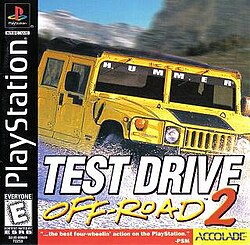 Test Drive: Off-Road 3 on PlayStation
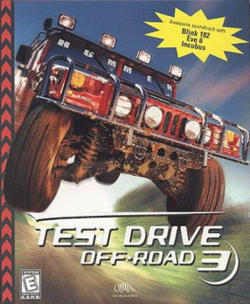 Project Awakening on PS4
 Combat Elite: WWII Paratroopers on PS2
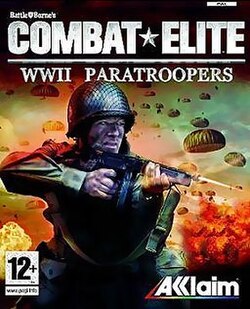 Orphen: Scion of Sorcery on PS2
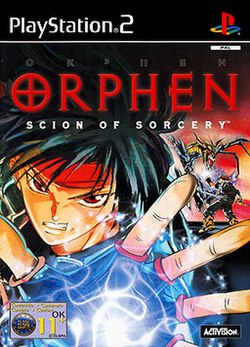 Monster Hunter Stories 2: Wings of Ruin on Switch
 Taxi Chaos on Switch
 Monster Jam: Crush It! on Xbox One
 Monster Jam: Crush It! on Switch










 Another SquareThought Site