

 Jun 2017
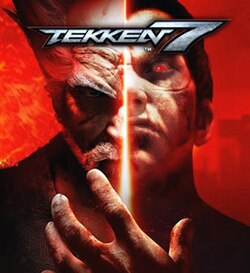

Tekken 7 is the franchise's pragmatic love letter to competitive fighters: an arcade-rooted, frame-counting, hitbox-respecting behemoth that was groomed for the modern era with Unreal Engine 4 and a decade-plus of design lessons. On PS4 it ships as the home conversion of Fated Retribution, bringing the arcade's mechanical rigor to living rooms in a package that balances accessibility tweaks with deep, technical systems. If you care about inputs, tradeoffs, and whether a new mechanic breaks or elevates the meta, this entry is designed to be inspected under a microscope. Beneath its glossy character models and cinematic Rage Arts there's a well-documented technical lineage: Namco's arcade hardware adapted to PC-like architecture, a target of 1080p at 60 fps in promotional builds, and a workflow built around iterative balance and DLC-driven content. Tekken 7 is simultaneously an esports darling and a living lab of mechanical design choices - some brilliant, some controversial - which is why a detail-focused review makes sense. Spoiler: it's excellent for players who enjoy systems and execution, and infuriating for players who want everything spoon-fed by a tutorial.
At the core, Tekken 7 preserves the series' 1v1, side-stepped, four-button input scheme but layers in modern mechanics that alter risk calculus in meaningful ways. Rage Art, accessible only in Rage mode, trades round-long advantage for a single cinematic, hard-hitting move that deals roughly 30% damage on hit. Technically this is intriguing because it compresses comeback potential into a single gambit: timing, spacing, and read accuracy decide whether Rage Art is a fair reward or an overbearing equalizer. Bandai Namco addressed balance iteratively; later patches made Rage Art damage inversely proportional to the player's current health, which is an elegant, if fiddly, solution to prevent easy round-turners. Power Crush is a second major mechanical pivot: it allows attacks to absorb mid/high hits and continue, effectively giving players a defensive-offensive option that ignores some chip damage but still penalizes low attacks. The stratified interactions between Power Crush, throws, lows, and block-rewarded pressure creates a rock-paper-scissors matrix that rewards frame knowledge. Screw hits replaced the older Ground Bound, putting opponents into aerial tailspins and opening up combo branches - they retain the combo-extending utility without reintroducing unlimited wall-combo loops. Fated Retribution added Rage Drive, a middle ground between a Rage Art's high-risk-high-reward and a normal special move. Rage Drive is either an empowered existing move or a new tool, and it trades the round-ending potential for utility and safer damage. This three-way trade (normal moves vs Rage Drive vs Rage Art) becomes an economic problem: how do you spend your Rage? High-level play treats Rage as a resource to be optimally invested across rounds, which is fascinating for players who like planning several moves ahead. The inclusion of guest characters with nonstandard mechanics, notably Akuma (with a Super Combo meter and 2D-style cancels) and later Geese/Noctis/Negan, forced the engine and balance philosophy to support hybrid playstyles. Akuma's air physics and cancel system create cross-paradigm interactions - Tekken's 3D footsies meet Street Fighter's meter play. These guests required per-character exception handling in the ruleset and, from an engineering standpoint, show how extensible the underlying systems are. Movement tweaks - backward walk changes similar to Tekken Revolution - and the option to choose which side of the screen you play on are minor but technically significant design choices. They affect spacing dynamics and input comfort. The addition of practice and frame-data display (later DLC) is a nod to the competitive audience: training mode actually matters because the execution ceiling is high and combo windows are frame-perfect. Online originally ran on Tekken-Net infrastructure; service shutdowns for certain builds and later moves toward rollback netcode co-developed with Arika reflect the shifting technical priorities for a game that needed tournament-grade online performance. Where the game slips is in single-player pedagogy. The Story Mode adds cinematic sequences and contextual fights, but the tutorial and onboarding are shallow for a title with such depth. Simple Combo and Assist modes from Story Mode were later added globally, which is a decent compromise for newcomers, but the real learning curve is in digging into frame data, practicing counter-hit confirms and mastering movement micro-controls. For players who relish the technical endgame, that learning curve is a feature, not a bug; for others, it feels like being handed a nutrition label and told to assemble the meal yourself.
Tekken 7's visual identity trades hyperrealism for a stylized fidelity that reads clean at competitive viewing distances. The Unreal Engine 4 upgrade is most visible in lighting, material response and cinematic effects: Rage Arts trigger bespoke animations and particle systems that are visually impressive and serve as clear telegraphs in matches. Character silhouettes are well-defined, which is a non-trivial achievement when animation complexity and hitbox clarity must coexist. Performance on PS4 lands comfortably: the console build retains the arcade ambition of 60 fps gameplay, and the tradeoffs tend toward slightly lower fidelity in some particle-heavy stages rather than framerate dips. Stages are varied and often packed with interactive set dressing; the G Corp. Helipad and Millennium Tower stages double as narrative set pieces and as practical arenas with clear depth cues. PS4-exclusive content - classic costumes and a Tekken jukebox - are nice quality-of-life bonuses but are purely aesthetic. Technical polish is uneven in a few areas: cloth and hair physics occasionally clip, and some cinematics use depth-of-field aggressively, which can obscure visual clarity for a fraction of a second. Those are quibbles next to the consistent frame pacing, crisp animation hitsparks and readable attack telegraphs that competitive players prioritize. The visual language of a hit - sound design, hitstop and camera shake - is engineered to communicate impact without compromising stutter-free input responsiveness.
Tekken 7 on PS4 is a technically confident fighter that rewards players who love systems, frame data and high-level nuance. Its additions - Rage Art, Rage Drive, Power Crush and Screw hits - create a modern meta that accommodates comebacks and mind games while preserving the series' execution demands. Graphically solid and competently optimized, the PS4 build preserves 60 fps intent and clean visual communication. If you want instant arcade thrills and competitive depth with the patience to learn, this is one of the best modern 1v1 fighters. If you expect hand-holding and a sprawling single-player buffet, you'll be frustrated by shallow tutorials and a story mode that prioritizes spectacle over pedagogy. For its technical ambition, long-term support, and sheer mechanical richness, Tekken 7 earns an 8.5/10 - a smart, sometimes ruthless, and ultimately gratifying fighter for players who enjoy studying the engine under the hood and then smashing faces with it.
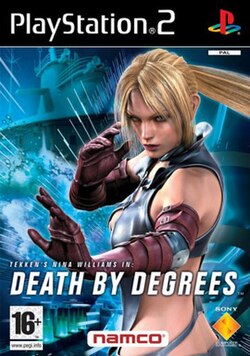 Tekken 3 on PlayStation
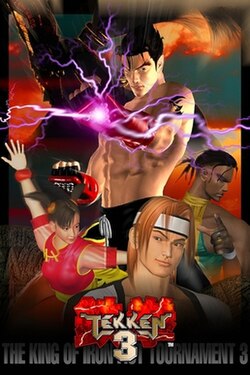 Tekken 8 on Xbox Series X/S
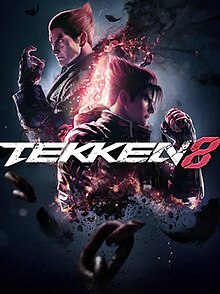 Ultraman Fighting Evolution on PlayStation
 ACA Neo Geo: Art of Fighting 2 on Xbox One
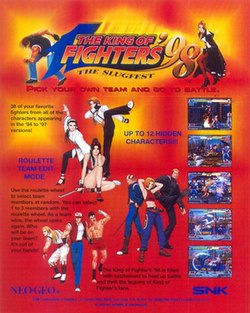
 ACA Neo Geo: The King of Fighters '98 on Xbox One
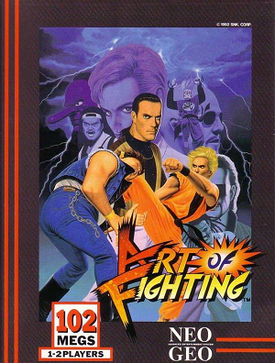
 ACA Neo Geo: Art of Fighting on Xbox One
 Tales of Arise on Xbox Series X/S
 Ace Combat 7: Skies Unknown Deluxe Edition on Switch
 Puyo Puyo Tetris 2 on Xbox Series X/S
 Tekken 8 on PS5
 Tales of Arise on PS5










 Another SquareThought Site