

 Sep 2019
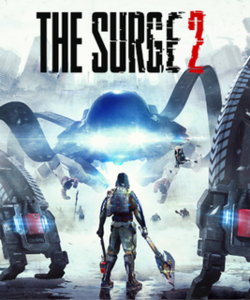

The Surge 2 dresses itself in dystopian chrome and then asks you politely to tear it apart limb by limb. It's a sequel that expanded outward: not just in map size and verticality, but in the ambitions of its storytelling. Where the first game kept you in the cold efficiency of a factory, The Surge 2 throws you into Jericho City - a neon, clogged, and religioso-industrial playground - and peels back a cast of characters who are desperate, broken, duped, or terrifyingly sure of themselves. If you expected a Souls-like where story is an optional garnish, get ready: Deck13 hands you a meatier narrative toothpick this time, with a cult, a corrupt relief unit, a dead-but-not-really child, and a protagonist who might be more machine than person. This review focuses less on combat frame-rates and more on the tragic, weird, and sometimes comic arcs of the people (and post-people) trapped inside the swarm.
The Surge 2 plays like a clinical experiment in making violence meaningful. Its third-person action keeps the button rhythm familiar to fans of tight melee systems, but the narrative implications of those mechanics are what make the characters feel lived-in. You craft the Warrior - gender, face, scars, and all - and Deck13 hands you a mechanical scalpel: targeted limb dismemberment. It's a gameplay choice that isn't merely gruesome showboating. Every time you slice off an arm or rip out a leg you are re-enacting the game's theme: the contest between flesh and tool. Looting the bits of your foes to graft onto your own machine-chassis literally turns the Warrior's story into a patchwork, a biography written in armor. Combat drones, consumables like bio-sensors, five distinct weapon types, and more aggressive enemy AI mean the world's threats feel tactical rather than decorative. Parry and dodge require correct angulation of your equipped weapon, which subtly enforces the idea that bodies - whether human or exoskeleton - have orientation, weight, and intention. When you meet NPCs and pick dialogue choices, your decisions ripple into the city: factions respond, the Children of the Spark react, and certain endings hinge on who you spared or executed. Graffiti messages from other players are a small but resonant reminder that your Warrior's ethical choices exist in a communal wasteland of advice and mockery. The Warrior's arc is the one you can sculpt most directly. You begin as an unnamed passenger on a doomed airplane - a setup that already hints at the ambiguity of survival - and wake in a prison, propped into an exoskeleton that seems as reluctant to let you go as you are to accept it. As you chase Athena Guttenberg's trail, you are both rescuer and revenant. The game toys with the idea that you died in the crash and were remade: your memory and mortality are fluid. That unanswered question about identity is echoed in every limb graft and every choice to spare or end another life. Several other characters act as foils to that central question. Athena Guttenberg's arc is quietly tragic and strangely central despite her being missing for most of the game. She's introduced as a child, the catalyst for the Warrior's quest. Exposure to the UTOPIA nanite payload turns her into more than a girl: she becomes a conduit. The progression from rescued child to a nanite-serpent fusion - later reborn into a human-like nanite form - charts a theme of transformation that flips the usual monster narrative. Athena's trajectory interrogates whether an entity shaped by tech can retain compassion, and her endings reflect how the Warrior's choices inform that answer: either commending the player's humanity or enslaving them as guardian if they showed lust for power. Warren, returning from the first game, wears his trauma like a mask. His presence is a connective tissue between the two titles, and his arc is one of seeking answers rather than easy revenge. He's the grizzled cipher who helps re-ground the Warrior and offers a buddy-cop, post-apocalyptic counterpoint - equal parts weary mentor and lab-coated conspiracy theorist. He wants truth, not necessarily justice; that makes his interactions with the Warrior a study in reliability: he nudges the protagonist toward revelations rather than dictating morality. The Children of the Spark give The Surge 2 its most theatrically unreliable personalities. Matriarch Celeste is the cult's iron heart: a believer with access to technology that can reanimate the dead. Her belief system sits at the collision of faith and nanotech, and she resurrects her son Eli in a move that turns myth into grotesque reality. Eli's arc is cinema-ready: prophet, murderer, resurrected superhuman, and finally, archangel of destruction. He's a study in the intoxicating corruptive pull of power. From charismatic heir to godlike antagonist, Eli shows what happens when the promise of transcendence is taken as entitlement rather than responsibility. Johnny, his brother, functions as a cautionary counterpoint - slovenly, drug-addled, and then killed by the Warrior - a demonstration that not every child chosen by prophecy is fit for it. The domestic dysfunction within the cult humanizes them: religious zeal undercut by sibling squabbles and addiction. Jonah Guttenberg, CREO's founder, occupies the archetype of the flawed creator. He offers scientific salvation and paternalism, and his research is the vector that allows Athena's removal from the swarm. His arc ends messy: killed by Eli, then replaced in narrative weight by what his work unleashed. The A.I.D. disaster relief unit is perhaps the bleakest character in the game: ostensibly there to help, they embody bureaucratic moral rot, abducting children in the name of experimentation. General Ezra-Shields, tasked with guarding Athena, turns into an antagonist in service of this moral rot, and the team's experiments - failures that killed children - are the moral sinkhole the Warrior must navigate. All these arcs converge on the Cathedral of the Spark and the Wall, both more than locations: they are ritual sites where story beats manifest as boss fights and moral choices. Defeating the Delver, unmasking A.I.D.'s crimes, killing and re-killing Eli, and finally confronting whether to execute or spare him are less about spectacle and more about what kind of resurrected person the Warrior will be.
Visually, The Surge 2 leverages its change in setting to tell character stories without a subtitle. Jericho City's verticality and alternating environments - from the carotid claustrophobia of prison wards to the faux-sublime Cathedral of the Spark and the biological simulacrum of Gideon Point - show a development team more interested in narrative geography than texture gloss alone. The environment design is a kind of non-verbal character writing: the wall that cages the city speaks volumes about fear, and the wrecked airplane and nanite-serpent sequences provide strong visual punctuation for Athena's transformation. The city's alleys and alternate paths offer not only mechanical choices but tonal ones: wander into a marketplace and you'll find cult propaganda, sneak into a lab and you'll smell Jonah's hubris. The result is a world that often feels like a stage set for the human tragedies unfolding within it.
The Surge 2 is not merely a tougher, shinier version of its predecessor; it's a game that uses its combat and customization systems as narrative tools. Characters don't just tell you their stories - they are their stories, in flesh and grafted metal. Athena's metamorphosis, Eli's messianic fall, Celeste's techno-religion, Warren's weary curiosity, and the Warrior's possible origin-from-death combine into a thematic knot about what it means to be human in a world that can rewrite bodies. Deck13 improved AI, broadened weapon types, and opened the city to more vertical, character-driven encounters, and those changes let these arcs breathe. It's not flawless: the storytelling sometimes leans on familiar beats of prophecy and cult theatrics, and a few narrative reveals ask you to accept very large leaps of plausibility. But if you care about character and story arcs as much as you care about ripping off an enemy's titanium knee and slotting it into your own build, The Surge 2 gives you meaningful choices and bitter-sweet payoffs. For PS4 players who enjoy ugly beauty, moral ambiguity, and the occasional melodramatic resurrection, this is a satisfying, sometimes haunting ride. Score: 7.5/10.
 Blackwood Crossing on PS4
 Air Management '96 on PlayStation
 Combat Elite: WWII Paratroopers on PS2
 Onimusha: Dawn of Dreams on PS2
 Disney's Chicken Little: Ace in Action on PS2
 Action Man: Operation Extreme on PlayStation










 Another SquareThought Site