

 Aug 2014


The Swapper is a small, tightly engineered puzzle-platformer that treats one clever mechanical idea-the ability to create body clones and swap your consciousness between them-as the fulcrum for its level design, narrative beats and emergent problem solving. Designed and largely implemented by Olli Harjola with narrative contributions from Tom Jubert and a clay-to-digital art pipeline, the game ships a sci-fi aesthetic, a Metroidvania-style progression map, and a deceptively simple toolset that yields hard, brain-aching puzzles. On PS4 this package arrives as a celebration of constraint: limited on-screen actors, deterministic clone behaviour and a compact set of environmental rules that interact to create a surprising amount of complexity. If you appreciate systems you can peek under the hood of, The Swapper is the sort of toy you'll happily take apart until it surrenders its tricks.
At the mechanical core is a two-function device: spawn up to four clones, and swap control (your 'consciousness') to any clone that is within line-of-sight. Both functions are subject to simple but strict rules, and the interplay of those rules is where the game earns its keeps. Clones, once created, mirror your inputs - they move in lockstep with the active character unless obstructed by geometry. This mirroring is not a cosmetic flourish; it is the predictable substrate that allows the game to compose multi-actor solutions from single-input choreography. The line-of-sight requirement for swapping is the game's primary spatial constraint and effectively defines the puzzle space. Swapping is only possible when the target clone has an unobstructed view of the currently-controlled entity; this encourages careful positioning and creates a choreography problem rather than a pure pathfinding one. The decision to cap simultaneous clones at four is a deliberate engineering and design choice: it keeps the state space tractable for the player and avoids cognitive overload while still enabling multi-step, layered solutions. The cloning tool also triggers a localized slowdown of time while in use. That slowdown functions as an interaction buffer: it widens the window for precise swaps and mid-air clone manipulations without resorting to impractical frame-perfect inputs. On a technical level this is an elegant way to bake accessibility into the mechanic-the designers avoid demanding inhuman dexterity and instead lean on deterministic physics and a controllable temporal dilation. Environmental hazards and modifiers are expressed with a small set of signalling lights-blue areas prevent clone creation, red areas block swapping, and purple blocks both. White lights and certain collision cases destroy clones outright. These binary, colour-coded rules make it trivial to predict legal states, which is essential because much of the challenge derives from sequencing legal and illegal states across multiple actors. The predictable death rules (fall damage and environmental hazards) further enforce careful planning: clones are expendable but not meaningless. Later levels layer new twists-gravity inversion zones and spatial gating by collectible orbs reinforce the Metroidvania scaffolding. The orb system is a classic gating mechanism: collect to unlock doors and access new rooms, which in turn expands the puzzle vocabulary. The station is divided into rooms, so the game naturally becomes a graph traversal exercise where you must adapt to previously learned clone behaviours in newly combined contexts. Backtracking is used sparingly and with purpose-the disciplines of limited save space and level segmentation keep the engineering simple while letting designers craft difficulty ramps. Mechanically, the game is a study in emergent solutions from deterministic systems. Because clones are governed by identical input mapping and simple physics, players can engineer sequences-create a clone above, swap while it falls, then reuse it as a moving platform-that feel like clever hacks. The edge cases are well signposted by lighting and geometry; mistakes are rarely the product of flaky controls and more often the result of incorrect sequencing or oversight. That reliability is a testament to careful tuning of collision, line-of-sight checks and clone lifecycle rules (reclaiming clones when they overlap the player, destroying them on illegal contact, etc.).
The Swapper's visual pipeline is one of its most interesting technical choices: assets were modelled in clay and digitized into the engine. That decision gives the game a tactile, low-poly-but-textured look that stands apart from polished PBR realism on the PS4. From a technical perspective this is an economical approach: rather than invest in expensive high-resolution textures and shaders, the game leans on lighting, compositing and the unique silhouette language of its clay models to craft atmosphere. The art direction pairs well with the gameplay constraints-levels are readable, with clear contrast between interactive elements (clones, switches, lights) and background set dressing. Porting work by Curve Studios aimed to maintain graphical parity with the PC version. On modern consoles the benefit is twofold: consistent frame rates and stable physics result in reliable clone behaviour, and the modest visual complexity avoids GPU bottlenecks that can introduce unpredictability into the simulation. Audio, composed by Carlo Castellano, complements the visuals with sparse, ambient cues that help the player focus; the sound design rarely distracts and often reinforces puzzle solutions through timing and atmosphere. Where the clay pipeline shows its engineering savvy is in level readability and hitbox consistency. Because most puzzles depend on precise spatial relationships and line-of-sight logic, the game's collision geometry and visual cues must be rock solid. The Swapper generally succeeds here: occlusion and line-of-sight are intuitive, and visual markers for blue/red/purple light cones align with the underlying logic. The result is a package where the aesthetics and the physics are coherent, not at odds.
The Swapper on PS4 is a focused, technically confident puzzle game that wrings complex behaviour from a succinct rule set. Its success is not in having the most mechanics, but in choosing complementary constraints-clone mirroring, LOS-based swapping, simple light-based inhibitors-and tuning them until they yield satisfying, sometimes fiendish puzzles. The clay-derived visuals and careful porting give the title a distinct identity and the deterministic simulation makes failure feel like a learning event rather than a glitch. Critics and aggregators rewarded it with positive scores (PS4 Metacritic around 83/100) and it picked up festival accolades, and that reception is justified: The Swapper is polished, smartly engineered and narratively ambitious without bloating its codebase. If you want a gimmick game that crumbles on second inspection, look elsewhere. If you want a game where a single, well-implemented mechanic produces dozens of memorable challenges and where the technical choices-time dilation, clone lifecycle, line-of-sight checks, and handcrafted asset pipelines-are all tuned to support player reasoning, The Swapper is a compact masterclass. On PS4 it runs smoothly, looks unique, and respects your time: most playthroughs are short, but they leave you thinking about identity, mechanics and the delightfully logical ways clay dolls can die in space.
 Puzzle by Nikoli 4: on PS4
 Twinbee Taisen Puzzle Dama on PlayStation
 Tokimeki Memorial: Taisen Puzzle-Dama on PlayStation
 Professor Layton and the Last Specter on DS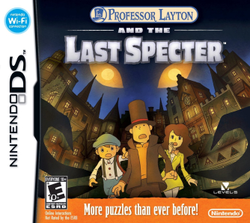










 Another SquareThought Site