

 Jun 2016
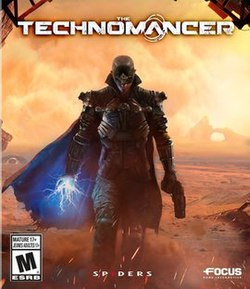

The Technomancer arrives on PS4 like someone who read all the best science-fiction RPGs, made a careful list of what to borrow, and then left half the screws in the drawer. It's a Mars-set action-RPG from French studio Spiders, released in June 2016, scored by Olivier Deriviere and built on PhyreEngine. You play Zachariah, a rookie technomancer - which is a fancy word for 'magician who also knows circuits' - thrown into the War of Water two centuries after humanity colonised Mars. The setting is the game's strongest suit: sand-scarred cities, water-guild politics, secret police, and a gloomy merchant haven called Noctis that feels like a place that would have a loyalty card for smugglers. The Technomancer wants to be a crunchy, choice-heavy single-player experience with moral forks and multiple endings. It offers three combat styles, four skill trees, weapon and armour crafting, companions who level up, and three slightly different endings shaped by your decisions. It also promises a main quest of about 25-30 hours, extendable to roughly 50 with side content, which is generous for a studio that previously made smaller-scale RPGs. If your expectations are calibrated to a mid-2000s BioWare checklist - squads, dialogue choices, hub cities and the occasional melodramatic monologue - this will look familiar. If your expectations include flawless animation, perfect enemy AI and combat that feels like ballet rather than a bar fight, the checklist might come as a mild disappointment.
Combat is the part of The Technomancer that likes to keep you on your toes, mostly because it cannot decide whether it prefers rhythm, randomness, or a respectful staring contest. The game gives you three combat styles to choose from, which is reasonable in principle: you can focus on melee, range, or technomancy powers. Each approach has its own toys and permutations, and there are four skill trees to invest in so your Zachariah can be that very particular kind of future-soldier you always pictured. Companions can be recruited, they level up, and they will occasionally hand you bottles of exposition when the plot needs lubrication. Crafting plays a practical role. You can make weapons and armour, which helps when the loot gods decide to be stingy. The game accommodates different quest solutions - stealth, diplomacy, or punching - which is commendable for a studio of Spiders' size. There are three distinct endings, and your major choices nudge the outcome in predictable but satisfying directions. Side quests are numerous compared to Spiders' prior work; the studio claimed four times as many quests as Bound by Flame, and you can see their enthusiasm in the sheer volume of fetches and conversations. The problem is that some of the moving parts feel like they were assembled by someone who said, 'That looks right' and then left for lunch. Combat frequently lacks flow or rhythm: hits can feel weightless, enemy reactions can be delayed, and difficulty sometimes appears to be dictated by dice rolls rather than skill. That inconsistency turns some fights into tense, rewarding encounters and other fights into awkward scrums where you flail until the system decides the fight is over. Dialogue and story aim for nuance - city politics, guild secrets, and the morally murky War of Water - but the script occasionally stumbles, and the pacing can be lumpy. That said, when the world-building clicks, it clicks hard: the game's Martian politics and the water-guild tension are genuinely interesting, and Zachariah's rookie technomancer perspective is a good lens for small betrayals and big secrets. Design-wise the game leans on hub cities and unlockable areas, as Spiders promised a larger Mars than in their previous titles. Exploration has rewards but is sometimes hampered by repetitive environments and a camera that prefers to be awkward at inopportune times. Your companions have their moments, but they are not consistently memorable. The choices you make do matter enough to make multiple playthroughs tempting, if you can tolerate the occasional mechanical hiccup. If you enjoy piecing together a game that has heart and ideas but also a few loose screws, The Technomancer will offer a satisfying, slightly creaky ride.
Graphically, The Technomancer is fine in the way a matte painting in a museum is fine: it conveys mood and texture rather than photorealistic fidelity. The environments do a lot of the heavy lifting - dusty Martian bazaars, water-scarce settlements and the neon gloom of Noctis are visually coherent and atmospheric. Character models and animations, however, are where the game shows its budget. Faces can be a little too expressionist; lip-sync occasionally files a formal complaint; and movement animations sometimes forget what gravity feels like. The PhyreEngine does a competent job with lighting and scale, but you will notice rough edges: stiff animations, clumsy NPC pathing, and the odd texture pop-in that reminds you this is not a triple-A production with a full day to spare on shader polish. Olivier Deriviere's score deserves a separate round of applause. The music complements the setting with moody, electronic-flavored compositions that rarely overstays its welcome and often elevates otherwise plain scenes. Sound design is hit-or-miss: weapon effects and technomancer powers feel punchy enough, but environmental ambience can be sparse in places where you expect more. In short, the game looks like it knows exactly what tone it wants to hit; sometimes it nails the mood, sometimes it fumbles the execution.
The Technomancer is a game with good intentions and enough narrative ambition to keep you engaged for a dozen to fifty hours depending on how many side quests you tolerate. Spiders aimed for a vast Mars with politics, moral choices, crafting and three endings, and they hit the target more often than not. The setting is rich, the premise is solid, and the music helps the whole thing breathe. Yet the game carries the sort of technical and mechanical unevenness that turns strong ideas into a sometimes bumpy playthrough: combat that lacks consistent flow, animations that occasionally look embarrassed, and a storytelling cadence that stutters when it should stride. If you want a polished, modern BioWare-level experience, this is not it. If you want a thoughtful, quirky RPG that scratches the space-guild itch and doesn't mind a few rough edges, The Technomancer is worth the trip. Consider it a handcrafted Martian stew: plenty of flavour, some chewy bits, and ultimately nourishing - especially if you come for the world more than the combat choreography. Metacritic hovered in the mixed/average range for the PS4 version, which feels about right. It's a competent, occasionally inspired title from a small studio trying big things; not perfect, but not dull either. You might not remember every fight, but you'll remember the setting, and that counts for a lot.
 Outriders on Xbox Series X/S
 Combat Elite: WWII Paratroopers on PS2
 Onimusha: Dawn of Dreams on PS2
 Disney's Chicken Little: Ace in Action on PS2
 Action Man: Operation Extreme on PlayStation
 GreedFall 2: The Dying World on Xbox Series X/S
 Pinball Fantasies Deluxe on PlayStation
 GreedFall on PS4
 GreedFall on Xbox Series X/S
 Steelrising on PS5










 Another SquareThought Site