

 Oct 2016
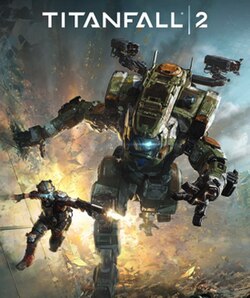

Titanfall 2 is that rare shooter that asks you to master both ballet and demolition: graceful, wall-running pilot movement one minute, stomping around in a 20-foot mecha the next. Released in late 2016 by Respawn Entertainment and landing on PS4 among other platforms, the game grafts fast, parkour-heavy pilot skills onto a multiplayer and single-player package full of tactical choices. If you came for the giant robots, you leave with better timing, sharper situational awareness, and an appreciation for elevator music, because the single-player makes you bond with a titan named BT - literally a buddy and not just a walking tank. This review zeroes in on the challenge aspects and the player skills Titanfall 2 demands: from split-second reflexes and map knowledge to decision-making under pressure and the patience to learn six Titans with distinct personalities, weapons, and weaknesses.
Titanfall 2's core challenge comes from managing two wildly different combat identities: the Pilot and the Titan. Pilots are fragile, nimble, and lethal in the right hands; Titans are lumbering, durable, and devastating if you know when to press the advantage. Learning to switch mindsets on the fly is the game's first exam. The Pilot toolkit rewards movement skill above raw aim alone. You get a jump kit for double-jumps and wall-running, the ability to chain parkour moves, and gadgets like grappling hooks, cloaks, and pulse blades. Each of these promotes vertical play and forces you to think in three dimensions - enemies above you, below you, and often threaded through a network of walls you can run along. The skill curve here is steep but fair: early missions and matches teach the basics, then nudge you into more complex combos that rely on momentum, jump timing, and environmental awareness. Precision movement is the bread-and-butter challenge. Wall-running and chaining parkour require consistent timing; a mis-timed leap turns a glorious flank into an embarrassing tumble. Sliding, introduced in this sequel, adds another layer: it's an offensive reposition tool and a defensive dodge if you learn distances and friction. The grappling hook both shortens travel time and becomes a risk-reward toy - reel to a rooftop for a three-shot kill, or overcommit and get punished by a waiting Titan. The pulse blade and holo-pilot force you to read the map and opponents, because their value comes from anticipation rather than brute force. Gunplay itself favors the hybrid player. Guns feel satisfying, varied, and are designed around playstyles that reward clever movement. Snipers and long-range Titans like Northstar dominate sight-lines and punish careless pilots; shotgun and Ronin builds reward close-quarters acrobatics. Learning each weapon's recoil, optimal engagement range, and sound signature (the game improved audio occlusion and reverberation for this) separates competent players from the greats. Situational aim - knowing when to fire, when to slide past, and when to disengage - matters more than twitch reflexes alone. Then there are the Titans: six at launch, each a distinct mechanical chess piece. Ion is a laser-magic control Titan with a shield that can catch projectiles; Scorch is about area denial and thermite zoning; Northstar excels at overwatch and flight; Ronin is the blade-and-dash skirmisher; Tone locks targets for mid-range devastation; Legion brings sustained fire with a rotary cannon. Monarch (added later) demands resource-meddling and adaptation mid-match. Each Titan has a different learning ladder: silhouette recognition, weapon pacing, dodge timings, and core ability windows. The multiplayer feels like a mash-up between an FPS and a fighting game because Titan matchups require reading opponents' cooldowns and baiting core abilities. Multiplayer adds another skill: meta-choices and loadout planning. Boosts (the new take on the old burn cards) force pre-match commitment - pick the wrong boost for a map and you're handicapped. Credits and merits gate progression, nudging you to grind specific modes or objectives to unlock your preferred toys. Map design encourages 'window-pane' thinking: multiple predictable lanes with verticality layered on top. Learning those lanes, the best wall-run routes, and where Titans most often fall victim to rodeo attacks (the revised rodeo lets pilots steal a Titan battery) becomes a crucial knowledge edge. Tactical thinking is often the deciding factor. Titan meter management - when to summon, whether to Camp with a guard-mode Titan or push with a follow-mode one - is a miniature strategy game. Rodeoing Titans lets pilots flip the tide if they can steal and insert batteries tactically. The game's emphasis on teamwork in modes like Bounty Hunt and Frontier Defense means individual skill is amplified by coordination. Solo heroics still work, but consistent success in multiplayer is far more about reading the map, tracking core timers, and playing to your team's strengths. Finally, the single-player campaign doubles as a challenge tutorial. Its 'action block' design mixes pure movement puzzles, stealth segments, and titan fights so that you keep sharpening different muscles. Levels like 'Effect and Cause' teach you to stop, think, and apply your mechanics in new ways. Puzzle segments slow the adrenaline and demand creative problem solving, while Titan sequences test your ability to adapt loadouts on the fly. For a player focused on skill development, the campaign is a training montage with personality: you get better, and the game tells you so through story beats and BT's stoic commentary.
Technically, Titanfall 2 runs on a heavily modified Source engine, and Respawn pushed enhancements like physically based rendering, HDR lighting, and texture streaming to make the environments pop. The maps favor a bright, postcard-worthy palette that highlights verticality and readability - crucial for a game where you must spot enemies across multiple planes. Titans have distinct silhouettes and visual cues so you can identify threats at a glance, which isn't just stylish: it's fundamental to the skill game. Audio design complements the visuals with occlusion and reverberation tweaks that help you judge distance and cover. On PS4, the result is a clear, crisp battlefield where readability and aesthetic both serve the player's ability to make split-second decisions.
Titanfall 2 is not a casual stroll through a robot museum; it's a dojo. The game demands you learn movement, map craft, weapon pacing, and titan matchups, and rewards that investment with some of the most exhilarating encounters in modern shooters. Its single-player is an inventive bootcamp that trains you to become a more complete player, while multiplayer tests your tactical sensibilities and teamwork. If you want a shooter that asks for both reflex and reason - and gives you the tools to become legitimately better - Titanfall 2 on PS4 is almost unfairly good. It stings a bit that its launch window kept it from the crowd it deserved, but the gameplay stands proud. Recommended for anyone who wants to level-up their FPS skillset while stomping serpents of steel and looking very cool doing it.
 Warhammer 40,000: Boltgun 2 on Xbox Series X/S
 PixelJunk Shooter 2 on PS3
 Turok: Dinosaur Hunter on Switch
 Primal Carnage: Extinction on PS4
 Apex Legends on Xbox Series X/S
 Apex Legends on PS5Star Wars Jedi: Fallen Order on PS5
 Star Wars Jedi: Survivor on Xbox Series X/S
 Star Wars Jedi: Survivor on PS4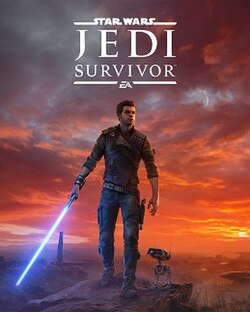










 Another SquareThought Site