

 Sep 2018
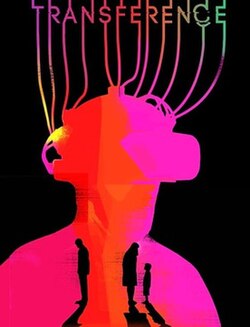

Transference is the kind of game that sneaks up on you like a quiet houseguest who rearranges your furniture and leaves an existential pamphlet on the coffee table. Built by SpectreVision and Ubisoft Montreal and released in September 2018, it casts players into a corrupted simulation constructed from the brain data of a single family: Raymond, a brilliant but troubled scientist; Katherine, his wife; and their young son Benjamin. On PS4 the experience trades some VR novelty for accessible spooky-adventure vibes, but its real attraction isn't jump scares. It's the slow, clinical unspooling of a household's fractures and the way the game asks you to walk through memory like a crime scene. If you want tidy resolutions or emotional comfort, this living-room therapy session will disappoint. If you want to stand in the footprints of three damaged people and feel the chill of watching them fail, Transference is unnervingly effective.
Gameplay in Transference is less about puzzles-in-the-traditional-sense and more about narrative archaeology. The house is your dig site and each record, voice clip, or altered environment is another layer of sediment revealing who these characters were, or at least who their simulated minds remember being. You move from room to room, shifting perspectives between Raymond, Katherine, and Benjamin. Each vantage point rewrites the house slightly, and that sliding-scale of memory and perception becomes the primary mechanical delight. There are lock-and-key moments and inventory-lite investigation, but the real game lies in interpretation. Raymond's arc feels like a peeling onion of intellect and instability. Introduced as a brilliant scientist responsible for the memory-transfer technology at the heart of the simulation, his brilliance is always edged with a nervous, disintegrating calm. The house seen through his eyes is clinical and precise, filled with gadgets and brittle rationality. As you dig deeper, hints of control issues and an inability to reconcile his inner chaos with the life he's supposed to provide appear. The simulation's corruption manifests as moments where Raymond's carefully organized world slips into paranoia. His arc doesn't offer redemption in the cinematic sense. Instead, it charts an erosion: intelligence used as armor, then as weapon, then as a confession written in the margins of lab notes. The game asks players to watch a mind dismantle itself, which is a brave narrative choice but one that leaves an emotional sting rather than relief. Katherine's perspective serves as the emotional counterweight. In her reconstructed memory the house breathes in domestic details and small, exhausted attempts at normalcy. The game positions her as the person trying to hold disparate pieces together, and through the fragments the player uncovers, you see the cost of that labor. Katherine's arc is quieter but no less devastating: she moves from hope to endurance to wary resignation. Transference respects the humanity of this arc by forcing players to live in the small things-broken toys, half-finished dinners, and voicemail messages that accumulate like bruises. The game never lets Katherine be a one-dimensional victim, but it doesn't spare her either. The narrative leans into discomfort deliberately, using Catherine's domestic viewpoint to confront the player with the consequences of Raymond's actions. Benjamin, the child, supplies the most haunting moments because children memorize trauma differently. His rooms are warped by childish logic and partial understanding-doors that don't open when they should, toys that whisper, and fragmented audio telling stories he only partly grasps. Benjamin's arc is less about transformation and more about imprinting: how trauma is recorded, misfiled, and then played back later in distorted form. Exploring his recollections feels like watching a home movie where the audio is out of sync. The child's presence complicates the moral calculus of the story; it's one thing to examine an adult's failings, another to see how those failings map onto a small mind. The simulation's mechanics-snapshots that loop, objects that trigger alternate memories-are most effective when filtered through Benjamin's limited comprehension, making ordinary rooms feel both familiar and menacing. Because Transference asks players to assemble evidence to 'repair' lives, there's a detective rhythm to proceedings. You collect tapes, piece together timelines, and make choices about which fragments to prioritize in your understanding. The payoff is rarely cathartic. Reviews at the time noted that the themes of domestic violence and family breakdown make for an uncomfortable experience, and that critique is fair. This is a game that makes you linger in awkward, painful moments without the relief of a neat moral resolution. That can be draining, but it's also the point: the simulation is corrupted because real lives were, and the lack of tidy endings forces you to sit with that discomfort.
Visually, Transference favors clinical realism over stylized horror. On PS4 the house is rendered with enough fidelity to feel lived-in: dust motes hang in the sunbeams, paint peels near doorframes, and every appliance hums with an authenticity that is quietly disconcerting. The corruption in the simulation is expressed through subtle graphical glitches-textures that jitter, light that warps, and spatial inconsistencies that make rooms feel slightly off-kilter. These visual choices are the game's primary mood engine, allowing atmosphere to do most of the emotional heavy lifting. Sound design and score play an oversized role in heightening the unease. Kreng's music is spare and intrusive in equal measure, often punctuating silence with notes that feel like memory trying to force itself back into place. The voice performances humanize the characters without melodrama; you get the sense that the actors are whispering secrets rather than reciting dialogue. The end effect is a believable, if chilly, world. For players who prize environmental storytelling, the visuals and audio combine into a compelling case study in how to make an ordinary home feel uncanny. Note that some players may find the visual austerity and intentional glitches underwhelming if they are expecting more traditional horror spectacle or flashy effects.
Transference is an ambitious experiment that uses interactive space to map psychological damage, and for the most part it succeeds. Its strengths are specific: a patient narrative that privileges character study over shock, a believable haunted-house read as a family portrait, and design that trusts the player to read between the glitches. The game's insistence on discomfort is brave, and at times brutally effective, particularly through Katherine's small, human moments and Benjamin's fractured recollections. The main drawbacks are structural: the ending is bleak in a way many critics found unsatisfying, and the payoff for investing in the characters is often introspective rather than cathartic. That will delight players who want to be unsettled and annoy players who want closure. On PS4 Transference is worth your time if you're interested in character-driven experiments and don't mind leaving a story with loose threads. It won nominations for VR and immersive awards, which makes sense given how well it captures the feeling of inhabiting anxious memories. This is not a game for light emotional appetites: it will sit with you, make you uncomfortable, and then ask you to think about what it means to live inside someone else's damaged mind. If you want to play something that treats a household like a crime scene of the soul, Transference is a disturbing, affecting choice. If you want tidy endings and warm fuzzies, look elsewhere.
 One Piece Grand Adventure on PS2
 Taiko no Tatsujin: Dokodon! Mystery Adventure on Switch
 Taiko no Tatsujin: Don to Katsu no Jikū Daibōken on Switch










 Another SquareThought Site