

 Oct 2015
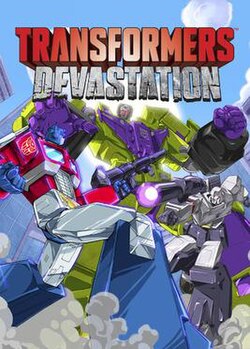

Transformers: Devastation is the sort of game that walks into a nostalgia bar, orders a sparkling neon Optimus Prime, and proceeds to fist-bump every childhood memory in the room. PlatinumGames took the cartoony, brass-toothed charm of the original '80s Transformers and shoved it through their action-engineering blender, producing a turbo-charged hack-and-slash that delights like a Saturday morning cartoon with better frame rates. If you came for crunchy combo strings and the sound of metal-on-metal violence scored by Vince DiCola riffs, you're in the right place. If you came for a sprawling RPG with plot twists every five minutes, you might be left wanting. This review will dig past flashy punches and into what really matters: the characters. Devastation doesn't try to reinvent any of them; instead it lovingly polishes archetypes-Optimus is nobility with a V8 heartbeat, Megatron is doom with a microphone, Starscream is moustache-twirling in jet form-then lets Platinum's combat system test whether their narrative beats can survive being repeatedly smacked into a wall. Spoiler: for the most part they do, and the payoff lies less in surprising arcs and more in seeing classic personalities earn a few meaningful moments.
On paper Devastation is PlatinumGames doing what PlatinumGames does best: make combat feel like an impressive gymnastic routine for giant robots. Each Autobot-Optimus Prime, Bumblebee, Sideswipe, Wheeljack, and Grimlock-has a distinct rhythm. Optimus is the steady dad-bot, slower but devastating when he lands a hit; Bumblebee is quick and nimble, the kind of character who makes enemies feel like practice dummies; Sideswipe is glass-and-speed; Wheeljack mixes gadgets for that techy slapstick; Grimlock is a stompy beatstick who turns every engagement into a dinosaur mosh pit. Mechanically, the game rewards timing. Dodge at the last possible moment to activate Focus, slow time, and then domino enemies with counterattacks. Overdrive acts as a cinematic capstone, turning your Autobots into temporary walking nuclear options. Vehicle mode isn't a gimmick either: it speeds traversal and changes how you approach certain fights, offering a tactile nod to the "robots in disguise" fantasy. The menu of credits, T.E.C.H. forging, weapon synthesis, and unlockable moves gives a satisfying carrot to chase, even if the carrots are on a fairly short stick. Where character and gameplay intersect is where the game is most fun. Megatron isn't just a big health bar: boss encounters stage his arrogance. Facing off with Constructicons and seeing them merge into Devastator feels appropriately overwhelming-this is Megatron imposing his will through sheer mass. Menasor and other combiners demand tactical shifts; they force you to rotate between Autobots and play to individual strengths. Grimlock fights, for example, are glorious in a way that makes you imagine a cartoon director shouting "Give him more tail-slap!" The story structure-seven chapters split into missions-serves as a parade ground for these characters. It's not interested in subtle character studies, but it does afford beats where personalities evolve through action. Optimus' role is classic: leader, moral compass, and the guy who must carry the weight of the universe (literally) when the Ferrotaxis goes haywire. The arc is compact: investigate, confront historical truth, make a painful choice. The choice to destroy the Ferrotaxis rather than attempt a mercy that risks Earth is a tidy, devastating moral moment; it cements Optimus' transition from exile commander to protector-of-Earth, and it lands because the game has invested in his gravitas through voice work and cinematic set pieces. Megatron, on the other hand, is less a layered antagonist and more a force of ideology: recreate Cybertron or die trying. His arc reads like a thesis statement-extremist, unyielding, occasionally brilliant in tactical cruelty-and Platinum leans into the flavor of his hubris rather than trying to humanize him. Starscream's role is predictably screamy and traitorous, and the game uses his antics for both comic relief and plot propulsion. Shockwave's cold logic provides exposition when the story needs to explain the Proudstar's horrific backstory: Nova Prime corrupted by Unicron, a ship meant to terraform becoming a weapon. The revelation reframes Megatron's plan from "world domination" to "misguided salvage operation," and that change in emphasis is neat: this isn't petty conquest, it's ideological reconstruction. If there's a narrative weakness, it's that side characters-Wheeljack's tinkering, Sideswipe's flashiness, Bumblebee's plucky heart-rarely get deep solo moments. They're given signature moves and quips, and the original voice actors return to sell those moments, but Devastation is optimized for spectacle over intimacy. The game's optional side missions and collectibles hint at deeper lore, but the short runtime means many of those threads remain decorative rather than fully explored.
The visuals are a confident love-letter to Generation One. The art direction leans into stylized, cell-shaded models and bold colors that could have been ripped straight from the original cartoon and given a high-res polish. Environments are destructible playgrounds of neon and concrete, and the screen fills with pieces of metal and sparks in a way that's perversely satisfying. Critics praised the graphics for their nostalgia and fidelity to source material, and the returning voice cast-Peter Cullen as Optimus, Frank Welker as Megatron and Soundwave, Gregg Berger as Grimlock, Dan Gilvezan as Bumblebee-gives the proceedings emotional authenticity. When Optimus speaks, it lands. When Megatron snarls, the world feels theatrically endangered. That said, the camera can be a bit of a temperamental cameraman. In tight indoor fights with lots of rubble and Insecticons, the angle sometimes forgets you're playing a game and insists on a cameo shot of a wall. It's jarring when the visuals are otherwise so polished, but it's hardly fatal; it just reminds you the game is built on a frantic ballet of inputs and occasionally trips over its own choreography.
Transformers: Devastation is not a deep psychoanalytic treatment of Cybertronian trauma. It doesn't need to be. What it is is a compact, gleeful smash-em-up that knows exactly which strings to pull on your nostalgia and which buttons to let you mash for maximum metallic satisfaction. Optimus' arc-from guardian of a lost heritage to the defender who decides Earth is home-is a short but satisfying beat, and Megatron's attempt to "fix" the cosmos by converting Earth into Cybertron gives the conflict ideological weight beyond mere evil-for-evil's-sake. Fans of the original series will grin through the game's brevity; newcomers will appreciate PlatinumGames' combat pedigree but might wish for more time with these characters. The return of classic voice actors and the aesthetic devotion to G1 give Devastation an identity many licensed games lack. If you want a story that revels in archetypes and serves them with high-octane combat and a soundtrack that punches like an energon fist, this game is worth a look. If you want sprawling character studies or a 50-hour epic, pack a lunch and wait for another movie. For what it sets out to do-deliver cartoon justice, robot redemption, and the occasional dinosaur headbutt-it succeeds with metallic charm and a satisfying crunch. In short: it's loud, it's brief, and it's exactly the kind of chaotic therapy session Autobots need once in a while.
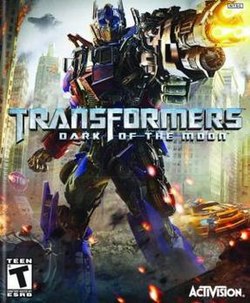
 Transformers: Dark of the Moon on PS3
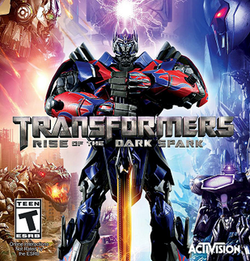
 Transformers: Rise of the Dark Spark on PS3
 PlayStation Home on PS3
 Ōkami on PS2
 Gaelic Football '25 on Xbox Series X/S
 Unearthed: Trail of Ibn Battuta on PS3
 Bayonetta 2 on Switch
 Bayonetta on PS3
 Ninja Gaiden 4 on Xbox Series X/S
 Astral Chain on Switch
 Ninja Gaiden 4 on PS5










 Another SquareThought Site