

 Jun 2011
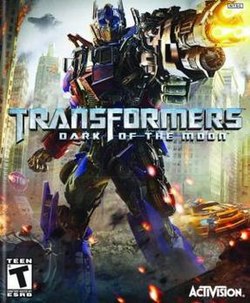

Transformers: Dark of the Moon (the game) is the tie-in that decided it wanted to be both a popcorn blockbuster and a snack-sized character study. Developed by High Moon Studios for the PS3 (with other versions developed by different teams), it takes the unusual route of telling an original prequel story to the movie and shuttles you back and forth between Autobots and Decepticons. If you were hoping for a sprawling epic in the mold of War for Cybertron, you'll find something smaller and more impatient here - but if you care about robot personalities and the little emotional beats that make metal feel like people, the game occasionally delivers surprising moments. The game is short, loud, and committed to giving familiar faces some momentary depth. The campaign alternates between Autobots and Decepticons, which is neat on paper: you get to see both sides' motivations and watch how the same events look through opposite ideologies. High Moon takes advantage of that conceit to sketch arcs rather than epics - characters aren't rewritten, but they do get scenes where they grow, make decisions, and sometimes pay for them. The voice work is competent: Peter Cullen returns as Optimus Prime and carries the gravitas expected, while Fred Tatasciore steps in for Megatron. Steve Blum's Starscream is deliciously venomous. The result is a game that feels like an appetizer for the film's main course - occasionally satisfying, never truly filling.
Mechanically, the PS3 version feels familiar if you've played High Moon's War for Cybertron: it's a third-person shooter with vehicle-to-robot transformation, cover-lite combat, and mission objectives that encourage forward momentum rather than contemplative exploration. The star addition is "Stealth Force," an upgrade that lets characters use weapons in vehicle form. It sounds like a small tweak, but it changes tactics: suddenly your car is a capable gun platform, not just a fast escape. This is also one of the ways the game tries to reflect character in gameplay: different Transformers get unique Stealth Force abilities and robot-mode skills, so playing as Bumblebee feels different from playing as Ironhide or Soundwave. Beyond the novelty of Stealth Force, the campaign design influences how character arcs land. Levels are structured as a series of battles and beats: set piece, small emotional payoff, set piece. Bumblebee's missions - the opening jungle deployment and rescue of Sideswipe - position him as the plucky scout forced toward responsibility. He sneaks, darts, and rescues; the mechanics (camouflage and hit-and-run action) are used to telegraph his personality. Mirage gets an outing that literally knocks him down a peg (he's injured and unable to transform), and the game uses stealth and limited mobility to communicate vulnerability. That kind of mechanical symbolism isn't subtle, but it works: players live the moment rather than just watching it. Ironhide's arc is the single most narratively satisfying Autobot beat. He's the muscle, the gruff veteran, and the game gives him a proper duel with Mixmaster and later Megatron. The fight choreography and the feel of Ironhide's weapons (grenades, experimental rocket launcher) make his pride and warrior's spirit tactile. When Ironhide triumphs over Mixmaster in Detroit, it's cathartic; when he later faces Megatron, the dialogue and tense combat underline his surprising growth: the old soldier can still surprise even the biggest villain. On the Decepticon side, Megatron's path is pragmatic and ominous. The game shows him actively pursuing ancient Cybertronian tech - MechTech - and orchestrating Operation: Pillar. He frees Shockwave, which is the game's clearest escalation: Megatron is willing to resurrect the coldest of scientists to tip the war. That decision is a narrative hinge. Shockwave's revival and the Driller's awakening provide a cinematic endgame, and the player gets to experience the consequences: a beaten Optimus, a temporarily triumphant Megatron, and the promise of darker forces yet to come. The interplay between Megatron's ambition and Starscream's opportunistic violence (he's the one who hunts Aerialbots and causes air-borne carnage) gives the Decepticon half some political texture. Starscream isn't merely a flying annoyance here; he is shown as willing to eliminate allies to further the cause - or himself. Soundwave's mission is a quieter, more espionage-oriented beat: he infiltrates former Sector 7 installations, retrieves moon-crash data, and wrecks evidence by triggering a volcanic eruption. His arc is about information control, and his moments are less about heroism and more about efficiency. That suits his character and lets the developers write a Decepticon level that feels thoughtfully different from another explosion montage. The game's tendency to switch perspectives has narrative benefits and drawbacks. On the plus side, seeing both sides creates dramatic irony: you know what the Autobots are trying to stop while the Decepticons are making their plays. On the negative side, the campaign's brevity means many arcs are sketches instead of novels. Warpath, Ratchet, Breakaway and others are present mainly as side notes or multiplayer-only characters; they don't get much story meat. Sideswipe's disappearance and rescue is serviceable but not transformative. The voice acting often lifts these shorthand arcs beyond their runtime; when a line hits, it resonates. When it doesn't, the scene feels like a draft run-through. Multiplayer exists with four classes (Scout, Hunter, Commander, Warrior) and a roster of characters, but it never quite elevates the story beats. It's more of a playground for the game's combat ideas - especially Stealth Force - than a narrative extension. That said, if you want to see Warpath or Shockwave (in multiplayer) you get a chance to use them in a way the campaign doesn't provide.
Graphically the PS3 game sits in the "good-but-not-great" zone. In its better moments the models are impressive: the character designs translate the live-action aesthetics into a game-friendly style, and a close-up on Optimus Prime's optics or Ironhide's scarred chassis reads well. Environments are serviceable: the jungle, Detroit, Siberian bases, and volcanic island all have distinct palettes. High Moon managed to get the Transformers to look mechanical and heavy without clogging the frame with unreadable detail. Critics were mixed at release and that makes sense: the cinematics and some in-level moments look sharp, but the game also shows limitations. Vehicle physics are occasionally awkward (something reviewers called out), and some levels feel recycled or bland. Frame rate dips and texture pop-in can intrude on immersion if you're picky. From today's perspective, it's clearly a PS3-era production with constrained budgets and schedule pressures; for its time it often passed as impressive, but it lacks the polish and artistic bravado of its more ambitious siblings. One place visuals and audio team up well is the sound design and voice acting. Having Peter Cullen reprise Optimus gives the protagonist proper voice-weight; Steve Blum as Starscream and Fred Tatasciore as Megatron provide distinct antagonistic flavors. Jeff Broadbent's score does its job, and the occasional triumphant swell helps give moments more punch than the visuals alone might manage.
If you're buying Transformers: Dark of the Moon on PS3 because you're desperate to live another cinematic robot fantasy, you'll get your fill: smashy fights, loud set pieces, and a handful of memorable character confrontations. If you're buying it because you want a long, layered narrative like a proper novelization of the films, you'll be disappointed - the game is short and often sketches arcs rather than evolving them fully. The real value here is in the approach: High Moon chose to tell a side-story that tries to treat Autobots and Decepticons as actors with purposeful motives instead of cardboard good-vs-evil cutouts. Bumblebee demonstrates growth by being forced into responsibility; Mirage learns vulnerability; Ironhide proves he's more than a gruff background unit; Megatron escalates the threat by freeing Shockwave and committing to Operation: Pillar. Those are genuine beats, and when coupled with competent voice work they land better than many movie tie-ins manage. Mechanically the Stealth Force idea is smart and gives each character a slight mechanical fingerprint, which supports the character-driven narrative the review set out to examine. The drawbacks - uneven polish, brief campaign, some shaky vehicle physics, and multiplayer that doesn't deepen the story - keep the game from reaching the heights of War for Cybertron. Score: 6/10. It's not the best Transformers game, nor the worst; it's an amusing, occasionally touching detour with moments of character that you'll remember even if the overall package feels hurried. Play it for the beats and the voices, and don't expect it to replace anything that actually matters in the franchise canon except maybe a few lines you'll repeat in the shower like a robot-themed fortune cookie.
 Transformers: Rise of the Dark Spark on PS3
 Dark Seed II on PlayStation
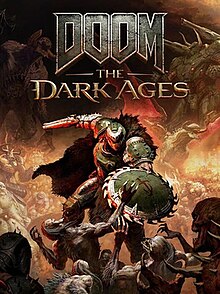
 Doom: The Dark Ages on Xbox Series X/S
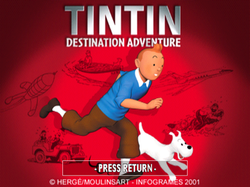
 Tintin: Destination Adventure on PlayStation
 One Piece Grand Adventure on PS2
 Taiko no Tatsujin: Dokodon! Mystery Adventure on Switch
 Onimusha: Dawn of Dreams on PS2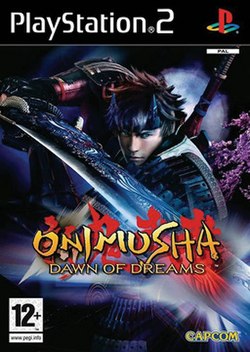










 Another SquareThought Site