

 Oct 2015
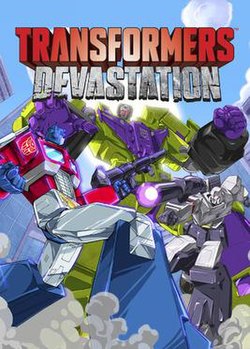

When I first laid eyes on Transformers: Devastation I felt a curious collision of eras - a modern PlatinumGames action engine grafted to the chrome-plated bones of the 1980s Generation One cartoon. This review comes with the straight-backed seriousness of a 1990s print desk, the sort of voice that once judged pixels by the quality of their dithering and a game's worth by how many times you returned to it after the review embargo lifted. Devastation is, by design and temperament, a nostalgia-fuelled slugfest. It is not trying to be an open-world behemoth; it is a hard-charging, linear brawler that wears its influences proudly, offering a compact, intense experience more in line with an arcade cassette you blow on before inserting than with the sprawling CD-ROM epics that would arrive later. If you expect grinding RPG systems, sprawling exposition, or a sandbox to lose days in, this is not your tapedeck. If you want to turn into a truck and pulverize a horde of Decepticons with a combo string that feels like it was tuned by a man with a wrench and an amphetamine, well, pull up a lawn chair and read on.
PlatinumGames took the developer's handbook on fast, responsive combat and rewrote a few pages in blocky primary colours. Players control one of five Autobots - Optimus Prime, Bumblebee, Sideswipe, Wheeljack, and Grimlock - each with a distinct playstyle, a stable of melee attacks, ranged weapons, and the cherished ability to transform into vehicle mode at will. Transformation is not mere window dressing; it serves as a dodge, a reposition tool, and occasionally a way to mow through background scenery for credits and pickups. The game's combat owes as much to Bayonetta as it does to Saturday morning cartoons. Dodging at the last possible instant triggers Focus, a slow-motion reprieve that permits furious counters and the sort of button choreography that will make your thumbs proud or sore depending on how cleanly you execute it. Missions are organized across seven chapters, each chapter split into multiple missions and optional side-missions. There are no sprawling side activities pretending to be content; instead the optional tasks are small, often combat-focused excursions that reward thoroughness with credits, new weapons, or collectible concept art. Progress is judged per mission by a rank, an old-school metric that will have you replaying stages until you can squeak out an S-rank like a perfectionist with a vendetta. The currency system is straightforward: credits and salvaged weapons that you may synthesize into stronger arms or forge into passive T.E.C.H. upgrades. This simplicity is deliberate. Devastation is about moments of combat - clearing rooms, taking on swarms, facing combiners - not managing menus for hours. There is a satisfying escalation to the encounters. Basic Decepticons fill the streets and rooftops; set-piece fights with Constructicons, Stunticons and other heavy hitters morph into encounters with combiners like Devastator and Menasor. Boss battles are big, sometimes unwieldy, and occasionally guilty of the same problems that plague big robot fights on a small camera: the contest reduces at times to learned patterns and patiently chipping at enormous health bars. The game ships with multiple difficulty levels and unlocks higher tiers on subsequent clears, which extends the life for completionists but cannot entirely conceal the fact that Devastation is brisk. The main campaign can be dispatched in a handful of sittings, and critics at the time were unanimous: the combat is sublime, but the overall length is disappointingly short. Challenge Mode pads the offering with fifty standalone missions that let you hone combos, face waves, and practice against boss variants. It also extends longevity for those who delight in perfecting a playstyle or wringing every last upgrade out of their favourite Autobot. The progression loop is tidy: earn credits, buy or forge better weapons, tweak T.E.C.H. for passive boosts, then take your shiny murder-robots back into the fray. There is a comfort here that a 1990s reviewer might call addictive in the best arcade sense - you want to see if your next run will shave a second here, land that extra Overdrive on a boss, or crack open one more chest of secret loot.
Visually, Devastation makes a statement: it wants to look like the cartoon you loved while simultaneously reminding you that it lives in a modern polygonal world. The art direction borrows heavily from the original animated series, aided immeasurably by the return of several Generation One voice actors, including Peter Cullen as Optimus Prime and Frank Welker as Megatron and Soundwave. Models are stylized, edged with cel-shaded outlines and bright, saturated colours that favor silhouette and recognisability over photorealism. The result is a game that reads animated in motion - lasers, explosions, and metallic debris pop off the screen with final-boss intensity. Technical craft is solid on PlayStation 3. Frames remain largely stable, the animations are explosive and weighty, and each Autobot feels satisfyingly massive without becoming floaty. There are moments, especially in crowded scenes or during the most sumptuous explosion sequences, where the camera can falter. Contemporary reviews rightly noted that the camera system is sometimes a mess; in cramped urban canyons or when facing a combiner with many limbs, the camera's desire to show everything can result in angles that show nothing useful. It is forgivable when the combat is this good, but it is not invisible and will frustrate the precise player. Audio work complements the visuals nicely. Vince DiCola and Kenny Meriedeth contribute original cues that nod to the movie and the series with triumphant brass and synth textures. The voice acting is a joy - authentic, warm, and often genuinely funny in that wry mechanical way that the franchise perfected. Hearing the original cast return lends the whole production an authenticity that the liveness of the animations alone could not achieve. The package is clearly a labour of fan love, and the presentation sells that devotion with unapologetic charm.
Transformers: Devastation is a paradox neatly wrapped in primary colours. It is both a love letter and a scalpel: PlatinumGames carved away everything that did not contribute to the visceral joy of robot combat and left behind a tightly focused, sometimes brief, and frequently brilliant core. Fans of Generation One will be pleased to find the aesthetic and voice cast handled with reverence. Combat lovers will appreciate the game's swift, rewarding systems that favor timing and risk - the kind of gameplay loop that in the 1990s would have earned a place of honour in any arcade hall of fame. Nevertheless, it is also a game that will prove divisive. Its brevity and a tendency toward repetition mean only the most ardent nostalgics or action aficionados will forgive the shortcuts. The camera is imperfect, the boss fights occasionally devolve into long health bars, and once the main campaign ends there is a sense of wanting more. That said, when Devastation hits, it lands with the satisfying thunk of a metal fist into a villain's jaw. For a PlayStation 3 owner who has kept a soft spot for cartoon robots or who longs for an action game that prioritises pure combat over systems bloat, this is an easy recommendation. It may not be the Transformer to end all Transformers, but it is the one that makes you grin like a kid opening a holiday present - even if that present runs a little short. Score: 8 out of 10.
 Transformers: Rise of the Dark Spark on PS3
 Transformers: War for Cybertron on PS3
 PlayStation Home on PS3
 Ōkami on PS2
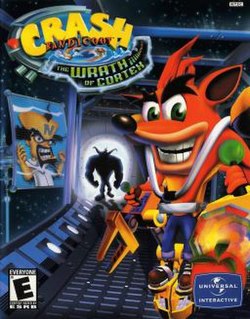
 Crash Bandicoot: The Wrath of Cortex on PS2
 Persona 5 on PS3
 Bayonetta 2 on Switch
 Bayonetta on PS3
 Ninja Gaiden 4 on PS5
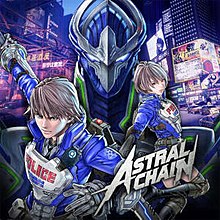
 Astral Chain on Switch
 Ninja Gaiden 4 on Xbox Series X/S










 Another SquareThought Site