

 Aug 2025
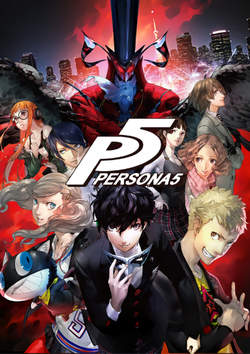

Persona 5 on PS3 is the kind of game that dresses like a slick heist movie and smells faintly of school cafeteria curry. You play as the silent protagonist codenamed Joker, a teenager on a year-long probation who moves to Tokyo, starts attending Shujin Academy, and promptly joins a squad of stylish vigilantes called the Phantom Thieves of Hearts. Underneath the leather jackets and dramatic jazz, Persona 5 is a story about freedom - escaping the cages people and systems build around you - and it tells that story through a parade of adults who act like villains and teens who act like the only ones brave enough to call them out. The game blends a daily life simulator with dungeon-crawling inside the Metaverse, a surreal manifestation of distorted desires. But what turns Persona 5 from 'very good' into 'memorable' is its characters: every member of the Phantom Thieves, their antagonists, and the supporting cast are written with arcs that ripple through you long after you close the PS3 cover and pretend you were only going to play for "one hour."
Persona 5's gameplay is a two-headed beast: outside the Metaverse you live the life of a high schooler (classes, part-time jobs, ramen runs, and Confidants), and inside Palaces and Mementos you break into people's twisted minds and steal metaphoric Treasures. That structure isn't just clever design; it underpins character growth. Stats you raise in the real world (Knowledge, Guts, Charm, Proficiency, Kindness) are literal keys to progressing relationships and unlocking new persona fusions-mechanics that are narratively woven into each character's development. Joker is the conduit. Silent protagonists can be boring, but Persona 5 gives Joker agency through choice and leadership. His arc isn't about "finding himself" in the melodramatic sense; it's about choosing responsibility. Framed and on probation, Joker's decision to don the mask and lead the Phantom Thieves is an act of rebellion that feels earned because the gameplay forces you to balance the mundane with the extraordinary. You can't just grind Palaces forever; school, friends, and deadlines pull you back to reality, mirroring how these teens stay tethered to normal life while challenging corrupt adults. Ryuji Sakamoto is textbook anger turned into action. He begins as a hot-headed delinquent, written off by authorities and labeled a troublemaker after being provoked by Kamoshida. His persona awakening and subsequent arc from resentment to purpose are propelled by combat encounters and palace infiltration: the gameplay gives him moments to shine as a frontline bruiser, but also scenes to wrestle with culpability and loyalty in Confidant conversations. The moment he becomes an actual teammate in the Metaverse is mechanically satisfying and emotionally cathartic. Ann Takamaki's arc is probably the most direct collision between narrative and mechanics. Her Palace emerges from sexual exploitation and shame inflicted by an adult figure; when you navigate that Palace and confront the Treasure, the stakes are visceral. In battle, Ann's persona Carmen and later Hecate are devastatingly effective as fire- and charm-based attackers, but more important is how her Confidant progression ties into agency: as you invest time into Ann, you get combat perks, yes, but you also shepherd her from isolation and objectification into someone reclaiming her identity. Morgana, the mysterious cat-like guide, occupies the dual role of comic relief and existential puzzle. His insistence on being a human-like thief drives a subplot of self-discovery: turns out Morgana was crafted in the Velvet Room to shepherd Joker. Gameplay rewards you for listening to Morgana-he's your stealth tutor and his tips on Palace navigation and 'Third Eye' use save lives and progress. His arc peaks when his origin is revealed, and the reveal lands precisely because Morgana has been mechanically useful throughout-he's not just a plot device. Yusuke Kitagawa, the art prodigy, brings a quieter, aesthetic tension. His Palace and later revelations about Madarame show a student betrayed by a mentor. Yusuke's combat tends toward precision rather than brute force, and his Confidant reflects an artist's journey: fuse the right personas into him and he learns new techniques that mirror his internal growth from imitation to authentic expression. Makoto Niijima's arc is one of the better-executed reversals. The student council president starts out as someone whose values align with institutional law and order. Gameplay teases her duality-her initial persona, Johanna, is stoic and judgmental. As you build her Confidant and use her in combat (she's a tactical powerhouse who buffs and controls), her slowly cracking exterior reveals a yearning to act beyond rules to protect the vulnerable. The fusion of mechanics (support abilities that change combat flow) with narrative (her wrestling with corruption and responsibility) sells her growth. Futaba Sakura's walk from hikikomori to hacker genius is where the game leans on empathy. She starts in a literal bedroom Palace-an internalized prison-and you have to coax her back into the light. Unlocking her Confidant ranks gives major gameplay advantages (overworld traversal shortcuts, sophisticated hacking), and the payoff is huge: she becomes the party's navigator in dungeons and the emotional anchor behind the Thieves' tech. Her arc is a study in trauma and gradual reintegration, made credible because the game makes you do the small, patient tasks that rebuild her trust. Haru Okumura's rebellion against a controlling patriarch is woven into both social and combat systems: she starts as a late-game addition who blends corporate guilt with personal revolt. In combat she brings unique grenade-like mechanics and floral-themed power, representing her transition from a pampered heiress to someone willing to swing an axe-not just a metaphorical one. Then there's Goro Akechi, which I will warn you to handle gently if you haven't played it: he's the delicious narrative twist that recontextualizes a chunk of the game's events. Akechi's detective persona is a brilliant duality-publicly charming, privately tangled in revenge and manipulation. The design of his Confidant and the way his abilities mirror his charismatic public facade before his reveal are admirable. The betrayal lands because the game invests time in making you want to trust him. The adult antagonists (Kamoshida, Madarame, Kaneshiro, Shido) are not one-note; they're constructed as distorted mirrors of the Thieves. Their Palaces are environments that make their vices literal, and the gameplay-pushing through their themed puzzles and fighting their Shadow selves-gives you a visceral sense of dismantling a corrupt worldview. The final boss beats (Yaldabaoth, and in Royal, Maruki) are not just battles but thematic endpoints: you are literally fighting a god of control born from humanity's wish to be rid of pain. That fight is the mechanical culmination of the game's central thesis about freedom. Persona fusion-performed in the Velvet Room-isn't just a menu. The 'Guillotine' fusion and the gruesome aesthetics (hanging, electric chair, solitary confinement) reflect the picaresque and capital-punishment themes that inspired the developers. The intimate connection between which personas you create, which skills you inherit, and how the party performs in key Palaces makes every Confidant investment feel consequential. The negotiation system (convincing Shadows to join you) and Hold Up mechanics reward strategy and feed into the narrative concept of persuasion vs. force. If you're looking for a pure action RPG, this is not that. Persona 5 demands time. It rewards patience. It uses its systems to make you care about people who start as archetypes and end as people worth stealing a heart for.
Persona 5 on PS3 pushes a bold, stylized aesthetic that reads like a neon-soaked comic book adapted by a fashion designer on a caffeine bender. The UI is famously aggressive-lots of dynamic, kinetic motion and a red/black/white palette that screams "mood." That isn't superficial; the UI and art direction convey attitude: the world is tense and urgent. Character models use two tiers-high-detail models for cutscenes and leaner models for gameplay-so the PS3 handles the burden well even if you occasionally notice polygonal frugality in crowded scenes. The Palaces are the real visual feast: each Palace is a caricature of its owner's distorted cognition (a castle for a pervert coach, an art gallery for an exploitative artist, a casino for a greedy mobster), and translating those metaphors into playable spaces is one of the team's biggest wins. The cel-shader work, led by Masayoshi Suto and Shigenori Soejima's designs, turns mythic Personas into unforgettable silhouettes-Arsène, Arsène's cloak, and ultimate Personas like Satanael look like they belong on a poster for a rebellious opera. Production I.G's animated sequences are excellent, especially the opening by Sayo Yamamoto; hand-drawn blue flame effects and fluid character animation elevate key moments. On PS3 you'll see compromises compared to modern current-gen ports, but the direction and composition are so strong that technical limitations rarely harm the experience. The soundtrack by Shoji Meguro? An audible character in its own right-acid jazz, horns, and rap that fit the game's perpetual feeling of being on the verge of something dramatic. If you value style as much as substance, Persona 5 delivers a visual identity that few games match.
Persona 5 on PS3 is an audacious blend of style and substance. It is long, occasionally demanding (prepare for a year's worth of in-game schooling and a month's worth of actual playtime), and not shy about making you do homework before the cool stuff happens. But this homework is character-building- literally and figuratively. The game uses its social-sim systems, dungeon design, and persona mechanics to tell layered stories about agency, the cruelty of adults who hide behind systems, and the messy, beautiful process of refusing to be boxed in. Its characters are where Persona 5 truly shines. Each Phantom Thief arrives as a type and leaves as a person; their Confidant arcs are meaningful because the gameplay ties rewards to empathy. The villains are grotesque distortions of adult failings, and the final confrontations force you to ask whether your vigilante justice is righteous or reckless. Persona 5 dares you to be uncomfortable and hopeful in the same breath. If you own a PS3 and the idea of a stylish, slow-burn RPG that asks you to invest in people rather than just levels appeals to you, Persona 5 is a heist you should join. It's audacious, occasionally flawed in localization, but ultimately one of those rare games where the cast takes up residence in your brain. Put on the mask, steal some hearts, and for goodness' sake, do your homework between palaces.
 Persona 4: Arena on PS3
 Persona 5 Tactica on Xbox Series X/S
 Combat Elite: WWII Paratroopers on PS2
 Predecessor on PS4
 The Banner Saga 2 on PS4
 Arcania: The Complete Tale on PS3
 Persona 3 Reload on PS5










 Another SquareThought Site