

 Jun 2010
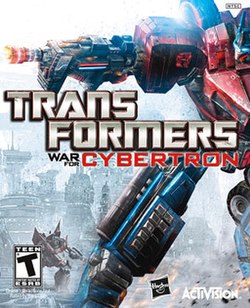

There was a time - not so long ago, in the life of a seasoned games columnist - when licensed properties meant one thing: hasty tie-ins that smelled faintly of corporate meetings and polyester. Transformers: War for Cybertron arrives not to erase that history, but to remind us that licensed games can be legitimate, loud, and even rather clever. High Moon Studios has taken Hasbro's armor and given it both weight and bite, setting the action on Cybertron in a civil war that predates Earth's involvement and, crucially, predates Michael Bay's lens flare obsession. I approached War for Cybertron with the guarded optimism of someone who remembers both the golden era of shmups and the sorrowful era of shovelware. What the studio has produced is roughly ten hours of single-player narrative split between two intertwined campaigns - Decepticon then Autobot - plus a surprisingly robust online suite. The experience feels like a childhood Saturday morning cartoon filmed through the lens of mid-era third-person shooters: chunky weapons, stoic leaders, screaming jets, and the occasional planet-sized moral dilemma involving a substance called Dark Energon. With Peter Cullen bringing gravitas to Optimus Prime and a soundtrack that occasionally reminds you that this is, at heart, a melodramatic soap opera for robots, War for Cybertron is an earnest attempt to make Transformers feel like a grown-up action game while still allowing you to turn into a tank and run people over for sport.
Mechanically, War for Cybertron does something that every modern shooter strives for: it gives you an identity and lets the rules of that identity shape your choices. Transformers are divided into four classes - Leader, Soldier, Scientist, and Scout - and each character is tuned to that role. Leaders are the hulking, slow-moving tanks of the group; Scouts are nimble, fast, and built for reconnaissance; Scientists are support-focused and uncanny at gadgetry; Soldiers sit in the middle with balanced weaponry and survivability. You switch between robot and vehicle forms on the fly, and the design decision to have vehicle modes hover rather than rely solely on wheels is a small but meaningful touch: it preserves strafing and mobility while keeping the spirit of 'car mode.' The trade-off is that vehicle form tends to feel like a sprint rather than a wholly different set of tactics, but when you ram a Decepticon into a wall the moment is splendid and unapologetic. Campaign structure is straightforward: five chapters per faction, with the Decepticon narrative placing the initial pieces on the board and the Autobot story following to clean up (or complicate) the mess. Each mission offers a choice of three playable characters, and the game is cooperative-capable online for up to three players. The friendly AI fills in gaps if your neighbours are off doing other important things (like buying snacks), and High Moon wisely polished the AI so your buddies help you without solving puzzles for you. That keeps cooperative play satisfying: you're aided, not babysat. Combat feels like a marriage of Gears-style cover shooting and the more vertical, movement-centric shooters of the era. The transformation mechanic isn't just window dressing - it is leveraged in level design so you can leap into vehicle mode for traversal, then snap back to robot mode to gun down foes in the corridors. Weapon pickup adheres to first-person shooter conventions: you find guns, you swap guns, you curse when you drop the perfectly tuned plasma rifle for a glorified shotgun. Some missions push the idea of scale in interesting ways - Cybertron is built to make you feel suitably small (or suitably enormous, depending on your chassis) - and the game occasionally revels in set-pieces: orbital skirmishes, prison-break stealth, and a climactic sequence involving a planet's core that takes itself rather seriously. Multiplayer is where War for Cybertron aims to stick its flag. Rather than crate a vanilla modes list, High Moon assembled a palette of match types that borrow from the best of online shooters. You get Deathmatch and Team Deathmatch, Conquest-style control-point battles, Countdown to Extinction (an objective-planting mode reminiscent of Assault in Halo), Power Struggle (king of the hill), and the oddly charming Code of Power, which revolves around short rounds and a contested giant melee weapon. The Escalation mode is the game's Horde - waves of enemies, purchasable upgrades using credits you earn in-match, and the chance to play campaign characters in a survival setting. The customization suite for multiplayer is competent: pick a chassis, choose a vehicle form, tint the colors, and slot abilities and perks. There is an XP-driven progression system with unlocks that will be familiar to anyone who played shooters in the late 2000s. Where the design creaks is in resource scarcity and checkpoint placement. Several reviewers pointed out that ammo becomes scarce at inopportune times, and the checkpoint system occasionally plops you back into a meatgrinder rather than giving you a breather. Those moments feel less like a challenge and more like a sudden tug on your patience. The level variety can also lean toward sameness; Cybertron's metallic aesthetic is evocative, but it doesn't always translate to environmental diversity. That said, the game compensates with personality: characters are redesigned in new, interesting ways that respect the license, and the voice work elevates much of the script from rote to memorable. Moments of melodrama, especially those delivered by Peter Cullen, land precisely because Cullen treats the lines as if they mattered. For fans of the property, and for players who like their action with a dose of mythic weight, the campaign is satisfying.
If you owned a magazine in 1995 you might describe War for Cybertron's visuals as 'polished industrialism.' The game runs on Unreal Engine 3 and makes good use of the middleware; textures are sharp where they need to be, and the transformation animations are, in a word, delightful. Watching a Transformer unspool into a jet or compress into an assault vehicle is handled with a kinetic attention to detail that gives weight to what could have been a simple button press. The models are heroic and the character redesigns - influenced by Generation 1 but distinctly modernized - are inventive and often inspiring. On the flip side, the environmental palette is a steady diet of greys, brass, and steel. Critics were unanimous enough on this point to consider it the game's largest aesthetic weakness: Cybertron looks suitably alien and mechanical, but too many missions take place in corridors and factories that beg for more visual variety. This isn't a technical failing so much as an artistic choice that, over the course of ten hours, can wear on the eye. Lighting and scale do a lot of the heavy lifting; when the game lets you see the planetary scale - vast spires, titanic machinery - it creates genuine awe. Particle effects and explosions are serviceable; Havok physics add satisfying weight to debris and bodies. Frame-rate holds reasonably well on PS3, though some hectic multiplayer matches can feel a touch crowded. Sound design and score deserve a separate nod. Composer Tyler Bates supplies a muscular soundtrack that sits comfortably under the game's cinematic impulses, and the inclusion of Stan Bush's 'Till All Are One' for the ending is a wink that most franchise fans will appreciate. The voice cast is uniformly strong: Peter Cullen is, as ever, the anchor, while the supporting players - including Fred Tatasciore, Steven Blum, and Johnny Yong Bosch - fill the world with distinct personalities. Gunfire, transformation noises, and the clank of a robotic fist on metal are all mixed with care. Put simply, the audio convinces you you're stomping through a planet made of gears.
Transformers: War for Cybertron is not the kind of game that reinvents the wheel. It doesn't need to. What High Moon Studios delivers is a competent, occasionally brilliant licensed shooter that understands the core pleasures of both the robot mythos and the third-person action genre. The transformation mechanic is more than clever doodadry; it's woven into combat and level design in a way that creates moments of genuine joy. There are rough edges. Cybertron's visual monotony, ammo placement frustrations, and checkpoint quirks prevent the game from hitting the rarified air of 'classic.' Multiplayer, while strong in design, suffered in practice from dwindling online populations after launch - a disheartening reality for anyone who bought the game for its online longevity. The downloadable character and map packs add value, but asking players to wrangle friends into private matches to enjoy them feels like asking someone to organize a LAN party in 2010 - doable, but not ideal. If you love Transformers and you want a shooter that treats the license with respect, this is the best adaptation the property had seen to that point. If you are chasing pure innovation, you might find War for Cybertron to be comfortably familiar rather than groundbreaking. For a PlayStation 3 audience in 2010, it was a welcome, thunderous step in the right direction. Recommended for fans and curious shooters alike: put on your flight servo, pick a class, and go make some very large enemies very small.
 Transformers: Fall of Cybertron on PS3
 Transformers: Dark of the Moon on PS3
 PixelJunk Shooter 2 on PS3
 Tom Clancy's Rainbow Six: Vegas on PS3
 Crimson Sea 2 on PS2
 Tower of Guns on PS3
 Deadpool on PS4










 Another SquareThought Site