

 Aug 2025
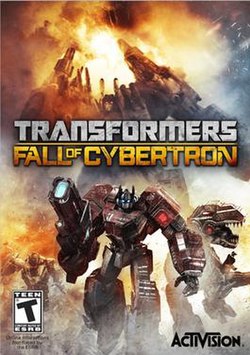

Transformers: Fall of Cybertron arrives like a heavy metal opera performed by giant robots - lots of spectacle, big emotional beats, and more angular jawlines than a comic-book artist on espresso. Developed by High Moon Studios for PlayStation 3 (with the PC build handled by Mercenary Technology), the game is a direct continuation of War for Cybertron and leans hard into cinematic set pieces and franchise fan service. Under the hood it runs on Unreal Engine 3 and uses the Havok physics middleware; you can feel both of those choices in how models, animations and collisions are composed and presented. Critics generally liked it (the PS3 build averages roughly a 77/100 on Metacritic), and if you want a technically minded rundown of what makes the PS3 version tick - and where it stumbles - keep reading. I'll attempt to be merciful to your attention span, but not to the Decepticons.
Fall of Cybertron is a third-person shooter that maintains the series' core gimmick: every playable character has both a robot and a vehicle form. The transformation system is one of the game's technical signatures - it's more than a flashy cinematic trick. Animators and riggers had to design skeletons and animation blends capable of swapping entire locomotion sets, collision bounds, and gameplay inputs mid-battle. On PS3 this is a nontrivial engineering problem: switching from bipedal aiming and strafing to vehicle physics requires rapid changes to movement controllers, different friction profiles, and different hitbox geometries without introducing jarring discontinuities for the player. High Moon mostly nails the transitions, with transformation animations that are satisfyingly tactile and mechanically meaningful (you can feel the difference in maneuverability and hitboxes), but the workload they impose becomes visible in moments of intense action. The health model sidesteps a pure-hitpoint system and uses a two-tier defensive stack: a regenerating shield that soaks damage quickly and a secondary health resource that is replenished only by pickups. This is functionally similar to the shield/health hybrids seen in shooters that favor moment-to-moment aggression without demanding constant medkit scavenging. On the systems side, that requires managing timers for shield recharge, weighted damage distribution between shield and health, and clean HUD feedback so players can parse incoming damage sources while piloting a skyscraper-sized robot. Weapons and upgrades are another place where Fall of Cybertron aims to be granular: weapons can be upgraded at Teletran 1 kiosks scattered through levels, and designers intentionally made upgrades feel massive rather than incremental (one upgrade can increase firing rate by as much as 75%). From a systems perspective that choice simplifies balancing (fewer upgrade tiers) but raises stakes for encounter design: the same enemy set must remain challenging both before and after a major weapon buff. The game balances this by ramping enemy composition and throwing heavier units into later encounters. Character-specific abilities shape level design. Jazz gets a grappling hook that extends traversal possibilities and forces level designers to provide vertical navigation windows; Grimlock uses a Rage mechanic that gates his transformation into a T. rex and changes the control schema (he's essentially a melee-focused archetype with limited ranged options); the Combaticons can combine into Bruticus, which is implemented as bespoke sections that account for Bruticus' enormous scale. Designing zones that accommodate both standard players and occasional Gordian-knot-sized entities required maintaining scale fidelity: when you climb Bruticus, the camera, collision volumes, audio occlusion and LOD all need to scale up. Metroplex, a city-sized Autobot titan, is another example where scale stresses engine systems. Metroplex sequences cleverly use set dressing and cinematics to sell size, but Metroplex's usage in gameplay arguably feels under-exploited compared to the narrative breath he gets. A controversial design decision was removing the cooperative campaign from the previous game in favor of single-player levels optimized around unique characters. That's a trade-off the studio made for pacing and scripted spectacle. The absence of co-op simplifies state management (no need to sync transforms, pickups and upgrade states across networked players for campaign missions) but removes an emergent gameplay mode that some players treasured. Multiplayer is composed of two main pillars: Escalation (a survival mode) and competitive multiplayer with deep customization. Escalation returns from War for Cybertron and is essentially a wave-based survival mode where you defend choke points, unlock new map sections over time, and gain access to superior gear as waves progress. The competitive side uses an unlock-and-purchase economy with hundreds of cosmetic and component parts (heads, torsos, legs, arms) to create unique Autobots/Decepticons. Players can buy parts with in-game ranks or microtransactions - the latter persisted on PS3 and was a live-service layer that allowed skipping grind. From an engineering standpoint that system demands a robust cosmetics pipeline, secure inventory handling, and consistent LOD variants so custom avatars render correctly at all ranges. On the network and live-service angle: Fall of Cybertron launched with DLC packs (Multiplayer Havoc Pack, Dinobot Destructor Pack, Massive Fury Pack) and preorder skins that bolstered the customization economy. Sadly for modern players, Activision discontinued online support and shut down multiplayer servers by 2020, which removes the online components and microtransaction pathways. The single-player still runs fine locally on PS3, but the community fragility of online-dependent features is a lesson in design longevity.
Visually, Fall of Cybertron is an unapologetic showcase for Unreal Engine 3's strengths: dense character models, detailed transformation animations, and crisp particle effects during energy weapon exchanges. High Moon leaned into moving parts and idle animations (little mechanical 'breathing' and subsystem articulation) to give characters a sense of life even when static. On PS3, visual fidelity choices are a classic console tradeoff: to maintain texture resolution and model complexity, the game uses LOD switches and aggressive occlusion culling, but reviewers and some players noticed frame rate drops during heavy action sequences. Those frame dips were most noticeable in encounters that combine dense particle FX (explosions, energy beams), multiple large characters on-screen, dynamic shadows and physics interactions. The PlayStation 3's limited CPU cores and memory bandwidth are likely the bottleneck here: Unreal Engine 3 games on last-gen consoles had to balance draw calls, shader complexity, and per-frame CPU overhead for animation blending and AI. When the game leans into spectacle - Bruticus combining, Metroplex sequences, or crowded firefights - the renderer and animation systems struggle to keep the steady 30 fps target. IGN called them 'occasional hiccups,' while Giant Bomb flagged the issue more heavily. In practice the dips don't break gameplay, but they do blunt the sensation of power during otherwise exciting moments. Design-wise there are wins: transformations feel weighty because of careful animation blending and camera framing; weapon effects are satisfying, and the color palettes (burnt, metallic Cybertronian grays offset by Energon blue/orange) help readability during chaotic fights. Where the game falters is in environmental variety and streaming: some levels are sprawling, and texture streaming can occasionally cause pop-in on distant props on PS3 if you spin the camera quickly. Overall, the game looks great for a UE3 title on last-gen hardware, but it's mechanically obvious when the engine is being asked to render twelve things at once.
Transformers: Fall of Cybertron is a mechanically ambitious sequel that prioritizes spectacle, character-driven set pieces, and fan-first casting and audio design. High Moon Studios used Unreal Engine 3 and Havok in competent ways: transformation animation systems, weapon-upgrade balancing, and large-scale entities like Bruticus and Metroplex demonstrate an attention to technical detail. The PS3 build shows both the benefits and limits of that ambition - gorgeous models and satisfying transformations, peppered with frame-rate wobbles during the most bombastic moments. The removal of campaign co-op is a design trade that makes sense on a production level but will sting longtime fans; likewise, microtransactions and DLC supported the multiplayer economy but created a dependency on online services that ended when Activision shut servers down in 2020. If you still have a PS3 and a soft spot for robots that turn into things, the single-player campaign is a well-crafted, often thrilling ride through a dying world. Technically curious players will enjoy dissecting how transformations, animation blending, and scale were implemented on constrained hardware. For multiplayer nostalgia hunters, be warned the online elements are no longer supported. Scoring it for the PS3 package (visuals, technical ambition, audio, and the occasional performance roughness), I land on an 8/10: a robust, mechanically interesting package that trips at times under its own scale - but usually gets back up, transforms, and leaves you wanting to pilot something enormous into a boss fight.
 Transformers: Rise of the Dark Spark on PS3
 Transformers: Dark of the Moon on PS3
 PixelJunk Shooter 2 on PS3
 Tom Clancy's Rainbow Six: Vegas on PS3
 Crimson Sea 2 on PS2
 Tower of Guns on PS3
 Deadpool on PS4










 Another SquareThought Site