

 Dec 2016
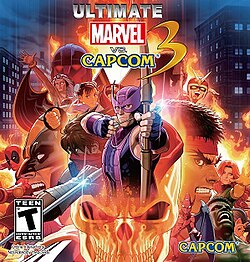

Ultimate Marvel vs. Capcom 3 (UMvC3) is the sort of fighting game that looks like a Saturday morning cartoon having an epileptic seizure - colorful, loud, and full of characters punching each other into orbit. The PS4 re-release brings the chaos to 1080p at 60fps and bundles the DLC roster, meaning you get all the heroes, villains, and raccoons in one tidy package. Underneath the flash, UMvC3 is a deliciously hard game of resource management, timing, and split-second decisions. If you like your challenges with a side of spectacle, this is your midnight snack.
UMvC3 presents itself as a pick-any-three, win-with-one-or-all-of-them fighter. That simplicity - choose a team of three and tag in and out - is a lovely trick. The controls are deceptively straightforward: three attack buttons (light, medium, heavy), an exchange button for air juggling, assists, specials and hyper combos. From a distance, it looks simple enough to learn; from about five minutes in, it looks like someone swapped your controller for a bag of live eels. The core challenge in UMvC3 is threefold: execution, decision-making, and team construction. Execution is obvious - hit confirms, long air combos and hyper combo finishers demand timing and muscle memory. The exchange mechanic lets you extend air combos by swapping characters mid-juggle; in Ultimate this is more tactical because exchanges can either burn your opponent's hyper meter, give you meter, or simply add damage. Knowing which option to pick in the heat of a combo is a skill in itself: are you converting for damage now, or hoarding meter to shut down an opponent later? That split-second call will determine whether you win a round or end up watching your character explode in spectacular style. Decision-making is constant and brutal. UMvC3's battles are hectic and fast, and a match can change with one well-placed X-Factor activation. X-Factor grants damage, speed and health regeneration for a short time and was adjusted in Ultimate to be more balanced - it's now usable in the air, and its boosts vary per character. That change opens up new tactical windows (air X-Factor comeback plays are real) but also creates a psychological minefield. Do you blow your X-Factor to convert a touch into a kill? Do you save it to anchor a last-ditch comeback? Getting comfortable with X-Factor timings and the meta around how opponents use it separates new players from the competent. Team construction is a strategy exam with cosplay. You must think about point characters (fast, good neutral), batteries (meter builders), anchors (strong last characters), and assists that create space or extend combos. The roster of 48 characters - including the 12 new additions in Ultimate - makes for endless experimentation. Complementing kits is essential: pairing heavy-hitting point characters with assists that lock down the opponent, or choosing an assist that allows for unblockable setups, is the kind of planning that elevates a team from gimmicky to tournament-ready. The game rewards creativity: Rocket Raccoon plays nothing like Wolverine; Vergil is a different beast again. That breadth adds longevity but also learning curves - you must learn more than one character to fend off popular, optimized teams. Neutral game and mind games are intense. UMvC3's neutral isn't about slow baiting and footsies like some one-on-one fighters; it's about space control with projectiles, using assists as extensions of your point character, and forcing the opponent into bad positions. You will learn to respect an incoming projectile, and you'll learn to fear assist calls that suddenly change which direction the round is trending. Mix-ups are relentless: high/low, cross-ups, unblockable setups and incoming character mixups make defense a skill almost as important as offense. Blocking is more of a temporary truce than a strategy - good players will force guesses. Defense in UMvC3 is not meek. Properly timed DHCs (Delayed Hyper Combos), push-blocks, and flawless exchange reads can reverse momentum. Teching throws and air recovery reads are small, crucial skills that feel personal when you fail. Training Mode and Mission Mode are great places to grind this stuff - Mission Mode includes trials for each character that teach bread-and-butter combos, confirms, and movement options. If you want to get good, be prepared to spend hours repeating the same sequence until your thumbs consider unionizing. Online is improved over the original thanks to optimized netcode and a spectator mode that lets friends watch and learn. The PS4 release brings the whole package to modern hardware and includes all previously released DLC, so the competitive ecosystem feels complete. The community aspect matters because UMvC3 is a game built for playstyles evolving through human competition. Watching higher-level matches will teach you frame traps, reset timings and the art of meter calculus faster than any tutorial. Finally, the learning curve is steep but fair. UMvC3 does not hide the tools you need - it hands them to you and then slaps you upside the head when you misuse them. Beginners will find the initial chaos punishing, but players who enjoy studying systems, building teams and polishing execution will find a well of depth that keeps giving.
UMvC3 looks like a glossy comic book. The PS4 re-release runs at 1080p/60fps which sharpens the art and makes the lightning-fast action easier to read - a meaningful advantage when split-second inputs matter. The HUD was redesigned in Ultimate to make the active character and X-Factor status more prominent, and that user interface polish helps reduce confusion during multi-character brawls. Stages are loud and detailed, and character sprites/3D models have personality; most new characters received animation tweaks and balance adjustments to fit the game's frantic flow. It isn't the pinnacle of next-gen visuals, but the clarity and responsiveness are precisely what a serious fighting game needs.
Ultimate Marvel vs. Capcom 3 on PS4 is an excellent sandbox for players who crave aggressive, resource-driven fighting game challenges. The surface is showy: big combos, louder-than-life special moves, and a massive roster. The substrate is demanding: execution-heavy combos, meter and X-Factor management, tight team construction and relentless mix-ups. If you want a calm, tutorial-led experience, this isn't it. If you want to develop muscle memory, learn to read opponents, and experience the rewarding chaos of converting a perfectly timed air exchange into a three-character annihilation, UMvC3 is glorious. It can be unforgiving, it requires dedication, and it will make you feel both terrible and godlike in the same session. For players willing to grind, study, and laugh at their own repeated mistakes, this is one of the most satisfying fighters of its era.
 Warriors Orochi 3 Ultimate on PS3
 Monster Hunter Generations Ultimate on Switch
 Ultraman Fighting Evolution on PlayStation
 ACA Neo Geo: Art of Fighting 2 on Xbox One
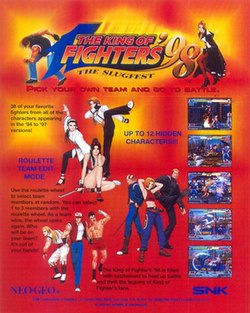
 ACA Neo Geo: The King of Fighters '98 on Xbox One
 Touhou Hyoibana: Antinomy of Common Flowers on Switch










 Another SquareThought Site