

 Aug 2018
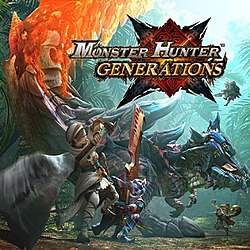

Monster Hunter Generations Ultimate is the Switch-sized, HD-buffed party version of a game that has always been more about stomping kaiju faces than stageing Shakespearean deathbeds. Capcom took the celebratory spirit of Monster Hunter X/Generations and stretched it out into Generations Ultimate (the international port of XX on Switch), stuffing it with more hunting toys, flashier attacks, and a cat mode you absolutely deserve. If you think a Monster Hunter review can't talk about characters and arcs, you're in for a treat: this game doesn't tell linear stories with cutscenes and tragic monologues, it makes characters out of mechanics. Weapons, styles, villages, and monsters are all protagonists in their own long-form arcs, and Generations Ultimate is smugly proud of it. Over hundreds of hours you witness development, conflict and catharsis - only with more scales, explosions, and the occasional sentient cat (a Felyne) stealing your loot and your heart. This review approaches Generations Ultimate like a theater critic who forgot their clipboard and brought a Great Sword instead.
Let's meet the cast. The Hunter: blank-slate protagonist archetype. Outwardly, you're an empty vessel meant for armour and opinions; inwardly, you're a slow-burning epic of competence. Your arc is painfully simple and deliciously addictive: start as 'someone who fainted to a rathian', and become 'the person who makes rathians faint to you.' The progression system - carving parts, crafting armour and weapons, upgrading gear (including the new armor-upgrade mechanic that lets you skip intermediate steps) - is the apprenticeship montage of this saga. There's no dialogue exposition; your growth is stitched into every sharpened edge and beat-you-survive. Then there are the Hunting Styles, which I insist are the emotional quadrilogy of the game: Guild, Striker, Aerial, and Adept. Each one has a personality and a trajectory. - Guild Style is the dependable straight man. It's your long-running series protagonist: familiar, stable, and slightly conservative. If the Hunter were a dad at a BBQ, Guild Style would bring the potato salad and a reliable set of combos. Its narrative arc is one of competence - you learn depth over gimmicks and are rewarded for mastery. - Striker Style is the gung-ho action-hero who never learned subtlety. It's the kid who yells, "I'll handle it!" while pressing every flashy button. Mechanically, Striker leans on Hunting Arts: three selectable special moves that charge during a hunt. Its plotline is explosive and immediate; the Striker seeks catharsis through spectacle and gets it, as the Arts let you stamp out a monster's plot with a single flourish. - Aerial Style is the daredevil chapter: literally airborne. Aerial treats monsters like trampolines and the Hunter like a parkour influencer. The arc here is liberation - escaping ground-bound limits and rewriting the fight in midair. The payoff is visceral and fun, and it reshapes how certain encounters feel: Mizutsune's slippery ballet becomes a circus act you orchestrate. - Adept Style is the grizzled veteran who learned to wait and punish. It's a reactive, counter-focused path with the best timing-based thrills. The Adept's story arc is revenge-by-discipline; it gives the player the satisfaction of reading a monster and flipping its aggression back on itself like a dramatic one-liner. Hunting Arts play the role of secret weapons and plot twists. They charge over time and, like any good narrative device, are powerful but gated. They let you deal massive damage, buff allies, or heal - like discovering a new theme late in a novel that changes how you feel about every preceding scene. The Prowler mode (playable as a Felyne) is the comic relief turned spin-off. Capcom finally lets you live the feline fantasy: smaller moves, different skill progression, and a charmingly different pacing. The Felyne's arc is an underdog story: labeled a sidekick for ages, the Prowler mode flips expectations and asks, "What if the side character had their own rogues' gallery to beat up?" It's a good move for newcomers and veterans who want a fresh narrative lens on the same monsters. Monsters are the antagonists with surprisingly memorable storylines. The four flagship threats - Astalos, Gammoth, Mizutsune, and Glavenus - each have distinct beats. Astalos is flash and electricity, an electrifying nemesis who forces aerial and flashy counters. Gammoth is a lumbering glacier of teeth and tusks: its arc is 'crush everything and change the map'. Mizutsune is elegant and deceptive, turning the environment into a ballroom for violent waltzes; it can make hunting feel like choreography. Glavenus is fire and temper; its progression in a fight is an escalating temper tantrum that requires both patience and a plan. Deviant Monsters are the sequel-black-ops faction: mutated, meaner variants of established creatures. Their narrative is tragedy-turned-hubris: standing on the bones of previous fights they've evolved into more dangerous forms. Defeating Deviants gives you materials for top-tier gear, which is the classic reward-equals-growth beat. The villages (four in total, including the new Bherna) are the townsfolk and neutral parties. Bherna is the newcomer in this cast: a small but significant setting that expands the social scaffolding of the game, offering quests, merchants, and a sense of belonging after each chaotic hunt. Gameplay systems - resource gathering improvements, easier item collection (hold button, gather repeatedly), and the once-per-mission Felyne messenger that sends goods back home - all act like small character developments that smooth the road of repetition. These are quality-of-life arcs: minor characters that grow up into useful adults. Armor transformations function as mid-arc revelations: you can upgrade armor like a weapon and skip the grindy middle steps. That's character development you can wear. The variety of weapon types (all 14 from previous entries) function like a theatre troupe. Each weapon has its own soliloquy - the Great Sword's long, tragic pauses and explosive monologues; the Bow's nimble, plotting asides. The game gives weapon-specific quest lines to tutor the player, like training arcs that convert dissonant newbies into convincing performers. Multiplayer is the chorus. It turns solo arcs into ensemble pieces where coordination, role recognition, and shared moments of triumph feel like a staged climax. Cross-platform saves between 3DS and Switch during the XX/Ultimate transition made this chapter accessible, letting long-term fans carry their personal arcs forward onto the new stage.
Generations Ultimate is an HD upgrade on a 3DS classic, and the Switch treatment does it justice: sharper textures, bigger monster faces, and the satisfying slap of scale when you land a hit. It isn't trying to win awards for photorealism like Monster Hunter: World; it's a portable-born title dressed up for the living room. The result is slightly stylised, colorful, and emphatic - almost like a comic book adaptation where every frame is captioned with 'SMASH' or 'SIZZLE.' The four flagship monsters look appropriately iconic: Astalos' neon bits flash with the personality of a punk rock antagonist, Mizutsune slides through scenes like a ballerina with a vendetta, Gammoth feels credibly heavy, and Glavenus' heat is obvious in animations that telegraph rage. Animations are readable, which is the most important thing in a combat-first game. The cinematics are limited, but every monster telegraph and attack feels like a chapter beat. The villages are small but characterful; Bherna in particular has a new-village charm that reads like a warm prologue between brutal middle acts. The aesthetic choices emphasize readability and spectacle over texture fidelity, and in that choice the game succeeds: you always know what the characters are doing, which is essential to any satisfying arc.
Monster Hunter Generations Ultimate is a celebration of what the series does best: it turns repetition into ritual, gear into identity, and fights into stories. If you want a conventional narrative with moral quandaries, you won't find it here. What you will find are deep character arcs baked into systems: the Hunter's rise from fumbling novice to respected slayer, the four distinct voices of Hunting Styles, the Prowler's side-quest coming-of-age, and monsters who evolve from antagonists into legends in your personal saga. This is a game for people who enjoy building a narrative from mechanics. It's also for people who like their endings to come in the form of carved materials and upgraded blades. The Switch port gives that classic 3DS title the room to breathe visually and socially, and Capcom's choice to include all the extra DLC, Deviants, and hunting options makes Generations Ultimate more of an anthology than a single book. Score-wise, it lands at a robust 8/10: polished, content-rich, and brimming with personality - even if that personality is expressed through hunting combos rather than soliloquies. For anyone who likes the idea of crafting a story by beating challenging beasts to a pulp, and then wearing their remains like character progression couture, this is a deeply rewarding chapter in the Monster Hunter saga. Bring your friends, bring your Felyne, and prepare for a long, satisfying arc where every hunt tells another piece of your story.
 Monster Rancher Hop-A-Bout on PlayStation
 Monster Viator on Xbox One
 Combat Elite: WWII Paratroopers on PS2
 Onimusha: Dawn of Dreams on PS2
 Action Man: Operation Extreme on PlayStation
 Project Sakura Wars on PS4
 Devil May Cry 5: Special Edition on Xbox Series X/S
 Resident Evil 2 on Xbox Series X/S
 Resident Evil 2 on PS5
 Resident Evil 4 on PS5
 Street Fighter 6 on Xbox Series X/S










 Another SquareThought Site