

 Feb 2016
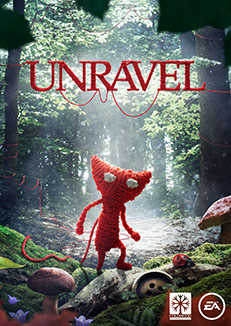

Unravel is the sort of game that greets you like a warm woolly hug and then makes you use the yarn from that hug to solve increasingly fiddly puzzles. You play as Yarny, an apple-sized, impossibly adorable creature made entirely of red yarn, who ambles through oversized real-world environments while unraveling behind him like a mobile knitting project gone rogue. Coldwood Interactive and creative director Martin Sahlin deliver a short, sentimental trip through memory-filled scenes lifted from the Swedish countryside - places inspired by Umeå and Sahlin's own childhood - all wrapped up in a photo album story that quietly explores love, loss and nostalgia. The game's biggest strengths are obvious from the first swing: gorgeous landscapes, a charming protagonist, and a folksy soundtrack by Frida Johansson and Henrik Oja that twangs at your heartstrings in a very tasteful way.
The core gameplay loop is simple and clever: walk, unravel, and use the yarn you shed to create rope, bridges, pulleys and trampolines to navigate the world. Yarny literally leaves a trail of his own body behind him, which feels poetic until you remember that walking too far makes you into a skeletal thread mannequin who needs to find a ball of yarn to refill. This mechanic does double duty as both puzzle fuel and a built-in timer of sorts - wander too carefree and you'll have to backtrack to restore your spool. Puzzles are built from everyday objects blown up to gigantic scale: a garden fork becomes a spiky menace, a fence is a towering obstacle, and a washing line doubles as a Pendulum of Doom. The best moments come when physics, environment and creativity collide: sling yourself on a string around a lamppost, anchor a taut line and use momentum to fling across chasms, or rig a makeshift bridge with a few well-placed stitches of yarn. Those little emergent wins - when the world finally yields to your woolly ingenuity - are hugely satisfying. That satisfaction is sometimes tempered by the game's less polished edges. Controls can feel a tad clunky, especially when precision platforming is required, and some puzzles lean toward repetition rather than variety. There are occasions when you must retrace steps after unspooling too much yarn, which can feel like the game scolding you for being curious. A few critics pointed out that the platforming depth is shallower than it looks: Unravel is strongest when it lets you experiment with string physics rather than forcing strict timing or twitchy jumps. The game is also fairly short; while some players will happily binge the levels in a single evening, others may be left wanting more meat on this charming, but slender, bone. Storytelling is a strength because it trusts players to piece things together. Yarny explores framed memories from an old woman's life - seaside trips, walks in the mountains, industrial changes to the landscape, and ultimately darker events. These vignettes are wordless but emotionally clear: Yarny's unraveling becomes a metaphor for moving away from what one loves. Each level yields a yarn badge that fills a photo album, a neat device that ties gameplay to narrative progress. The emotional payoffs are subtle and effective without being melodramatic, culminating in a final, bittersweet sequence that left many players surprisingly moved. If you like games that reward curiosity and gentle experimentation over leaderboard grinding, Unravel will tick many boxes. If you live for ultra-tight platforming or endlessly varied puzzle design, it might feel like a pretty postcard with a short message on the back. Overall, the gameplay is inventive and heartfelt, even when it stumbles on occasion.
Unravel is easily one of the prettiest yarn-based love letters to real-world scenery you'll play. The art direction blends photorealistic backgrounds with handcrafted foregrounds in which Yarny feels like a tiny theatrical prop acting out human stories. The environments - influenced by northern Sweden - are lovingly detailed: mossy rocks, windswept shores, and cozy domestic interiors that make ordinary objects feel majestic by scale. Lighting and particle effects give each scene a living quality; sunlight filters through leaves in a way that practically hums folk music. Critics praised the visuals consistently, and for good reason: Unravel doesn't just look good, it creates mood. The animations of Yarny are a highlight too - simple gestures convey personality without a single spoken line. The soundtrack complements the visuals perfectly, offering folk-inspired melodies that make each level feel like a quiet memory played on a porch at dusk. There are no fireworks of technical bravado, just a steady, cinematic presentation that uses aesthetics to carry much of the game's emotional weight.
Unravel is a compact, charming experience that excels at mood, aesthetics and quiet storytelling. It's the sort of game you tell your friend about because of one cute swing or one unexpectedly wrenching memory, not because you beat it in a weekend to pad your completion trophies. Coldwood and EA crafted a title that proves small mechanics - a spool of yarn and some physics - can carry genuine emotional heft when paired with thoughtful design. The game isn't perfect: clunky moments, repetitive puzzle design and a short runtime keep it from being a masterpiece. Still, its highs are high enough to make a recommendation easy. If you want a gentle, visually delightful puzzle-platformer with a beating wool heart and more charm than a basket of puppies, Unravel on PS4 is worth the trip. Play it when you need something that looks like a warm scarf and feels like a short, sincere story. If you finish and want more, there is a sequel, Unravel Two, that expands the formula with cooperative twine-tangling - because apparently Yarny made friends at knitting club.
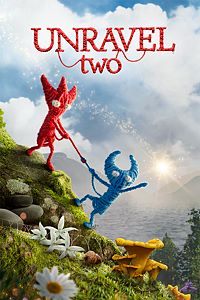 Unravel Two on Switch
 Lego Star Wars III: The Clone Wars on PS3
 Puzzle by Nikoli 4: on PS4
 Twinbee Taisen Puzzle Dama on PlayStation
 Tokimeki Memorial: Taisen Puzzle-Dama on PlayStation
 Professor Layton and the Last Specter on DS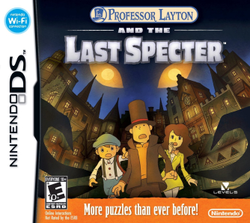










 Another SquareThought Site