

 Feb 2020
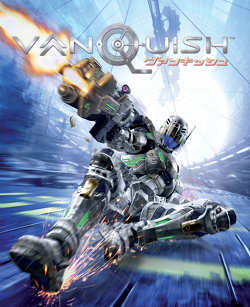

Vanquish arrived originally in 2010 as PlatinumGames' bullet-hell, brawler-adjacent answer to the cover shooter, and the PS4 10th Anniversary remaster mostly dresses that core in higher-resolution clothes and a couple of modern framerate promises. This is a review angled at the engine-room: systems, numbers, mechanics and why the game makes you feel like the laws of physics are on a coffee break while you boost-slide across a warship. If you care more about "Why does my suit whirr like a blender?" than "Who betrayed whom?", you're in the right place. On PS4 the package isn't a full rebuild so much as a respectful technical emendation: it bundles Vanquish with Bayonetta and unlocks higher-res textures and 4K/60fps support for Pro-class hardware. That doesn't change the underlying code that made Vanquish stand out in 2010 - namely the Augmented Reaction Suit (ARS), the rocket-slide, and the weapon-management quirks - but it smooths the presentation and makes the frenetic choreography easier to parse at high frame rates.
Vanquish's gameplay is a tight dance between resource gating (suit heat, AR availability), spatial momentum (slide-boost), and weapon loadout logistics (the BLADE system). The ARS is the mechanical MVP: it invokes an "AR mode" when the suit is auto-triggered by damage or when the player manually holds aim while evading, sliding or vaulting. Technically, AR functions like a local slow-motion bubble for the player, increasing "reflexes tenfold" - which, under the hood, is a time-scaling affordance that changes animation timings, aiming sensitivity and enemy projectile travel perception without having to run a parallel simulation. The gameplay reward is simple and elegant: use AR to thread impossibly tight dodges and target weak points in the stagger time. The sliding-boost mechanic is the actual design twist that justifies the game's continued discussion. Implemented as a high-velocity, short-duration state change tied to boosters on the suits' thighs, rocket-sliding treats horizontal motion as a first-class combat resource. From a systems perspective it's a mobility ability with multiple roles: cover penetration (you can slide into and out of cover at speed), offensive setup (close in for melee or weak-point shots), and defensive escape. Because the booster and AR usage are tied to the same overheating meter, the game forces trade-offs: aggressive mobility reduces access to the temporal advantage that AR provides, and overheating temporarily cripples mobility and disables both boosters and AR. That heat-management loop is where Vanquish's combat stretches beyond pure twitch; it becomes a short-term economy problem - when to spend, when to hold. Combat also leans on a modified cover-system that PlatinumGames called an iteration "to the next level." Rather than encouraging passive camping, Vanquish spawns salvos of projectiles and homing missiles from multiple axes in patterns reminiscent of 2D bullet-hell shooters. Some cover is destructible, dynamically altering level geometry and funneling the player into motion. The game even applies a score penalty to lengthy cover-stays, mechanically nudging players toward the boost-slide usage that defines the combat rhythm. These choices are supported by a physics layer (Havok) that handles destructibles and ragdoll transitions, allowing the studio to focus on choreography rather than wrestling buggy environmental interactions. Weapon management is handled by the BLADE system - a scanner-and-store mechanic that lets Sam adopt up to three weapons scanned from the battlefield out of a pool of eight (plus DLC additions). The system emphasizes on-the-fly adaptability: grabbing a new weapon via the reload-hold action will drop the previous weapon in that slot, and collecting the same weapon when at max ammo contributes toward upgrade chips. Upgrades improve ammo capacity, damage and blast radius; top-tier play requires balancing between using weapons to conserve upgrades and scavenging to power-level favorite tools. Difficulty settings alter progression fidelity: on Normal/Hard, death downgrades the active weapon by one level; on God Hard, upgrades are disabled altogether - a clean way to shift the player's interaction model without changing enemy AI or encounter design. Other mechanical flourishes include opportunistic commandeering of enemy walkers and turrets, grenade variants, occasional quick-time events for bigger enemies and a handful of environmental explosives that serve as scripted encounter modifiers. Boss fights lean into the systems: telegraphed weak points, required use of AR to expose windows of vulnerability and massive, patterned projectile attacks that make the sliding-and-slow-motion tango a necessity rather than a novelty. Replayability is inherently constrained by level and encounter variety, which is why the game's campaign length (first playthroughs often under four hours) is a frequent critique despite the tightness of the mechanical loop.
Visually, Vanquish is a deliberate collision of anime-inspired stylization and metallic, high-contrast sci-fi palettes. Director Shinji Mikami cited 1970s Casshern as an aesthetic influence, and that lineage shows in the exaggerated motion lines, bold silhouettes and kinetic camera language. On PS4 the remaster smooths edges, raises texture fidelity and (on Pro hardware) can hit 4K at 60fps - a meaningful improvement for a game whose combat depends so heavily on visual clarity. Higher frame rates reduce motion blur and input latency, which is not just a cosmetic plus: they materially improve the player's ability to track fast-moving projectiles and time boost-slides. From a technical standpoint the Havok physics engine remains competent in managing destructible cover and puppet transitions, and the particle systems for explosions and impacts maintain readability even in chaotic moments. The UI is functional rather than flashy: heat meters, AR status and weapon slots are minimalistic but effective. Where the presentation stumbles is narrative delivery: voice acting and script quality are serviceable at best, and the writing leans into technobabble and pulpy betrayals that don't match the mechanical sophistication. That said, the game's animation work - especially the slide, vault, and melee transitions - is top-tier, and the rail-shooter end-credits sequence is a whimsical technical flourish that underlines the studio's playful attitude toward production credits.
If you approach Vanquish on PS4 as a systems showcase - a study in combining time-scaling, mobility economy and destructible cover - it's a brilliantly engineered shooter that still holds up. The rocket-slide plus AR mode is one of the more original mechanical couplings in action games, and the way overheating ties together offensive and defensive choices gives the combat an elegant metagame. The remaster's higher resolution and frame-rate targets don't reinvent those systems, but they do make the core loop crisper and more responsive, which is the single best thing you can do for a game that moves this fast. The flip side is obvious: short campaign, sparse multiplayer ambitions (none), and a plot/voice package that won't win any writing awards. If you want long-form RPG progression or social multiplayer, look elsewhere. If you want an intense, finely tuned single-player shooter that treats momentum as a weapon and makes every encounter a micro-economy of heat and motion, Vanquish remains essential. Awards like GameSpot's "Best Original Game Mechanic" are not window dressing - they're acknowledgement that a design risk paid off. For PS4 owners who missed the original, the 10th Anniversary remaster is a technically sensible pickup: the core is intact, the pixels are cleaner, the frame-rate helps your timing, and sliding never felt so good.
 Abathor on PS5
 Ender Lilies: Quietus of the Knights on Xbox Series X/S
 PixelJunk Shooter 2 on PS3
 Tom Clancy's Rainbow Six: Vegas on PS3
 Crimson Sea 2 on PS2
 Don 2: The Game on PS2
 Bayonetta 2 on Switch
 Bayonetta on PS3
 Ninja Gaiden 4 on Xbox Series X/S
 Astral Chain on Switch
 Ninja Gaiden 4 on PS5










 Another SquareThought Site