

 Dec 2021


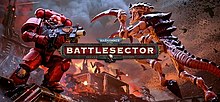
If you're a Warhammer 40,000 fan who thinks 'strategy' should come with booming voice-overs, shoals of bolter fire and a spreadsheet's worth of unit stats, Battlesector will make you smile like a Space Marine after a promotion. Developed by Black Lab Games and published by Slitherine, Battlesector is a grid-based, turn-based tactics title that takes the tabletop battles of the grimdark 41st millennium and compresses them into 20 missions of Blood Angels vs Tyranids on Baal Secundus. It launched on PC in July 2021 and staggered onto consoles - including PlayStation 4 - on December 2, 2021. The game's critical reception landed it in the 'solid but imperfect' bin (Metacritic ~72/100), and that summary is the right starting point for a technical examination: Battlesector is mechanically coherent and polished enough to satisfy tactical players, but it sometimes feels like a beautifully painted miniatures box with a so-so scenario book inside.
Under the hood, Battlesector is a textbook turn-based tactics game with a few wrinkles that make it more than just marching marines down a grid. Matches run on relatively small, discrete maps and armies are compact - roughly 10 to 25 units - which changes the balance calculus. Every model matters; losses sting and tactical choices are magnified. The game uses a grid-based system for movement, cover and line-of-sight, which simplifies analysis and removes ambiguity that can plague isometric tactics games. From a technical perspective, that's a good call: fewer edge cases, fewer wonky collision checks, and more predictable pathfinding. IGN highlighted a 'momentum-based tactical system', and that's an accurate shorthand for one of Battlesector's key mechanical flavors. Momentum here functions like a meta-resource that rewards chaining actions and exploiting openings. From a design standpoint, momentum reduces the tedium of static turn loops by giving combat flow - it nudges players towards planning sequences rather than resolving isolated skirmishes. Combine this with deep unit customization (weapon and equipment choices, upgrades and roster building) and the result is meaningful pre-battle engineering: your success often comes down to composition and who you brought, not just how you micro every turn. Randomization in mission setups adds replay value and forces players to treat the campaign more like an ongoing tactical puzzle than a rote march through identical maps. Random elements in objectives and deployment create branching decision trees that increase the value of adaptive strategies and contingency planning. However, this is also where Battlesector shows its limits. Multiple reviewers noted that mission design can be humdrum: objectives sometimes boil down to 'clear all enemies' or 'survive X turns', and the campaign's 20 missions, while narratively bound to the Blood Angels vs Tyranids story, occasionally fail to introduce mechanical twists to break repetition. For a tactics game that leans heavily on customization and momentum, the campaign could have leaned harder on layered objectives, environmental interactions or multi-phase encounters to make each sortie feel unique. Multiplayer is versatile: you can go online, hotseat, or even play by mail. From a technical architecture perspective, that breadth is commendable because it demands robust state serialization and turn synchronization to support non-real-time exchanges like play-by-mail. Hotseat is a natural fit for console and local play, though it does highlight UI/UX needs for clear player context switching. The small army size keeps netcode light and reduces bandwidth frictions for asynchronous modes, which probably helped make the various multiplayer methods viable. AI behavior earns mixed marks. In its best moments the AI acts as a credible opponent, exploiting terrain and focusing high-value targets; in other moments it can be predictable or conservative. For a tactics game with compact rosters, AI decision quality matters disproportionately because a single mistake is costly. Battlesector's AI is competent enough to present a steady challenge on normal difficulties, but players looking for adaptive, tactical nemeses on higher difficulties might find it occasionally telegraphed. DLC like Necrons and Sisters of Battle (released in 2022) expand unit pools and offer new toys for experimentation, but as Wargamer's assessment hinted, more varied or better-realized campaign content would have increased the value of those expansions beyond being neat unit packs.
Graphically, Battlesector takes the 'tabletop translated to 3D' approach: unit models and animations are serviceable and recognizable to anyone familiar with the 40K aesthetic, but this isn't a next-gen showcase. The art direction does heavy lifting by leaning on iconic silhouettes and well-executed textures, which is important on PlayStation 4 where GPU and memory constraints encourage efficient asset design. The UI is clean and prioritizes information density - vital for tactics games - with health bars, action points and status effects presented unambiguously. The grid-overlay and camera behavior are functionally designed; they avoid the cinematics-first trap and instead favor clarity for tactical decision-making. Voice acting is an unexpected technical and production win: Kotaku praised the cast, and it's true that strong VO adds a low-latency layer of narrative feedback that amplifies the combat loop. When a unit shouts a line on activation, it feels like immediate, humanized telemetry, which is a clever way to add emotional weight without adding more numerical readouts. Frame-rate on consoles wasn't a major complaint in the supplied sources, likely because the compact battles and conservative visual effects profile keep rendering demands moderate on PS4 hardware.
On PlayStation 4, Battlesector is a tight, well-executed tactical package that understands what its audience wants: concise, consequential battles, a satisfying sense of progression through army customization, and the correct amount of 40K theatricality courtesy of good voice work. Its technical foundation - grid-based maps, compact rosters, momentum mechanics, and varied multiplayer modes - is solid and thoughtfully implemented. The main friction point is content variety: mission design and the campaign structure occasionally fail to match the quality of the underlying systems, so the strategic high you get from clever builds and momentum chains can be dulled by repetitive objectives. If you prize crunchy tactical design, clear UI, and the ability to tinker with rosters, Battlesector on PS4 is well worth your time. If you want endlessly inventive mission scenarios or an AI that feels consistently like a creative adversary, be prepared for moments of 'good, not great'. The DLCs add desirable units but not the narrative heft many players craved. Final verdict: a competent and enjoyable console adaptation of tabletop tactics - a definite buy for fans of the genre, a solid rental for the casually curious.
 10,000 Bullets on PS2
 Warhammer 40,000: Inquisitor – Martyr on PS4
 Coloball 2002 on PS2
 Tiny Metal on Switch
 Achtung! Cthulhu Tactics on Switch
 Star Hammer: The Vanguard Prophecy on PS4










 Another SquareThought Site