

 Dec 2017
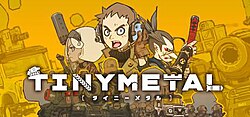

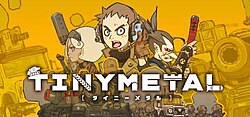
Tiny Metal arrives on the Switch wearing a jaunty little hat of nostalgia and carrying the battle-scarred toolkit of classic turn-based tactics. Developed by Area 35 - a debut studio led by Hiroaki Yura with roughly half a dozen people carrying the creative weight - the game openly flirts with the DNA of Advance Wars and borrows the grim, militaristic tone of wargaming influences like Warhammer 40,000. Released on 21 December 2017 and published by Unties, Tiny Metal is small in name but reasonably ambitious in intent: to give strategy fans a bite-sized campaign that rewards planning, patience and a willingness to stare at a grid until your brain starts filing tactical patents. Critics were mixed - Switch reviews landed around the mid-60s on Metacritic - but that's only the wallpaper. For players who live and breathe positioning, tradeoffs and the delicious sting of a well-executed ambush, the real story is about what the game demands from you as a strategist.
Tiny Metal is a textbook example of what turn-based tactics asks of a player: think ahead, respect positioning, and be cruelly efficient with limited options. The gameplay is built around the familiar rhythm of planning a turn, executing it, then watching the clockwork of enemy responses. If you are someone who plays on autopilot, treats movement like decorative animation, or thinks 'resource management' is an optional lifestyle choice, Tiny Metal will repeatedly remind you that tactics are not optional - they're survival. The challenge here isn't flashy; it's cerebral. Each battle is a logic puzzle under pressure. You will be required to map out multi-turn plans, anticipate enemy counters, and decide whether to commit to an attack that gains mileage now but exposes your flank later. Tiny Metal rewards a certain mental hygiene: counting moves, visualizing enemy reach, and prioritizing targets. When the map tilts against you, you discover the difference between panic and strategy. Panic yields clogged supply lines and dead tanks; strategy turns a bad situation into a textbook throttle-back-and-counterattack. One of the core skills the game trains is positional awareness. Terrain, choke points and unit placement matter a great deal; a single well-placed artillery piece or defensive position can stall an entire offensive. That means you must learn to think two or three turns ahead more often than not. This is less about reflexes and more about pattern recognition: you learn the typical formations the AI favors, the guts of enemy behavior, and then start laying traps. Tiny Metal is merciless toward sloppy setups. If you leave your units scattered with long supply lines, the AI will pick them apart like a bored predator. Adaptability is also crucial. The AI doesn't always play like a chess grandmaster, but it will exploit openings in predictable ways. Your job is to not be predictable. If your response palette is always the same - rush tanks, spam air, fortify cities - the game will stop being a puzzle and start being a lecture. The best moments come when you mix strategies: use a bait unit to lure enemy armor into an ambush, then punish with combined arms. That want of variety in tactics is where Tiny Metal shines: it gives you enough toys to create synergies, and the challenge is to invent new uses for the same handful of pieces. Resource and unit management are less about micromanaging infinite upgrades and more about making each piece count. You're not going to be able to brute-force your way through most maps; attrition matters. Knowing which fights to pick and which to avoid is as important as winning the encounters you choose. The campaign nudges you toward smart tradeoffs: sometimes sacrificing a unit to blunt an enemy advance is better than losing the supply network later. Those hard choices train the skill of triage; Tiny Metal forces you to prioritize what's mission-critical. Learning curves in tactics games are like muscle memory - they build slowly and then all at once. Tiny Metal's campaign is modest in scope but layered in difficulty. The maps escalate in ways that force you to evolve from textbook play to improvisational tactics. Expect to replay scenarios, analyze where your plan collapsed and refine it. That repetition can be punishing, but it's also where the satisfaction comes from: when your revised approach flips a previously impossible mission into a clean victory, the payoff is cathartic. On the flip side, the game's AI and presentation sometimes monkey-wrench the learning process. Critics pointed out that polish issues and occasional rough edges can make the lessons feel less crisp: unclear telegraphs, occasional pathfinding oddities, and a few balance wobbliness moments. Those rough patches can be frustrating when you're trying to learn precisely which move will swing momentum, because the game sometimes nudges you with inconsistent responses. Still, this doesn't change the central truth: Tiny Metal is a thinking person's game. If you want to test and improve skills like long-term planning, positional control, risk assessment, and adaptive thinking, you'll find a steady diet here. Multiplayer and skirmish modes - where available - extend the challenge by replacing predictable AI patterns with human cunning. Playing against another person exposes blind spots in your strategies much faster than the AI ever could. In human-versus-human matches, small tactical mistakes snowball faster, rewarding concise, disciplined play. Whether you're grinding the campaign or facing an actual brain behind the enemy, Tiny Metal asks you to sharpen both your micro (individual unit actions) and macro (overall battlefield plan) thinking. The payoff is the same: you get better at seeing the board as a living thing rather than a collection of icons. Finally, patience is a skill Tiny Metal will teach you whether you asked for it or not. The game doesn't want you to win by button-mashing; it wants you to stare at the map, plan a turn, and then savor the slow collapse or flurry of the opponent. If you cultivate that patience and combine it with the other learned skills - positional sense, triage, adaptation - you'll graduate from getting your butt handed to you to handing out tactical lessons of your own.
Tiny Metal doesn't try to win any beauty contests, and that's perfectly fine for a tactics title where clarity beats flash. The visuals are tidy and functional: units read clearly on the map, icons communicate intent, and the aesthetic leans practical rather than photorealistic. On the Switch the performance is competent, which is what you want when your brain is doing the heavy lifting. Visual polish isn't the game's main argument; its art and UI simply get out of the way and let the strategy take center stage. That said, a few reviewers flagged that the presentation sometimes feels a little rough around the edges compared to the studio's inspirations. Small annoyances can crop up - like UI bits that could be clearer or animations that are serviceable but not striking - but none of these actively interfere with the challenge. If you're buying Tiny Metal for twitchy spectacle, you're shopping in the wrong aisle. If you want a clean, readable battlefield where every decision is legible at a glance, the game delivers. The sound design shares the same ethos: functional, occasionally jaunty, and not likely to make you weep with orchestral glory. It supports the gameplay, which again is the important thing. When you're deep in a multi-turn plan the last thing you need is a visual or audio flourish that obscures what's happening on the map. Tiny Metal's minimalist polish keeps the battlefield intelligible, and for a tactics game, that's a virtue rather than a compromise.
Tiny Metal on Switch is a focused, brainy tactics package from a tiny but ambitious studio. Its strengths lie in the demand it places on player skills: positional awareness, multi-turn planning, resource triage, pattern recognition and, above all, patience. The campaign trains you in those disciplines through maps that force you to think beyond the next move and into the next few minutes of warfare. The experience is occasionally hampered by polish issues and some AI/presentation roughness, which helps explain why critics were mixed, but those blemishes don't erase the core strategic satisfaction. If you are the kind of player who loves turning problems into plans and plans into flawless little disasters for your enemies, Tiny Metal is a worthy workout. It's not the prettiest or the flashiest tactics game, and it won't convert someone who dislikes methodical play into a strategist overnight. What it will do - reliably, almost academically - is sharpen your tactical instincts. For that reason, I give it a solid 7/10: a gratifying course in battlefield thinking with a few rough edges that keep it grounded and challengingly human. Take it on if you want to improve as a strategist, not if you want a spectacle. Your brain will thank you. Eventually.
 Tiny Tank on PlayStation
 Tiny Troopers: Joint Ops DX on Switch
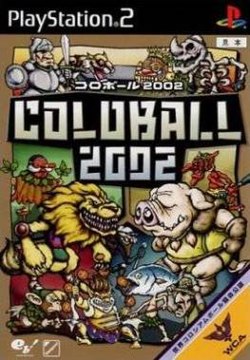
 Coloball 2002 on PS2
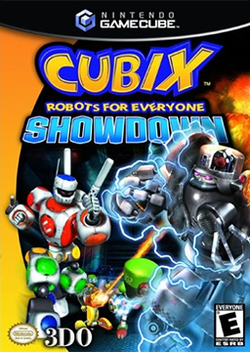
 Cubix: Robots for Everyone: Showdown on PS2
 Achtung! Cthulhu Tactics on Switch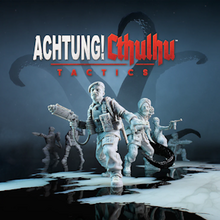










 Another SquareThought Site