

 Jul 2019


Tiny Metal: Full Metal Rumble is a cheeky little strategy sequel built by a team of six at Area 35 and released by Unties in July 2019 for the Switch (and PC). If the name makes you think of tiny tanks and disproportionately large explosions, you're on the right track - the series wears its Advance Wars inspiration on its sleeve and sprinkles in a dash of Warhammer-flavored grimy military flair. What Full Metal Rumble wants from you is simple: think ahead, suffer choices, and learn to read the battlefield better than your opponent. What it gives you in return is the cold comfort of well-earned victory, and the occasional frustration that comes from a small-studio game's rough edges. This review digs into the part of the game that matters most for tactics fans: the challenge. If you're into planning, adaptation, and the slow-burn satisfaction of outmaneuvering an AI or another human, keep reading. If you want fireworks every five seconds and zero consequence for your actions, Tiny Metal will politely hand you a roadblock.
Full Metal Rumble is a turn-based tactics game at heart - think of the kind of map where every tile is a tiny moral decision and every unit is an argument you must win. The game's DNA is obviously borrowed from Advance Wars; you move units, contest territory, and try to out-position, out-trade, and out-think your opponent. Unlike action games that punish sloppy fingers, this one punishes sloppy thinking. Challenge profile and learning curve The difficulty curve here is less about twitch skill and more about cognitive patience. Early missions walk you through core systems, but the real challenge emerges when scenarios begin stacking constraints: limited reinforcements, narrow chokepoints, and mission objectives that punish brute force. The game's learning curve is kind of like learning chess via a Tuesday night club - you can pick up the moves quickly, but the strategies that reliably win cost time and a few crushed pride points. You will lose maps you thought you owned because you misread attack ranges or ignored an enemy support unit. That's intentional: Tiny Metal rewards studying the board and punishes sloppy assumptions. Tactical skills required - Map awareness: The single most important skill. You need to learn which tiles are worth contesting and which are traps. Choke points, forests, and high-ground equivalents (where present) change the value of units dramatically. Treat each map like a personality you haven't quite figured out yet. - Unit valuation and composition: The roster isn't endless, so you need to evaluate whether you need heavy hitters that soak damage or light, mobile units that seize objectives. Some units counter others in obvious ways, but the trick is building a force that can handle multiple contingencies - scouts for recon, artillery for denial, and a solid tank or two to hold lines. - Resource/time management: If the campaign forces you into limited unit pools or delayed reinforcements, you must treat units like premium snacks - don't waste them on selfish charges. Managing when to commit and when to stall is crucial; time itself can be a resource when objectives are turn-limited. - Prediction and reading the opponent: Especially against more aggressive AI settings or in multiplayer, the ability to anticipate pushes and bait enemy moves matters. Setting traps, leaving tempting but costly tiles exposed, and forcing the opponent into bad trades are high-skill plays. - Micro vs macro balance: Good Tiny Metal players know when to micro (win a local skirmish by landing a particularly effective attack) and when to macro (move the big picture units to secure the map). Over-microing will burn turns and leave you out of position; under-microing will let you bleed value in every engagement. AI and difficulty tuning The game's challenges are shaped a lot by how the AI behaves. Reviewers and players have noted mixed experiences with the AI - it can be predictably stubborn in some missions and surprisingly punishing in others. That inconsistency is part of the challenge: sometimes you're outsmarting a tactical mastermind; sometimes you're solving a puzzle that feels handcrafted to gate your progress. For competitive players, human opponents expose different skills - negotiation of tempo, bluffing with feints, and capitalizing on hesitation. Where the AI might telegraph its plans, humans will not, and that introduces an entirely different skill ceiling. Mission design and modes Campaign missions range from tutorial skirmishes to multi-objective headaches where you must hold territory while disabling a threat or racing against a turn limit. The mode design ensures that challenge comes from structure as much as opposition: restricted unit lists, environmental hazards, and secondary objectives turn familiar scenarios into fresh problems that force new thinking. If you want something that pushes you to adapt strategy on the fly, the campaign does it; if you want endless balance-tested multiplayer, the experience feels more indie and less polished compared to big-budget alternatives. Mental stamina and meta-skills Tiny Metal teaches an underrated meta-skill: the willingness to lose a mission to learn three things from the loss and come back smarter. Trials are often short enough that repeating a mission and implementing tweaks becomes an enjoyable loop rather than punishment. The game rewards thoughtful play and brutal honesty about your mistakes. You'll get better at not just which moves to make, but how to reason about them. Frustrations and where the challenge feels unfair Not all challenge is constructive. Small-studio limits sometimes show in inconsistent difficulty spikes and AI quirks that feel less like clever play and more like rules that weren't fully smoothed over. A well-crafted challenge should make you feel wrong for your choices, not cheated by the system. Tiny Metal occasionally errs toward the latter: sudden reinforcements, RNG damage swings, and maps that favor a specific playstyle can feel like punishment instead of a test. Those moments can bruise confidence and grind patience, especially when you're trying to execute a well-thought plan that the game happens to counter with a mechanical surprise.
Graphically, Full Metal Rumble is functional and charming rather than eye-popping. The art direction leans into colorful, chunky units and readable map tiles - which is crucial for a tactics game where clarity trumps photorealism. On the Switch, the visuals run well and the camera does a good job of communicating unit ranges and terrain effects at a glance. The small-team origins are obvious in some texture and animation shortcuts, but honestly, these are the kinds of games where crisp information is more important than AAA sparkle. The interface gets the job done: menus and unit stats are clear, movement overlays are readable, and the game rarely fights you for clarity. If you care about immersive cutscenes and cinematic camera flourishes, this isn't where Full Metal Rumble impresses. If you care about making the right choice on turn five, it has everything you need.
Tiny Metal: Full Metal Rumble is a tidy, bite-sized strategy game that will reward anyone who enjoys cerebral challenge and tactical problem-solving. It's not flawless - small-team limitations and occasional AI oddities sap some of the shine - but where it succeeds, it offers satisfying decision-making loops and a campaign that respects your ability to learn and adapt. The skills it demands are the kind that keep your brain busy: map study, unit valuation, prediction, and the patience to iterate on failure. For Switch owners craving a portable Advance Wars-style fix with a slightly grittier tone and a focus on thoughtful play, Full Metal Rumble is worth your time, as long as you're prepared for a few moments of indie roughness. Score-wise, it sits comfortably in the 'good but imperfect' space - a 6.5/10 reflects a game with real tactical heart and the occasional developer-sized limp. If you want a strategy workout that rewards thinking harder than clicking faster, Tiny Metal will make you sweat in the best possible way.
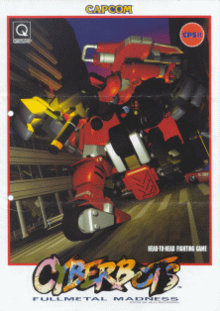
 Cyberbots: Full Metal Madness on PlayStation
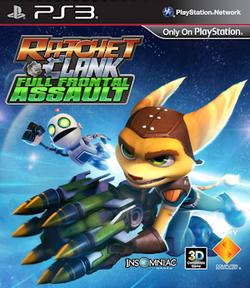
 Ratchet & Clank: Full Frontal Assault on PS3
 Coloball 2002 on PS2
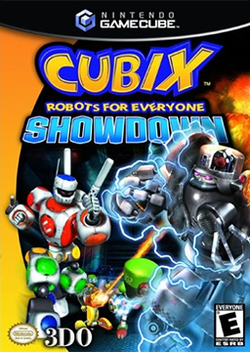
 Cubix: Robots for Everyone: Showdown on PS2
 Achtung! Cthulhu Tactics on Switch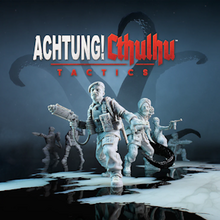










 Another SquareThought Site