

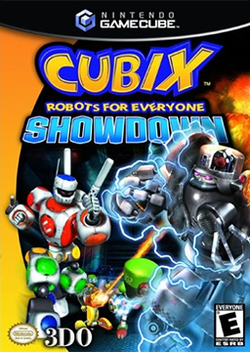

Cubix: Robots for Everyone: Showdown arrives like a Saturday-morning cartoon dressed as a video game: loud, colorful, and full of collectible things. Based on the Cubix TV series and developed by Blitz Games, Showdown hands you the controller as either Connor or Abby and sets you loose to gather 25 Cubix robots for turn-based combat. The game wears its young-audience intentions on its sleeve, but underneath the cartoon gloss there are little character moments and a surprisingly clear-if shallow-attempt at an emotional throughline. This review will dig into the game's attempt to turn an episodic kids' show into a game that tries to be both a light action-adventure and a Pokémon-style collect-and-battle RPG. I'll focus less on strict mechanical minutiae and more on how the characters-human and mechanical-are used to tell a story, what arcs are implied by the game systems and missions, and where the adaptation succeeds or stumbles. The developers and writers credited (director David Manuel; writers Chris Bateman and Richard Boon; composers John Guscott, Matt Black, Gerard Gourley, and Andrew Morris) clearly had a brief to keep things accessible and toyetic. That brief is visible in every design choice, for better and worse.
Gameplay in Showdown is a simple loop: choose Connor or Abby, explore the Story mode to find robots from the Cubix roster, then deploy them in turn-based battles. The modes list-Story, Battle, Challenges, Tournament, and Mini-Game-reads like a checklist of what a licensed kids' RPG should include. Story mode is the spine; Battle, Tournament, and Challenges are the meat; Mini-Games are the dessert that sometimes consists of squeezing a jellyfish-shaped robot until points fall out. From a character-and-arc perspective, the most interesting decision the game makes is to let the human protagonists exist mostly as curated avatars rather than full-blown protagonists. Connor and Abby are both playable and both exist as narrative anchors, but their growth is communicated almost entirely through the robots they recruit. This is a clever workaround: instead of writing long monologues for kid characters, the game writes short episodes where a robot needs fixing, acceptance, or a moral choice resolved through a small quest. Each recovered Cubix robot serves as a micro-arc-lost to neglect, captured by a villain, or malfunctioning-and the resolution to each provides a tiny beat of growth for Connor or Abby. Collectively, these 25 vignettes add up to a collage of lessons about responsibility, teamwork, and empathy. Connor's implied arc is the classic tinkerer-to-caretaker path. The game casts him as the kid who wants to fix and keep everything, which makes the act of collecting robots both a victory and a burden-an increasing set of little lives that demand attention. As you unlock more Cubix, you also unlock options in battle and customization, which mechanically mirrors Connor learning to prioritize and manage. Abby plays the counterpoint; she is the moral compass, the voice reminding players that robots are more than tools. In practice, this means many of her missions emphasize rescue and reconciliation rather than competition. The turn-based combat is formulaic but functional. Battles are straightforward exchanges of moves with elemental or tech-ish affinities, and there is a mild tactical layer in party composition and move selection. It's not deep enough to sustain a 40+ hour campaign for mature strategists, but it's tuned for the audience: quick decisions, visible cause-and-effect, and bright, readable enemy telegraphs. Where the combat enriches character is in the way certain robots have unique abilities tied to their 'personalities'-a repair bot that buffs allies, a protector bot that taunts, and the like. These are not Shakespearean characterizations, but they give each robot a role and a short, repeatable narrative function when deployed in battle. Showdown borrows the collect-and-battle DNA popularized by series like Pokémon, which is both its blessing and its curse. The GMR quip calling it "Pokemon with bad wiring" is a bit cruel, but it pinpoints the problem: the structure is familiar and lovable, but the implementation lacks the polish and systems-level depth of the giants it imitates. Where Pokémon makes you care through long-term creature development and emergent stories, Showdown relies on cutscene beats and mission design. That makes the emotional stakes smaller but also more immediate: you're rarely asked for long-term investment-just thirty minutes of attention, a handful of missions, and you'll have another robot buddy. Multiplayer and Tournament modes add replay value, and the Challenges section gives a few non-story reasons to return to the combat systems. Mini-Games, while shallow, offer a palate-cleanser between story missions and battles, and they lean into the show's playful tone. The game's development history-originally slated for a September 2002 release, delayed to June 2, 2003, and released around the time the 3DO Company folded-might explain some of the rough edges. There are moments where a character beat feels like it was meant to be longer, or where a robot's animation is short enough that you must supply the rest of the emotion from your own head. For a game aimed at kids, these gaps are forgivable; for players looking for a tightly-crafted RPG, they're a little disappointing. Ultimately, the character arcs that matter are the aggregated tiny narratives of the robots and how Connor or Abby react to them. The game doesn't attempt existential profundity, but it does offer short, earnest stories about trust, repair, and friendship. Those micro-arcs make the act of collecting feel like a narrative choice rather than an arbitrary checklist, even if the payoff is often small and immediate rather than profound and long-lasting.
Visually, Showdown is pastel-and-circuit-board: bright colours, chunky robot designs, and environments that look unmistakably derived from a children's TV show. On the PlayStation 2 the game doesn't push the hardware-textures are serviceable, character models are simple, and animations are more functional than cinematic. That said, the aesthetic matches the source material, and there's value in that fidelity. The Cubix themselves are well-designed for their purpose: each robot's silhouette is distinct, which is crucial when your job is to recognize and collect 25 of them. Battle animations are snappy enough to communicate impact, and the UI prioritizes legibility over flair-again, a design choice made with younger players in mind. The art direction leans into toy-like proportions and bright lighting, which helps hide polygon counts and texture repetition. If you were hoping for a PS2 showcase, you'll be underwhelmed. If you want a faithful tie-in that looks like the cartoon you remember (or never watched but saw the toys of), it does the job well. Sound design and music, credited to John Guscott, Matt Black, Gerard Gourley, and Andrew Morris, produce jaunty, TV-friendly themes and serviceable combat stings. Nothing here will make an awards jury swoon, but the soundtrack supports the tone: upbeat during victories, slightly dramatic when rescuing a robot, and cheerfully unobtrusive during overworld exploration.
Cubix: Robots for Everyone: Showdown is a competent, kid-focused licensed game that knows what it is and mostly sticks to that plan. It doesn't aspire to redefine the RPG or challenge narrative conventions, but it does repurpose the mechanics of collect-and-battle games into a string of character vignettes that reward empathy as often as they reward grind. The human leads, Connor and Abby, function as archetypal anchors: Connor the tinkerer learning stewardship, Abby the conscience pushing for compassion. The 25 Cubix robots are where the emotional work actually happens-each acquisition is a small story about fixing, understanding, or accepting. Where the game falters is in polish and depth. The turn-based combat is solid but shallow, the story beats are brief, and the whole package feels like it was designed for quick, episodic play rather than long-form investment. Critical reception was accordingly mixed (GameRankings sits in the high 50s, and magazines like Electronic Gaming Monthly and Nintendo Power were lukewarm), and the oft-cited comparison to Pokémon-made less flattering by GMR-underscores the difficulty of competing with genre-defining systems on a kid-friendly budget. If you're an adult with nostalgia for early-2000s tie-ins, or a younger player who wants an accessible, friendly RPG with collectables and turn-based skirmishes, Showdown will probably make you smile. If you demand deep systems, cinematic storytelling, or visual fireworks, you'd do better elsewhere. In short: Showdown is a pleasant if modest show-and-tell of licensed game design-heartfelt in intentions, limited in execution, and charming enough to enjoy in short bursts. Score: 5.8/10.
 The Jackbox Party Pack 2 on PS3
 Tintin: Destination Adventure on PlayStation
 Combat Elite: WWII Paratroopers on PS2
 Onimusha: Dawn of Dreams on PS2
 One Piece Grand Adventure on PS2
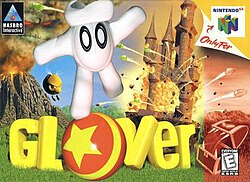 Karaoke Revolution on PS3
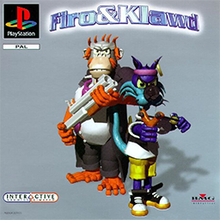
 Firo & Klawd on PlayStation
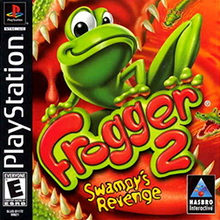
 Frogger 2: Swampy's Revenge on PlayStation
 Disney's The Little Mermaid II on PlayStation
 Chicken Run on PlayStation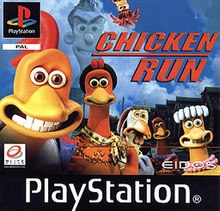












 Another SquareThought Site