

 Aug 2025
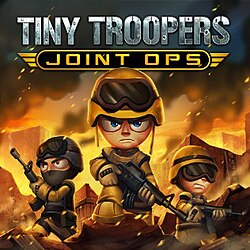

Tiny Troopers: Joint Ops DX arrives on the Switch with approximately the same subtlety as a tiny soldier screaming into a radio: loud, cheerful, and inevitably stepping on a landmine. The game began life as a mobile and PC experiment in making warfare adorable and frantic, and was later bundled into home-console editions on PlayStation and Xbox. Joint Ops DX is the sort of package that primarily asks two questions: can you point two sticks in different directions at once, and are you fond of tiny people and tiny explosions? If you answered yes to either, you and the Switch's joysticks are going to get along just fine. The original Joint Ops (2014) was ported to consoles by Plunge Interactive and Epiphany Games and published by Wired Productions. The core pitch is honest and short: control tiny troopers, blunder through brightly coloured battlefields, collect a range of throwaway upgrades, and declare victory in ways that suggest paperwork will be handled by somebody else. Critics gave the earlier console releases middling reviews - Metacritic scores in the low to mid-60s across PS3, PS4, PS Vita and Xbox One - which means the game did exactly what it promised but failed to impress anyone in a tuxedo. Joint Ops DX on Switch behaves like that cousin who gets invited to family gatherings because they're fun and not because they bring useful conversation. It is cheerful, uncomplicated, and blissfully uninterested in being deep.
The gameplay boils down to what every joystick arrangement secretly wanted to be: turn one analog stick into 'run like you mean it' and the other into 'spray bullets until the problem solves itself.' Twin-stick shooters are a famously simple breed, and Tiny Troopers doesn't try to be a philosophy thesis disguised as entertainment. The single-player loop asks you to shepherd pint-sized soldiers across missions that are short enough to finish between Instagram doomscrolling sessions, each map containing pockets of bad guys, an item or two, and a graceful invitation to chaos. You control a cadre of tiny men and women who are not tiny in personality. They sprint, duck, aim, and fire, and they can pick up special weapons and items that briefly turn the odds in your favour. The game parcels out these toys at a measured pace: rocket launchers, grenades, the usual chaotic paraphernalia. The core systems are almost aggressively uncomplicated; there's no sprawling upgrade trees or inventories that require a spreadsheet and a therapist. That's the point. If your biggest gaming worry is reading three paragraphs of stats before blowing up a tank, then this is your kind of war. Missions are bite-sized and often straightforward. Objectives tend to be variations on 'go somewhere,' 'shoot things there,' and 'maybe escort something if you like responsibility.' There is a satisfyingly tactile feel to clearing a room of enemies: the tiny troopers will bubble around a firefight like an overenthusiastic school of sardines, bullets and explosions producing a rhythmic nonsense that is genuinely amusing. The pace is brisk and forgiving; death isn't permanent in most mission contexts, and the game does not hold grudges. You can screw up spectacularly, respawn, and be rewarded with another shot at being charmingly incompetent. Where Joint Ops shows its restraint - or laziness, depending on your appetite for variety - is in level design and long-term progression. After an hour the novelty of tiny soldiers compared to giant weapons starts to wear thin, because the maps reuse a small handful of ideas and the enemy variety, while adequate, doesn't push the envelope. This is the kind of game that rewards short bursts of play rather than marathon sessions. It's also the kind of game that knows what it is: not a AAA blockbuster, not an indie magnum opus, but a tidy, focused arcade experience with a cute premise and the attention span of a caffeinated ferret. On Switch, the controls map cleanly to the Joy-Cons and Pro Controller. The analog sticks give you the expected precision for strafing and aiming, and the button layout keeps your actions human-scale. There isn't the depth of a tactical shooter, so the learning curve is mercifully flat. You press buttons, you use special weapons, you collect items, and sometimes you get to declare victory with the kind of pomp reserved for toy soldiers and boy bands. Difficulty is adjustable in a subtle way: enemy numbers and damage create spikes, but the game seldom feels unfair. It can, however, feel a little repetitive after several hours, which is where its console brethren's middling Metacritic scores come into play. Multiplayer elements and co-op options are not the centerpiece of this package, which will frustrate the tiny portion of the population that believes every shooter must include a battle-royale mode. Instead, Tiny Troopers is content to let you have misadventures alone or with a friend if the Switch version provides local co-op options. The charm is in the little moments: a grenade toss that obliterates a wall and three enemies, the bewildered expression on a trooper's face when a lucky shot surprises them, and the game's unspoken commitment to keep things light rather than tragic. If you want complicated loadouts, meta-progression, or existential dread, you will have to show up elsewhere. If you want short, punchy missions and cheerful incompetence, there is a lot to like.
The art style is intentionally small and bright, like a diorama for people who enjoy explosions but resent them for being too serious. Visuals trade photorealism for an accessible, toy-like aesthetic that keeps the violence cartoonish and the mood buoyant. The Switch handles this without drama: framerates stay steady for the most part, and the simple geometric shapes and clear colour language ensure that the screen never feels cluttered. The environments are functional rather than stylish. You won't be blown away by lighting tech or texture fidelity, because the game never tries to pretend it's a next-gen spectacle. Instead, it leans into clarity: enemies are easy to spot, pickups glow politely, and effects are satisfying in a low-key way. This simplicity is a conscious design choice more than a budgetary confession. It complements the game's arcade roots, making sure that the important moment - your trooper standing in the middle of a gunfight looking very brave and also very small - reads instantly to the player. There are occasional visual repetitiveness issues; maps can look like cousins at a family reunion who all decided to wear the same outfit. This is most obvious on extended play sessions when the background palettes and object sets begin to blur together. But in single missions, and especially in handheld mode where play sessions are naturally shorter, the visuals do their job: they make the action readable, the characters adorable, and explosions satisfyingly tiny and noisy.
Tiny Troopers: Joint Ops DX on Switch is a compact, deadpan joy. It will not pretend to be deep, and it will not win awards for design ambition. What it will do, with a kind of cheerful impertinence, is give you quick, satisfying bursts of twin-stick mayhem with a cast of troopers that look like they belong in a child's lunchbox and a soundtrack of bullets doing their very best work. Critics were lukewarm about the original console releases - Metacritic scores clustered in the low 60s - which feels fair. The game excels when you treat it as an arcade snack rather than a multi-course meal. If you have two functional analog sticks and a taste for charmingly shallow combat, this is a recommendation with small print: pick it up when you want uncomplicated fun, especially in handheld mode. If you want narrative heft, sprawling progression systems, or variety that keeps reinventing itself every few hours, the troop transport is already full. For those evenings when you would rather herd tiny soldiers than think about taxes or long-term commitments, Joint Ops DX is an affable companion. It is small, loud, and perfectly aware of both facts. That awareness is basically the entire point, and it sells that point with the steadiness of a soldier who knows their job is to be tiny and enthusiastic. Final verdict: pleasant, occasionally repetitive, consistently upbeat. Like a warm bag of potato chips that only sometimes runs out.
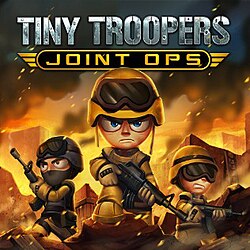 Tiny Metal on Switch
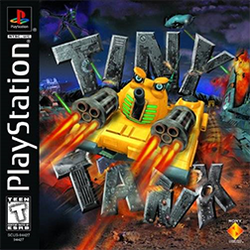
 Tiny Tank on PlayStation
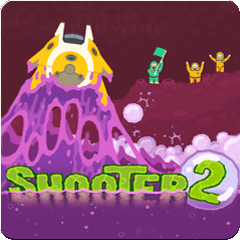
 PixelJunk Shooter 2 on PS3
 PixelJunk Shooter on PS3
 Ugly Americans: Apocalypsegeddon on PS3
 Ultratron on PS3










 Another SquareThought Site