

 Dec 2019
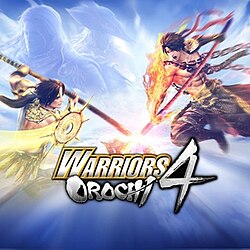

In an era when video games were judged in print and the adjective "massive" still came with a sense of wonder rather than a checklist, Omega Force learned how to do one thing very, very well: let you mow through hundreds of pixelated enemies while pretending there is a story. Warriors Orochi 4 Ultimate is the polished descendant of that design philosophy - a crossover of Dynasty Warriors and Samurai Warriors, wrapped up in a mythological paper mâché of Greek and Norse deities. For the PlayStation 4 this Ultimate edition is less a reinvention than an expansion, a deluxe box of action toys with a new chapter or three tucked inside. If you come to this game thinking you will be surprised by revolutionary mechanics, you will be disappointed. If you come for the comforting, escalating chaos of hack-and-slash encounters, a colossal roster, and mythic schadenfreude played out in battlefield-sized sandboxes, you're in familiar territory and the game mostly delivers.
Warriors Orochi 4 Ultimate takes the series' signature three-character teams and makes them bigger, weirder and more blasphemously populous. The Ultimate version boasts 177 playable characters. Yes, one hundred and seventy-seven - a number that would have been printed in an impossibly small font in the back of a 1990s strategy guide and devoured by the spreadsheet-inclined. Characters are drawn from the Dynasty and Samurai lines, guest franchises, and a handful of original additions: Zeus, Odin, Loki (masquerading as Perseus), Ares and company add a distinctly Olympian spice to the menu. Mechanically, the backbone is unchanged: choose a three-man team, churn through missions, capture bases, and reduce swathes of AI to an unceremonious pile of numbers and sound effects. The game retains the familiar class trinity - Power, Speed and Technique - while pruning older systems (the Wonder type from earlier Orochi entries is gone). The headline addition here is magic and Sacred Treasures: each character can now perform special magic-based actions by holding the right shoulder button and pressing an attack input. These moves sit outside the class system and demand management of a separate magic gauge. Musou economy is altered too; some characters lose a second musou attack while retaining aerial options, others lose special attacks but keep hyper attacks. The effect is a small recalibration rather than a sea change. Awakening and Musou Gokui, formerly disparate systems pulled from Dynasty and Samurai entries, are unified. Activating this buff (now triggered by pressing the left analog stick) transforms characters into deified forms tied to Greek or Norse myths, granting big stat boosts and visually ostentatious attacks. It's a gratifying, if not especially deep, power spike - the kind of moment that makes the screen flash and your fingers believe they're doing something important. Levels are a patchwork quilt: many stages are recycled from earlier Warriors games, occasionally reskinned, and sometimes stitched together in mashup levels where a Dynasty Warriors lower keep will suddenly transition into a Samurai Warriors upper bailey. For a player who remembers the older games fondly, the reuse is nostalgic; for someone expecting wholly new landscapes, the catalogue approach feels familiar to the point of laziness. The Ultimate DLC and new chapters do provide fresh narrative beats and new boss encounters, but the core loop stays the same - grind, unlock, repeat. Multiplayer options include a three-versus-three competitive mode, which provides a brief diversion from the single-player slog. The PS4 handles character switching and horse mounting (hold the right shoulder and press jump) cleanly, and the control scheme, once learned, becomes as second nature as opening a strategy manual and ignoring the text. If there is a criticism that can't be massaged away by louder music or flashier deification, it's pacing. The sheer size of the roster and the abundance of optional modes make the experience feel like a generous but bloated encyclopedia entry. Progression systems are serviceable; unlocks and costumes provide dopamine hits for completionists but not much in the way of surprising emergent gameplay.
Graphically, Warriors Orochi 4 Ultimate is a product of a studio that has learned to squeeze the PS4's hardware until it glows, and then to paint over the seams with style. Character models are detailed where it matters - faces are recognizable, weapons have presence - and the deified forms get the sort of over-the-top visual treatment that suits the game's self-aware mythological pastiche. The environments are where the game's thrift becomes obvious. Many stages are lifted directly from previous Dynasty and Samurai installments and given only modest cosmetic surgery. Mashup stages are clever - a jolt of novelty when two disparate map halves collide - but originality is sporadic. Textures can look a little soft at times, and you will notice repeated assets and copy-pasted buildings if you play long enough to complete the roster several times over. Framerate holds up solidly on the PS4 through most encounters, though the sheer number of enemies and effects can occasionally coax the hardware into a brief sigh. Sound design and music perform admirably. Ultimate's new theme - "Statice" by Saori Hayami - is an appropriately dramatic choral piece that slots into the end credits with a satisfying thud. The sound of steel on flesh is intentionally arcade-like: every string of combos generates a satisfying percussive punctuation. Voice acting remains a mixed bag; the new mythic cast is delivered with theatrical gusto, while older characters retain their established vocal signatures. In the end, the package looks and sounds like a premium edition of a long-running series rather than a reinvention of it.
Warriors Orochi 4 Ultimate is not a reinvention, nor should it be expected to be. It is a proud, noisy, occasionally indulgent celebration of everything Omega Force has refined over the years: absurdly large rosters, mythic flourishes, and the intoxicating math of thousands of enemies collapsing under your barrage. For those who loved Dynasty Warriors or Samurai Warriors in the decades past, this is the deluxe commemorative volume, full of bonus content and the kind of bloat that counts as comfort food. There are real caveats. Stale reused stages, a menu of mechanics that sometimes feels more cosmetic than transformative, and a pacing that rewards completionists far more than casual drop-ins will keep this from being universally adored. Critics in 2018-2020 were middling, and the PS4 Ultimate edition's Metacritic showed respectable but not stellar scores - a fair reflection of a game that will thrill its audience while leaving others unmoved. If you are the sort who measures worth in hours of relentless, gleeful button-mashing and want a mythological spin on the familiar Warriors recipe, pick up Ultimate on PS4. If you demand innovation over iteration, you may prefer to read about the spectacle in a magazine while someone else does the hacking and slashing. In short: a solid decade-spanning warrior's buffet - bring a big appetite and an even bigger save file.
 Warriors Orochi 3 Ultimate on PS4
 Warriors Orochi 3 on PS3
 PlayStation Home on PS3
 Gaelic Football '25 on Xbox Series X/S
 Together! The Battle Cats on Switch
 Crash Bandicoot: The Wrath of Cortex on PS2
 Wild Hearts S on Switch 2
 Dynasty Warriors 8: Empires on PS4
 Dynasty Warriors: Origins on PS5
 Attack on Titan 2 on Switch
 Attack on Titan 2: Final Battle on Switch










 Another SquareThought Site