

 Dec 2019


Wattam arrives wearing the pedigree of Keita Takahashi (yes, the brain behind Katamari Damacy) and a manifesto about noticing how mundane life is secretly great. On PS4 the game presents itself as a puzzle-platformer whose core systems are less about jumping on platforms and more about engineering joy through relationships: you befriend trees, toilets, rocks and a suspiciously cheerful poop by holding hands, solving puzzles, and playing tiny minigames. From a technical perspective, Wattam is interesting because its gameplay is a scaffolding of interaction systems - connection mechanics, combinatorial audio, and cooperative affordances - all stitched together after a famously troubled five-year development cycle. The result is creative and oddly sincere, and also, predictably, a bit rough around the edges. Critics were split (Metacritic clocks the PS4 score at 72/100), which feels appropriate for a game that trades conventional polish for a peculiar, experimental tech stack built around social play.
Wattam's central mechanical abstraction is 'connection' - characters join hands, forming chains that are used to solve environmental puzzles and trigger emergent behaviors. From a systems-design standpoint this is a neat constraint: inputs map not only to the active character but to a relationship graph. The game repeatedly asks you to reason about topology (who's linked to whom), state propagation (what happens when one node in the chain acts), and role specialization (different characters bring different interactions). That design reduces puzzle space to combinatorics of relationships rather than raw dexterity, which is a smart way to prioritize discovery over twitch skill. The single-player/co-op toggle is more than a marketing line: Wattam is designed to scale intent across one or more controllers. When played solo, the control model needs to shepherd multiple actors without overwhelming the player; when in co-op, it must avoid camera and input contention. Funomena's choice to let players simply hold hands to initiate joint actions sidesteps a lot of UI clutter - there are no complex menus to join or leave a party - but it also forces the engine to maintain consistent state across attached actors. In practice that means collision handling, animation blending, and animation-driven forces need to reconcile quickly when characters chain and unchain. On PS4 this mostly works, but the seams can show: animation pops, slightly awkward ragdoll transitions, and the occasional pathfinding indecision when a long chain needs to navigate tight geometry. Audio is one of the more cleverly engineered subsystems. Each character has an identifiable melody and those melodies can be combined, which implies a runtime audio-mixing architecture rather than just looping discrete tracks. From an engineering perspective that requires audio stems that are tempo- and key-aware, and an event system that triggers layering without phasing or clipping. The BAFTA nomination for Music suggests the approach paid off: the game's soundtrack behaves like a small modular synth of personalities, and the emergent musical moments are what make otherwise simple interactions feel meaningful. Minigames and secrets are used as pacing devices. Their implementation feels intentional: small interactive affordances reset player attention and give micro-rewards without breaking the central systems. Technically, these minigames act like isolated microservices within the wider runtime - temporary state machines that take over input and animation and then hand control back. That separation reduces the likelihood of systemic bugs but also makes transitions a bit abrupt when the game needs to swap contexts. Development turbulence is part of the Wattam story and it's visible in the code-shaped places: Funomena worked with Sony early on and then switched publishers to Annapurna, the studio experienced staff changes, and the project spanned over five years. That timeline explains why some subsystems are experimental while others feel patched together. The game's ambition to create consistent, whimsical emergent behavior from many tiny interactions is clear. The flip side is uneven polish in pathfinding and animation systems and the occasional UI feedback that could be clearer about objectives or failure states. Overall, the technical design favors expressive systems over deterministic precision, which will delight players who enjoy emergent systems and frustrate those who want tight, predictable platforming mechanics.
Visually Wattam opts for charming simplicity rather than graphical realism. That aesthetic choice reduces rendering complexity and prioritizes clear silhouette-readability - a smart move for a game whose mechanics depend on instantly recognizing who is holding whom and what state each character is in. The world is built from stylized geometry and a color palette that emphasizes contrast between interactive objects and the background, which helps the eye-grouping tasks the game demands. From a technical art perspective, the team leaned on animation-driven interaction rather than physics-only solutions. Characters have signature animated behaviors that blend when joined, so the engine must support real-time animation blending and masked transitions. This is where development trade-offs are most obvious: blending is generally effective for preserving the game's personality, but long chains of characters sometimes produce visual artifacts or awkward joint placements. Lighting and post-processing are used sparingly, which keeps frame-time costs down on PS4 hardware and helps the game sustain consistent frame pacing for most of the experience. The nomination for Music rather than Art at BAFTA makes sense: the game's strongest sensory technical execution is in sound design and interactivity rather than high-end graphical sheen.
Wattam is an engineer's playground disguised as a cuddly game about friendship. Its technical identity is defined by systems that prioritize connection and combinatorial play: a relationship graph for characters, layered audio that reacts to who you befriend, and modular minigames that punctuate exploration. Those systems are creative and often delightful, producing moments of genuine wonder where a melody combination or an improbable chain of friends solves a puzzle in a way you didn't plan. The game's troubled development history is visible in a few rough edges - some animation and pathfinding hiccups, uneven context transitions, and an occasional lack of UI clarity - which helps explain the 'mixed or average' critical reception despite several high scores and award nominations. If you love experimental design and are willing to forgive mechanical wobbliness in exchange for charm and emergent systems, Wattam on PS4 is worth experiencing. If you want razor-sharp platforming precision or fully productionized systems, Wattam's heart might be in the right place but its execution will occasionally remind you it was built by humans who argued a lot and then somehow delivered something weirdly human in return.
 Twinbee Taisen Puzzle Dama on PlayStation
 Tokimeki Memorial: Taisen Puzzle-Dama on PlayStation
 Professor Layton and the Last Specter on DS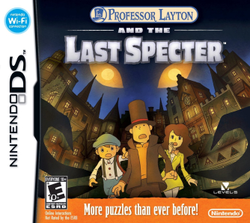










 Another SquareThought Site