

 Sep 2024
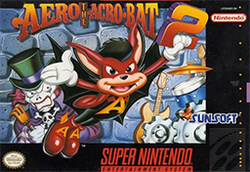

Aero the Acro-Bat 2 arrived in 1994 wearing more neon than a roller rink and a slightly goth makeover, and somehow survived long enough to be re-released on PS5 in 2024. This is the same game that originally trotted across the SNES and Genesis with ambitions of being both cute and dramatically brooding. The story is gloriously uncomplicated: Aero knocks a villain off a tower, discovers a magician's box, and is promptly transported to an ancient castle where the villain plots Plan B involving a kamikaze squirrel. It is the sort of narrative economy that says "plot" but refuses to stay for dessert. Playing Aero on a modern PS5 feels like dusting off a beloved hoodie and discovering the pockets are full of secrets, coins, and inexplicably, extra lives. Ratalaika Games' re-release brings the original version to a contemporary platform without trying too hard to modernize it. The controls, level design, and cheeky difficulty curve remain intact - which will delight anyone nostalgic for 90s platformers and mildly terrify anyone expecting hand-holding. If you are into precision jumps, secret-hunting, and bats who punch above their weight class, this is a tidy little time capsule that still plays with surprising polish.
Aero the Acro-Bat 2 is a classic platformer that divides itself into eight worlds, each world usually containing three acts. Levels are longer than the first Aero outing and stuffed with secrets the way a magician's hat hides more things than physics would recommend. There is no timer and no complicated objectives - your job is to find the exit at the end of each act, beat enemies, and gather power-ups. The pace is refreshingly old-school: exploration and repetition are rewarded rather than penalized. Mechanically, Aero keeps his signature drill jump from the original game, which you can aim diagonally up or down to reach platforms or enemies. The sequel adds a straight-down drill jump, deadlier than a poet at an insult contest, which lets Aero attack enemies directly beneath him and access otherwise unreachable nooks. You also get the familiar star-throwing attack and collectible food for points, preserving the arcade sensibility of the original. Each act contains four hidden letters spelling A-E-R-O; collecting them unlocks a cup-switching minigame where you can win extra lives. The minigame can also be openly bribed via the Options menu if you prefer your bonuses on demand. Design-wise, levels are long and inventive, with an emphasis on secret areas. The platforming is precise: jumps feel responsive, and the game rewards learning the rhythm of an area more than brute force. If you like pixel-perfect timing and the satisfaction of finding a hidden path, Aero 2 delivers. The boss encounters are the usual 'learn the pattern, exploit the pattern' affair, which for better or worse means triumph comes from patience rather than reflex miracles. The biggest modern caveat is that the game was not built with accessibility features you'd expect on a PS5 - no adjustable difficulty beyond the classic 'get better' model, and no modern save-anywhere system unless the re-release tacks on quality-of-life options. For purists, that's charming; for everyone else, it can be a test of stubbornness. Level variety is a highlight. Despite the gothic lean, the game never settles into a single mood - expect long winding stages, platforming puzzles, and secret routes that feel like rewards rather than tacked-on filler. The absence of a timer removes the stress of being rushed, which invites methodical exploration, and the ability to retry sections quickly keeps the frustration curve manageable. Critics at the time praised the improved moveset, larger levels, and clever secrets, and those observations still hold. The core loop is solid: explore, find secrets, use the drop drill to reach new areas, and enjoy the smug satisfaction of unlocking an extra life.
Graphically, Aero the Acro-Bat 2 made a small fuss when it first launched by using SGI technology to render backgrounds, which in 1994 meant Sunsoft was trying to make its stages look like dimensional dioramas rather than flat paintings. On PS5 the visuals are unaltered in spirit: colorful, chunky sprites with backgrounds that attempt depth through layered artwork. The art direction leans toward moody and theatrical - think Victorian castle meets circus tent that's had an identity crisis. The animations are crisp for a 16-bit era title, and Aero himself has enough expression frames to convey smugness, if not existential dread. Playing on a modern screen, the pixel art holds up well. The re-release preserves the SNES/Genesis charm: detailed foregrounds, parallax scrolling, and occasional set pieces that still look nicer than their era should allow. If you expect 4K particle effects and ray-traced gloom, the game will remind you it is a product of a simpler time, which is not an insult unless you are allergic to nostalgia. Several reviews at the time singled out the graphics and level design as top-tier for the console generation, and Nintendo Life's later commentary on the Virtual Console release praised the improved graphics relative to the original Aero. In short, the game looks exactly like a competent, lovingly crafted mid-90s platformer - and that's a compliment. Music and sound are serviceable and occasionally catchy. Rick Fox's compositions provide atmosphere rather than earworms, and the sound effects have that pleasingly punchy 16-bit percussion. There is no orchestral bombast, but the soundtrack supports the levels without making you reach for the volume dial in regret.
Aero the Acro-Bat 2 on PS5 is a faithful port that will please anyone who enjoys old-school platformers with a generous helping of secrets and a deadpan bat hero. The game keeps the satisfying drill-jump mechanics, extended levels, and quirky design choices that earned it respectable reviews back in 1994. Critics of the original and re-releases have praised its graphics, level design, and controls, while sometimes lamenting a lack of originality. That criticism is fair in the sense that Aero 2 doesn't try to reinvent the genre - it polishes it. If you are approaching Aero as a nostalgia piece, you will find much to love: the exploration, the hidden letters, the drop drill, and the slightly melodramatic backgrounds all work together to deliver a compact, enjoyable platformer. If you expect modern conveniences like adaptive difficulty, extensive accessibility options, or gameplay innovations tailored to today's standards, you may be left wanting. For me, the PS5 release is a pleasant reminder that games once thrived on clever level design and tight controls rather than cinematics and 120-hour epics. Score: 7.5/10 - a solid recommendation for platforming fans and anyone who enjoys a bat with more tricks than a magician's sleeve.
 Aero The Acro-Bat 2 on Xbox Series X/S
 Aero The Acro-Bat: Rascal Rival Revenge on Xbox Series X/S
 The Wacky History of Platform Games
 Roblox on PS4
 DreamMix TV World Fighters on PS2
 Toki Tori on Switch
 Turok: Dinosaur Hunter on Switch
 Aero the Acro-Bat on Switch
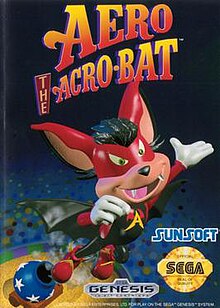 Aero The Acro-Bat: Rascal Rival Revenge on PS5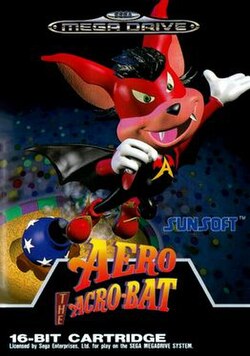










 Another SquareThought Site