

 Apr 2024
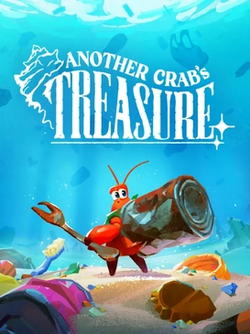

Another Crab's Treasure is the sort of game that politely asks you to die a lot and then clucks at you for leaving microplastics all over the place. You play as Kril, a misanthropic hermit crab whose shell was repossessed for unpaid taxes by a loan shark with the charming name of loan shark. It is a Soulslike, which means combat is deliberate, punishment is tidy, and you will become emotionally invested in a fork. Aggro Crab manages to blend the familiar weight of soulsborne combat with a surprisingly buoyant sense of worldbuilding: a polluted ocean, a city built from trash, and characters who treat cardboard cereal box mazes as urban planning. The PS5 version sits comfortably in the competent range, matching the critical consensus that the game is sturdy, occasionally brilliant, and occasionally stingy with polish.
If you have played a Soulslike, you know the drill. Dodge, wait for an opening, and then stab small things until their health numbers get embarrassed. If you have not, the drill is still dodge, wait for an opening, and then stab small things until they get embarrassed. Kril's primary weapon is a discarded fork, which is both thematically perfect and mechanically consistent: it is the one tool you will carry from the tide pool to the abyssal depths. You can upgrade that fork using Stainless Relics, which turns the otherwise grim work of slaughtering polluted enemies into the slightly more satisfying chore of optimising a utensil. The shell system is the game's clever core. Trash becomes armor, and each Shell functions as both protective gear and a limited-use power with its own Shell Spell. Tuck into a shell and you are almost invincible to everything except Grab attacks; the tradeoff is that the shell takes damage and can shatter, which is an elegant way of making defense feel risky instead of complacent. Shell Spells spend Umami, the game's mana, and Adaptations-special abilities learned through progression-spend the same resource. The Balance meter is another neat touch: fill an enemy's balance and they Capsize, which is basically Souls parrying with a nautical slap. Timing is rewarded, and when you land that critical hit after capsizing a bloated crustacean, it feels worth the reputation damage you will sustain from your salt-streaked keyboard. Another Crab's Treasure does not pretend to be stingy with options. Unlike most games in the genre, you may change difficulty at any time. The default setting is hard, because of course it is, but if you want less suffering you can dial it down without having to stage a dramatic protest. That accessibility decision is quietly revolutionary for a Soulslike. Exploration plays well with combat: the underwater world is interconnected, with some branching routes and some linear corridors that funnel you to trash-strewn calamities. Kril has a platforming moveset that is, honestly, more gymnast than crab: short swims after jumps, climbing netting, and a grappling hook via a fish hook make verticality feel meaningful. Certain Adaptations like the Mantis Punch let you access previously unreachable areas, which feeds the satisfyingly old-school loop of exploration, new ability, and revisit. Progress and setbacks follow familiar Souls logic. Microplastics are the currency; die, and you drop them. Return to your corpse and you can retrieve them. Die again before you reach them and they are gone forever, like a crab version of regretting all your life choices. Moon Snail Shells act as bonfires-spots to spend Microplastics, fast travel, and reset enemies. Aggro Crab also offers a forgiving wrinkle: if you die to most bosses, you get the option to respawn at a floating Moon Jelly instead of the nearest Moon Snail Shell, which is an oddly compassionate feature in a genre that usually enjoys watching you suffer. Combat variety comes from enemy design more than weapon kits. You face polluted foes, gunk-infested bosses, and the occasional megalomaniacal businessman who treats trash like assets. The enemy roster is inventive enough to make the fork feel versatile: some foes punish aggression, some punish complacency, and some punish you for looking at them wrong. The skill tree, unlocked through the Moon Snail NPC, opens offensive and defensive options that let you tailor Kril's build without feeling like you are chasing a meta. All of this is wrapped in environmental storytelling: item descriptions, stray messages, and the layout of the world itself deliver the plot with the same dry sarcasm that saturates the rest of the game.
Visually, the game makes a pleasing argument that trash can be aesthetic if curated correctly. New Carcinia, a city constructed from rubbish, looks lived-in in the way only a place built on detritus can: cardboard signage, corrugated pathways, and a skyline of floating junk that somehow reads as civic. The Old Ocean and bleached coral areas bring contrast, trading the bright grime of the city for a quieter, sadder palette. The design leans on environmental storytelling more than spectacle; you will notice story beats in the debris and the way architecture collapses under neglect rather than in long cutscenes. The shell designs are charmingly inventive. Each Shell visually telegraphs its defensive properties and spells, which helps when you are toggling gear mid-combat. Animation is unflashy but serviceable-Kril's swims and climbs are satisfyingly crablike, which is to say he is awkward in a way that feels intentional. On PS5 the frame pacing and load times are generally respectful of your impatience, with the port receiving middling-to-good critical scores on that platform. There are moments where textures and draw distance remind you the game is an indie title made in Unity, but those moments are never catastrophic. The overall package is more about mood and design coherence than high fidelity, and it succeeds at creating a believable, if polluted, underwater world.
Another Crab's Treasure is a Soulslike that prefers satire to nihilism and trash to treasure-sometimes literally. It pairs familiar, satisfying combat with an unusual amount of movement freedom and accessibility options, most notably the ability to change difficulty anytime and quality-of-life respawn choices for boss deaths. The shell system is clever and tactile, turning found junk into meaningful choices rather than cosmetic clutter. Its narrative is equal parts bleak and mordantly funny, culminating in a plot that involves loan sharks, a garbage storm, and a Perfect Whorl that confers godlike power. The ending is messy and fitting: people will exploit trash for the promise of wealth, then grudgingly clean up later, and Kril will walk away with the existential baggage of someone who has learned that you can lose a house to taxes and still find a new one in the wreckage. The PS5 build sits comfortably with critics: not a flawless triumph, but a distinct and memorable title. If you enjoy deliberate combat, exploration that rewards curiosity, and deadpan environmental humour, this game will give you many hours of productive frustration and occasional delight. If you hate any of those things, you will still have time to stare at the ocean and consider whether a loan shark is an appropriate antagonist for a hermit crab. Either way, you will leave with a deeper appreciation for forks.
 Summer Time Rendering: Another Horizon on PS4
 A.C.E.: Another Century's Episode on PS2
 Wuchang: Fallen Feathers on Xbox Series X/S
 Hellpoint on PS5
 Wuchang: Fallen Feathers on PS5










 Another SquareThought Site