

 Jan 2023
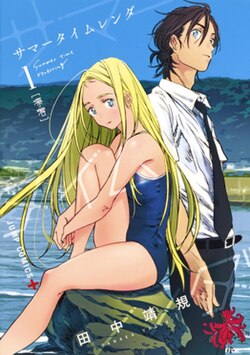

Summer Time Rendering: Another Horizon arrives on PS4 like a guest at a funeral who insists they came for closure but also brought snacks and a suspiciously cheerful scrapbook. Developed and published by Mages, the visual novel retells the anime's main storyline set on the eerily picturesque island of Hitogashima while adding six original side stories and a brand-new ending. If you enjoyed the anime's mixture of time loops, doppelgängers called Shadows, and small-town paranoia, this is the version that offers more of the same, plus a few new angles to stare at while pretending you weren't just peeking for spoilers. The game's pitch is simple and sincere: replay the tension, the mysteries, and Shinpei Ajiro's talent for walking into bad situations so the rest of us can watch him improvise his way out. The anime cast reprised their roles and Yasuki Tanaka designed an original character, Kaori Koyuba, voiced by Yui Ogura, so it feels like the production treated the game not as an afterthought but as a proper footnote to the franchise. For anyone who binged the show and wanted more timelines to stare at, Another Horizon is here with a polite bow and a stack of alternate narratives.
If you have played even one visual novel in your life, you already know roughly what to expect: read walls of text that are trying their best to be tense, click to advance, occasionally make a choice, and then either get the good or bad ending depending on how much attention you paid to that one throwaway line three chapters ago. Another Horizon follows this formula closely, which is both comforting and slightly disarming. The core of the experience is the retelling of the anime's 25-episode arc, condensed into a reading format that preserves key events and pacing while offering the player branching opportunities to explore side material. The six original stories are the game's selling point. They slot into familiar narrative beats like bonus discs on a collector's edition DVD: sometimes illuminating, sometimes charmingly tangential, and occasionally the thing you'll remember over the main plot because it does something a bit unexpected. Choices in the visual novel influence which of these side narratives you unlock and how certain relationships develop. The game also promises an "original ending," which is fairly brave for a title built around a finished anime-it's the equivalent of rebooting a movie franchise to tell the one subplot fans whispered about at conventions. Gameplay is largely passive: the writing carries the weight, and the player's main work is to choose branching options at critical moments. These choices are where Another Horizon tries to inject agency. Pick the right conversational thread and you get one of the original scenarios or deeper insight into a character; pick poorly and you get a replay loop or a terse epilogue that is markedly less satisfying. Replayability is therefore baked into the structure-not in the sense of emergent systems that surprise you, but in the sense that the novel is a puzzle you solve by reading it enough to learn which doors lead to which rooms. There is also the series' core conceit-the time loop ability of Shinpei-woven into the narrative experience. The game doesn't attempt to gamify the loop with complex mechanics; instead, it treats looping as a storytelling device. You learn, try a variation, and then return to select a different path. That approach keeps the focus where it belongs: on the characters and the slow, steadily unsettling revelation of what the Shadows are up to. Players who liked the anime's detective aspects will appreciate the payoff, though those hoping for interactive detective mechanics-inventory, logic puzzles, or minigames-may find the experience more like an immersive audiobook than an adventure game. Presentation-wise, the game is loyal. The anime voice cast returns, which helps sell the emotional beats and the occasional melodrama. There's limited interactivity beyond choice points and some menu navigation, but the writing usually rewards patience. The limited edition saw fit to include a guidebook and an original soundtrack CD, which is the proper reward for fans who will, inevitably, replay routes until they have memorized every piece of dialogue about Ryūnosuke Nagumo's novels.
On PS4, Another Horizon looks exactly how a faithful visual novel adaptation should look: like a very pretty, static comic that occasionally uses motion to remind you the characters are still breathing. Character portraits are crisp and true to Miki Matsumoto's designs from the anime, while the backgrounds do a strong job of evoking Hitogashima's quiet streets and sun-bleached, slightly uncanny beaches. There are moments where subtle animations-blinking, hair moving in a gust, small camera shifts-add atmosphere without trying to pretend the game is anything other than a story-first experience. The visual direction favors mood over spectacle. Lighting choices and color palettes excel at turning sunny island vistas into scenes of creeping dread. Shadows (the monsters, not the design choice) are handled more through implication than graphical showmanship: you get the suggestion of wrongness, which is usually more effective than a detailed model. Cutscenes are present but sparse; the game relies on careful composition of stills and voice acting to sell major plot revelations. If you were expecting flashy 3D action, this will disappoint. If you wanted to sit under a digital parasol and watch excellent character art have a nervous breakdown, you're in luck.
Summer Time Rendering: Another Horizon is not trying to reinvent the visual novel wheel. It retells a strong anime, adds six new stories, gives fans an original ending, and wraps it all in polished presentation and the original voice cast. For fans of the series, it's a generous expansion that deepens some relationships and teases out extra corners of a story about time loops and identity theft by shadow-creatures. For newcomers, it functions adequately as a compacted version of the anime, though the best experience still comes from having some prior knowledge of the show and characters. The game's deadpan charm comes from how seriously it takes its own premise: teenagers, doppelgängers, and rural gods are handled with the weight of soap opera stakes and the pacing of a locked-room mystery. It isn't a must-buy for players who expect heavy interactivity, but as a piece of franchise fiction it is competent, occasionally surprising, and reliably watchable-if by watching you mean clicking through well-acted scenes while making choices that politely nudge the narrative door open a fraction further. If you liked the anime's slow-burn tension, give it a go. If you are allergic to reading large amounts of dialogue that lead to satisfying narrative closure, maybe stick to the anime and preserve your thumbs.
 Prince of Persia: The Sands of Time Remake on PS4
 Time Crisis on PlayStation
 TimeShift on PS3
 Root Film on PS4
 Tokimeki Memorial Drama Series Vol. 3 Tabidachi no Uta on PlayStation
 Oshiete! Popotan on PS2
 Princess Princess on PS2
 Robotics;Notes Dash on Switch
 Laid-Back Camp: Have a Nice Day! on PS4
 Anonymous;Code on PS4
 Famicom Detective Club: The Missing Heir on Switch
 Anonymous;Code on Switch










 Another SquareThought Site