

 Oct 2025
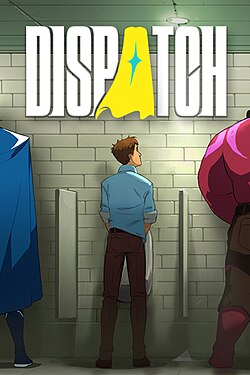

Dispatch sells itself as a workplace comedy for people who once coveted capes but now worry about PTO. Beneath the jokes, though, AdHoc Studio built a surprisingly thoughtful soap opera about how people remap themselves after trauma. You play Robert Robertson III - Mecha Man - a third-generation superhero whose identity is weirdly divided between the man in the suit and the man who needs to fix it. When the suit gets blown up and retirement looms, he swaps one fantasy (being an untouchable powered icon) for another, less cinematic one (taking calls, juggling egos, and learning to rebuild from the ground up). The game's episodic structure, voice ensemble, and choice-driven narrative make it less 'smash the villain' and more 'navigate the living, complicated human mess that is a modern superhero team.' This review digs into the characters, their arcs, and how your choices either stitch these people back together or cut them in dramatic ways.
Dispatch's mechanical bones are deceptively neat: dialogue trees, a map-based dispatch system, and a few QTEs and hacking minigames. But where the game actually lives is in character management. The SDN map doesn't just ask you which hero is strongest; it asks you who belongs at a scene, who needs a win, and who can't be trusted to keep their cape on. That design choice converts what could have been sterile resource allocation into moral triage, and that's where character arcs benefit the most. Robert's arc is the spine. He starts as a grieving, slightly entitled relic of heroic lineage, defined by his mech and the ghost of a father he's chasing. Being forced into dispatch strips him of performative heroism. Gameplay forces you to live in the details - choosing who to send, who to bench, and who to fire - and those decisions become character therapy. Cut a teammate to 'send a message' and you're not just editing a roster; you're altering the Z-Team family dynamic and Robert's own sense of justice. The game constantly undercuts the fantasy of instant redemption with payrolls, office politics, and the petty cruelties of bureaucracy. If Robert's biggest arc is learning humility, the player earns it through having to weigh outcomes: save the suit component now, or let a team bond heal later? Courtney / Invisigal is Dispatch's most fascinating narrative variable. Laura Bailey voices her as a brittle, sarcastic woman whose invisibility hinges on a literal breath: that mechanic underscores the fragility of her redemption. She's the one who planted the bomb in Robert's suit, a reveal that could have been a pure trapdoor twist. Instead, Invisigal's arc is an invitation to argue about forgiveness in real-time. You can trust her, give her responsibilities, and watch months of rehabilitative progress actually change how teammates treat her. Or you can ostracize her, and the narrative punishes you with a version where she sheds her last ties and walks away with Shroud's mask. The fact that Invisigal can either die protecting Robert, be welcomed back, or become the new masked antagonist is testament to how Dispatch makes agency feel palpable. Mandy / Blonde Blazer and Chase / Track Star function as narrative mirrors for Robert. Mandy is corporate competence embodied: her amulet grants flight and strength, but take it away and she becomes visibly human - a useful reminder that public image is an accessory. Her relationship with Phenomaman and managerial role push Robert into adult conversations about leadership versus celebrity. Chase, voiced by Jeffrey Wright, is mentorship with a time bomb. His power ages him aggressively; his body is an archive of a thousand heroic sprint-years. The game uses this physical consequence to explore what sacrifice looks like behind the quips. In a brutal, satisfying scene, the team gives Chase a sliver of help - an amulet loan - and it lands emotionally because we've watched him teach Robert to dispatch with patience. The Z-Team is Dispatch's playground for redemption themes. MoistCr1TiKaL's Sonar is a tragicomic Harvard-educated bat-man whose cocaine addiction and monstrous form complicate the binary of villain and hero. Alanah Pearce's Malevola Gibb and the bulked-up Golem, Coupé, Punch Up, Flambae, and Waterboy all bring idiosyncratic baggage that the game refuses to flatten. Sonar's struggle with addiction isn't just flavor text; it shows up in mission suitability and team trust. Choosing to rehabilitate or re-incarcerate members makes the Phoenix Program feel lived-in rather than schematic. Antagonist Elliot Connors / Shroud is the reverse side of Robert's coin. He's agile in his sociopathy: a former Brave Brigade member gone rogue, wearing a mask that lets him predict moves. Shroud drives Robert's vengeance arc and also demonstrates what happens when grief radicalizes someone. Gameplay gives you the option to kill or spare Shroud, and that choice isn't cinematic morality for morality's sake. It changes consequences: a killing can cost Robert his job, while sparing him lets the public and your teammates remain morally complicated about you. The dog Beef being taken hostage is a darkly comic but effective lever that forces Robert - and the player - to confront impulse control in a world that never forgives hero mistakes. Voice casting elevates all this. Aaron Paul's Robert oscillates between wounded masculinity and exasperated dad-jokes; Jeffrey Wright sells every weary mentorship beat; Laura Bailey makes Invisigal's moments of vulnerability sting. The result is a game where the choices don't feel like binary toggles but conversations you're having with living people.
Built in Unreal Engine 4, Dispatch favors a stylized, comic-inflected look over photorealism. Character silhouettes and facial animation are expressive, serving both the comedic and emotional beats. Environments are practical and readable-SDN's call center feels like a functioning office for superheroes, and the city retains a lived-in quality that supports narrative focus rather than technical showboating. The PS5 handles the presentation smoothly, and small visual details (torn sleeves, bruises, cape weight) deliver emotional punches when dialogue carries the scene.
Dispatch is a rare genre hybrid: a dispatch-sim wrapped in an interactive drama, anchored by memorable characters and the choices that shape them. It's at its best when it forces you to make uncomfortable personnel calls and then hands you the interpersonal fallout. The game's hacking minigames and QTEs aren't deep, but they serve as seasoning rather than entrée; the meat is the ensemble and how decisions ripple through relationships. The episodic pacing helps characters breathe and gives performances room to grow, and the multiple endpoints for Invisigal and Shroud prove that this story means what it says about redemption and consequence. If you want a cape-and-explosion sandbox, Dispatch will politely hand you a headset and direct you to another aisle. If you like stories where the real fights happen in break rooms, therapy sessions, and PR meetings - and where killing a villain can cost you everything - then Dispatch is one of the better narrative games of its year. It's smart, frequently funny, and occasionally heartbreakingly human. The game's commercial success and critical praise are deserved: it turned a modest studio's gamble into a character study that actually makes you care about who answers the phone when the world burns. Play it for Robert's reluctant growth, stay for Invisigal's messy, brilliant arc, and maybe, just maybe, you'll start checking the little boxes that make team management feel less like a spreadsheet and more like life.
 Neon Chrome on Switch
 Damascus Gear: Operation Tokyo on Switch
 Tintin: Destination Adventure on PlayStation
 One Piece Grand Adventure on PS2
 Spirit: Lucky's Big Adventure on PS4
 The Princess and the Frog on DS
 The Wolf Among Us 2 on Xbox Series X/S










 Another SquareThought Site