

 Mar 2026
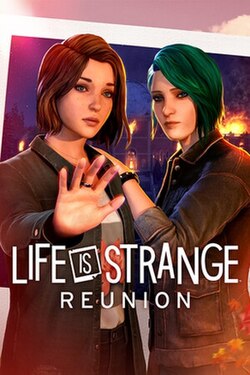

Life Is Strange: Reunion is the emotionally loaded final act for Max and Chloe, built in Unreal Engine 5 by Deck Nine and delivered to PS5 owners with all the earnestness of a late-night heart-to-heart and a few too many texture seams. Reunion promises a technical and narrative bridge between the franchises older timeline-based mechanics and the newer instalmentsapproach to branching drama. On PS5 its a game of contrasts: polished art direction and an excellent soundtrack sit beside a handful of engine-level hiccups and deliberately simple mechanical systems. If you care about the "how" of games as much as the "why," Reunion is equal parts inspiring and infuriating; it shows what UE5 can do for painterly lighting and cinematic composition while also reminding you that asset streaming and shadow budgets still bite when production schedules get tight.
Reunions mechanical backbone is modest and intentionally restrained, which will make engineers and designers nod in recognition and completionists roll their eyes. The playable roster of two protagonists is the headline: Max Caulfield returns with an evolved "rewind"-not an unrestricted time machine but a localized, deterministic undo that can only jump seconds to minutes back and only to moments in which Max was present. Thats an important design constraint: it reduces combinatorial chaos and frames time manipulation as a tactical, spatial problem rather than a narrative escape hatch. Mechanically this manifests as two clear affordances: tactical undoing of conversational choices and short windowed branching in environmental puzzles. The polaroid-based long-jump (travel to a previously photographed past) is still in play, providing discrete scene-state changes rather than freeform timeline editing. Chloes "backtalk" returns as a mechanical complement. Its less declarative than combat and more a gated conversation tool-unlocking dialogue paths, bluffing NPCs, and access to areas Max cant reach. From a systems perspective, backtalk functions as a key-and-lock with narrative payoff: use it to change NPC states and open scripted beats. That simplicity keeps the player focused on story over systems, but it also places tight limits on meaningful mechanical progression. Puzzles are sparse and mostly logic/observation based: identify clues, use Max's rewind to test outcomes, or coerce a response with Chloe. There are no sprawling environmental physics puzzles or emergent systems; the game is intentionally authored. From a technical design angle, Reunion trades mechanical depth for branching surface. Choice consequences are noticeable but narrow: many decisions affect local scenes and some character fates in the climactic blaze, yet the game avoids sprawling state trees. This keeps QA manageable and narrative coherence high, but it reduces the reverberation of player agency. The dual-character structure is the more interesting mechanical gamble: switching between Max and Chloe creates alternating gameplay rhythms (time-tinkering vs. brazen social engineering) and lets designers tune tension by limiting each avatars toolkit. Its effective at creating contrast, though some players will want more depth per toolkit. The UX is clean: dialogue trees are readable, the rewind UI uses visual time markers and polaroid anchors to reduce cognitive load, and evidence-gathering is presented as a tidy inventory with memory playback. Where Reunion earns its keep is in the mechanical choreography of set-pieces-rescue sequences, infiltration beats, and the climactic fire play well because the scripting engineers focused on tight, testable systems rather than open-ended simulation. If youre evaluating it like a systems designer, its a conservative but coherent piece: predictable, low-entropy, and narratively optimized, at the cost of ambition in emergent gameplay.
Reunions visuals are an interesting study in UE5 trade-offs on PS5. Deck Nine leans on the engines strength for atmospheric lighting and cinematic framing: warm, analog-inspired palettes, soft volumetrics, and carefully composed set dressing give the university and abandoned Abraxas house a lived-in, nostalgic look. Character faces and performances are generally strong, bolstered by solid voice work and animation that mostly avoids the uncanny valley. The original score and licensed tracks sit in the mix in ways that enhance the cinematics without drowning out dialogue. Technically, however, the PS5 build shows the faults of mid-development UE5 titles: texture pop-in, LOD snapping, and occasional texture flicker crop up in dense scenes. These are symptoms of aggressive texture streaming and perhaps a conservative VRAM or IO budget; the engine prioritizes high-res assets for focal points but lets peripheral data stream in, which causes objects or decals to resolve visibly in front of the player. Players will also notice rough shadow edges and some shader aliasing in darker scenes, suggesting either a simplified shadow cascade setup or intentional performance scaling to maintain CPU/GPU headroom. The games particle work and fire simulation in the blaze sequence are competent, but the explosion feels more authored than simulateda deliberate choice that reduces physics instability but also reduces emergent spectacle. Performance-wise, the PS5 version targets stable frame pacing but doesn't present a locked 60fps experience in every scene; instead, it favors consistent animation smoothness and cinematic presentation. Memory and streaming constraints likely informed level design: many interior spaces resolve quickly and feel dense, while exterior campus areas are more modular and prone to pop-in. Comparatively, reception data shows Xbox Series X had a stronger consensus, which hints at platform-specific optimizations elsewhere. In short, Reunion looks terrific in still screenshots and mid-shot cinematics, but as a technical package it needs shader and streaming polish to match the ambition of its art direction.
Life Is Strange: Reunion is, at heart, a finishing move: it brings Max and Chloe back together, wraps some emotional threads, and presents those beats with careful audiovisual craft. From a technical and design perspective its a study in prioritization. Deck Nine chose stability of narrative and cinematic polish over systems complexity, which results in a game thats refined in some disciplines (lighting, voice direction, soundtrack integration) and understandably thin in others (puzzle depth, mechanical variety). On PS5 that choice is visible: the UE5 visuals and lighting are lovely, but streaming artifacts and shadow roughness remind you that engine greatness still depends on pipeline time and optimization. If youre a fan of the series and the Max+Chloe hook, Reunion mostly delivers the catharsis and the technical shine you want, even if it trips over a few performance seams. If youre chasing systemic gameplay depth or consequential, far-reaching branching, this isnt the most adventurous title to scratch that itch. For players who appreciate design that leans toward authored, testable, emotionally driven sequences rather than simulation, Reunion on PS5 is worth the trip. Just assume itll get a few post-launch patches to smooth texture streaming and fix the remaining visual jitterand enjoy the soundtrack while you wait.
 Fantasy Life i: The Girl Who Steals Time – Nintendo Switch 2 Edition on Switch 2
 DX Jinsei Game IV on PlayStation
 Jinsei Game DS on DS
 Tintin: Destination Adventure on PlayStation
 One Piece Grand Adventure on PS2
 Taiko no Tatsujin: Dokodon! Mystery Adventure on Switch
 Taiko no Tatsujin: Don to Katsu no Jikū Daibōken on Switch
 Life Is Strange: True Colors on PS5
 Life Is Strange Remastered Collection on PS5
 Life Is Strange: Double Exposure on Xbox Series X/S
 Life Is Strange: Double Exposure on PS5










 Another SquareThought Site