

 Oct 2026
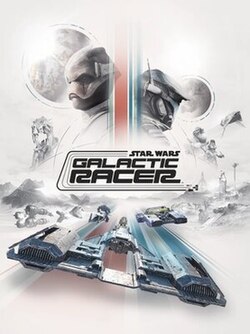

Star Wars: Galactic Racer bills itself as a 'Racing Adventure' and, somehow, Fuse Games has taken that label seriously enough to hand the steering wheel to characters rather than to a sterile series of time trials. Set in the New Republic era after Return of the Jedi, the single-player campaign is framed by the Galactic League - a lawless, Outer Rim soap opera in which trophies are earned with speed and grudges are settled at terminal velocity. The core dramatic triangle fueling the game is deliciously simple: Darius Pax, founder of the League and reluctant patriarch; Kestar Bool, the clan-backed racer-tycoon who wants the whole thing for himself; and Shade, a mysterious loner with a personal vendetta against the Bools. Sprinkle in cameos from Ep I racers like Ben Quadinaros and Sebulba, throw in podracers and a brand-new skimspeeder class, and you've got a racing story that wants you to care about the podium as much as the plot twist.
Galactic Racer's campaign is not content to be a string of circuits. Races exist within the political theater of the Galactic League: winning a heat is part race, part power play. The campaign's structure - racing plus off-track segments where you control a player character - is designed to allow character moments to breathe between laps. Darius Pax spends much of the early story as an exasperated idealist: he founded the League to create a spectacle and a semblance of fairness in a lawless part of the galaxy, and watching his creation gradually corrode under Kestar Bool's domination is the emotional engine that pushes the player forward. Pax's arc reads like the classic, quietly-ruined organizer trope: from hopeful founder to wounded owner to someone who must either reclaim authority or accept that his dream has been co-opted. Kestar Bool is the villain on paper, a clan-backed racer who uses muscle and influence to monopolize the League. In practice the game paints him as an ecosystem rather than a single man - a presence whose threat is systemic. The Bool clan represents corruption dressed up as tradition: their chokehold on the League shows how a racing culture can be captured by family politics and intimidation. Kestar doesn't have to be a one-note mustache-twirler because the game's world-building allows his clan to do the heavy lifting; he's the headliner for an entire system of advantage. Shade is the campaign's most interesting study. Presented as a mysterious loner with a personal grudge against the Bool family, Shade's arc is built, intentionally, as a slow-unfurling secret: why the grudge exists, whether it will consume Shade, and whether revenge will lead to catharsis or collapse. The choice to make Shade the tool Pax must recruit reverses the usual trope: instead of a hero raising a street-level rebel, we have a founder who needs an outsider to navigate the mud his institution has made. Shade's presence lets the player live in both worlds - the polished politics of the League and the jagged, personal underside of Outer Rim grudges. The game's roster - including familiar faces like Ben Quadinaros and Sebulba - functions like a Greek chorus. They remind players that the League is older than the present squabble; these racers carry the franchise's lineage and give Pax's fight stakes beyond ego. Mechanically, the variety of vehicle classes (podracers, landspeeders, speeder bikes and the new skimspeeder) also becomes a story device: pod-type legacy racers reflect the weight of tradition, while skimspeeders signal innovation and disruption - exactly the tension Pax faces when his creation meets Bool control. Vehicle-building elements let players personalize not just performance but identity: bolting on an underpowered engine and a scarred hull is narratively different from building a showpiece machine. Gameplay itself leans arcade: there's an Arcade mode with time trials and objective races, and multiplayer supports up to 12 players with a planned ranking system. The developers insist there's no single ideal racing line, which doubles as a narrative thesis: there's no single ideal path to resolve the League's crisis. The way tracks are designed - on Hoth, Endor, Tatooine, Lantaana, Jakku, Ando Prime and Sentinel One - gives each chapter a distinct emotional flavor. Hoth's open, brittle ice fields mirror Pax's isolation; Endor's dense foliage evokes the entangled loyalties of the League; Tatooine's dunes smell of sand, grit, and survival. Off-track segments let you wander into these environments, and those spaces are where the characters talk, scheme and reveal themselves. If you like your racing wrapped in political melodrama, the campaign gives you just that: skids, betrayal and a redemption arc that's measured in laps.
Built on Unreal Engine 5, Galactic Racer treats the Star Wars galaxy like an expensive theme park whose rides are all explosions. Planetary tracks are well-realized: Hoth looks like a place that keeps secrets in its ice, while Jakku's ruined vistas quietly whisper of past conflicts. Character models for the original racers and the new protagonists are serviceable; cameos like Sebulba and Ben Quadinaros land the nostalgia punches without ever turning into uncanny-valley nightmares. The skimspeeder class, being new to the franchise, gets some of the flashiest design moments - it's visually distinct and communicates the game's balance between legacy and innovation. Lighting and particle effects do the heavy emoting during races: dust plumes, ice crystals, and Endor's dappled sun all act like secondary actors supporting the human drama. On PS5, framerate and load times are expected to be generous, and the game's ambition - wide planetary vistas, multi-class vehicle physics, and off-track interaction - shows in the polish. If there's criticism to level, it's that the emotional beats rely heavily on set dressing; the graphics supply mood, but the characters need good writing to avoid being lost in the glow.
Star Wars: Galactic Racer does something clever: it asks players to care about the podium as if it were a throne. Darius Pax, Kestar Bool and Shade form a compact, satisfying dramatic core-a founder clinging to a dream, a clan that turned racing into domination, and a loner whose grudge forces everyone to reckon with the League's sins. Gameplay complements the arcs by giving players both racing thrills and off-track moments where those arcs breathe. The roster of vehicles and the variety of planets support narrative beats, and the presence of legacy racers anchors the story in franchise history. For fans of pure arcade racing this might feel like a story-heavy detour; for players who like their speed with stakes, Galactic Racer nails the tone. It isn't flawless: some emotional moments risk being overwhelmed by spectacle, and the villainy occasionally feels systemic rather than personal, which is a design choice more than a flaw. Still, Fuse Games has built a game that treats racing like storytelling: messy, fast, and occasionally heartbreakingly human. Recommended for anyone who wants their lightspeed with a side of soap opera - and who enjoys the idea that sometimes winning the race means fixing the racetrack.
 Lego Star Wars II: The Original Trilogy on PS2
 Angry Birds Star Wars on PS3
 Angry Birds Star Wars on PS4
 Tintin: Destination Adventure on PlayStation
 One Piece Grand Adventure on PS2
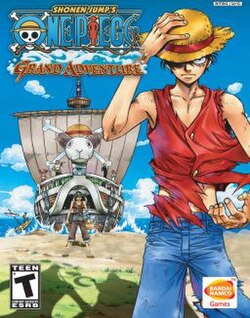 Team Sonic Racing on Switch
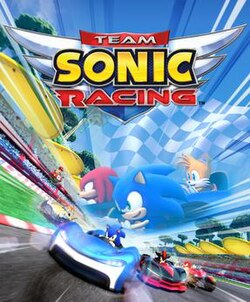 Tony Stewart's All-American Racing on PS4










 Another SquareThought Site