

 May 2026


This is a review written in a voice that remembers dial-up tones, strategy guides with maps folded into the spine, and magazine ink that smelled faintly of ambition. Zero Parades: For Dead Spies is ZA/UM's sophomore release, a departure from the detective-inflected moral theatre of Disco Elysium into the taut, morally ambiguous corridors of espionage. It preserves the studio's appetite for dense prose, philosophical asides and a refusal to hand the player a hero in a shiny box. Instead, you play Hershel Wilk, codename Cascade, an Operant with a fractured psyche who is sent back to the island city-state of Portofiro to pick up the threads of a bungled intelligence operation. The PlayStation 5 edition arrives as the console sibling to the Windows launch earlier in 2026, and on Sony's hardware the experience is primarily one of narrative fidelity rather than pyrotechnic visual gimmicks. ZA/UM makes no secret of its intentions: this is a story-first role-playing game that expects you to think, to negotiate with your own inner voices and to live with the diplomatic mess you help create. If you long for a role-playing game that treats espionage as an intellectual exercise rather than an action set piece, Zero Parades will sit comfortably on your shelf. If you came for fireworks, bring a paperback instead.
Zero Parades presents itself in a classical isometric view, a perspective that invites methodical observation rather than twitch reflexes. The core loop is exploration, conversation and decision-making; ZA/UM has carried forward the studio's removal of traditional combat in favour of skill checks and dialog as the principal means of conflict resolution. Hershel is as much a battlefield as the streets of Portofiro: she maintains a split psyche and many interactions are resolved by making checks against facets of her personality or against other characters. The system will feel familiar to anyone who admired Disco Elysiums voice-driven mechanics, but it has been retooled here with a distinct espionage tilt. The game adds a layer of mechanical theatre with stress meters that track things like anxiety, and an option to spend extra effort to gain mechanical advantage at the cost of increasing these stresses. This trade-off forces players to weigh short-term wins against long-term fragility, which is an elegant mechanical echo of spy fictions moral calculus: sometimes you make a choice that works and then awake the consequences later. Dramatic encounters function as mini decision trees, requiring commitment to a chain of options where success often hinges on a mixture of dice, attributes and narrative justification. They are tense, frequently clever, and rarely forgiving. Exploration is intentionally paced. Portofiro is a compact stage, a city-state with a history as a Luzian penal colony and geopolitical meat in a tug-of-war between three powers: the Superbloc, the Developed World under EMTERR and the authoritarian La Luz. The plot propels Hershel across the Quisach district, into safehouses and tram carriages, unpicking the death of an old asset named Tempo del Sur and the tangled negotiations involving Facundo Reyes and EMTERR. Dialog trees are dense and rewarding when you pay attention. There are occasions where the game expects you to infer more than it explainsa staple of classic adventure writingand at times the world seems less palpably lived-in than the feverish streets of ZA/UMs past masterpiece. You will meet a cast of operatives, double agents and bureaucratsPseudopod, Melita, Tesoro Buendia among themand the story leans into double identities, body doubles and staged assassinations in service of a plausible regional casus belli. Choices matter not because they lead to neat endings but because they rearrange the political weather; the final evaluation hinges on whether Facundo Reyes is alive, dead, or in custody, and that assessment sends ripples outward. For players who prize narrative consequence over combat choreography, Zero Parades is a satisfying, often weighty ride. Critically, the game has its stumbles. Several reviews noted that it sometimes tries too hard to echo Disco Elysiuma comparison that is unavoidable but not always flattering. Hershel, unlike Disco Elysiums Harry, can feel undercooked in places; the player can role-play her decisively, but the internal animation of her character is less vivid than the mechanical mindscapes the game otherwise presents. The worldbuilding is clever and ideologically textured, drawing inspiration from Cold War pastiches and the spy novels of John le Carre, but occasionally the city itself acts more as an information hub than a living place.
ZA/UM continues its painterly approach to isometric presentation. Artists Kaspar Tamsalu and Anton Vill have created environments that favour texture, tone and political grime over glossy polygonal spectacle. On the PS5 the game benefits from clean edges and smoother transitions, but the ambition here is not to showcase raw horsepower; rather, it is to present a map of human compromise in carefully composed tableaux. Character portraits and environmental details are rich with suggestion: a tram vestibule with a scuff pattern that implies a scuffle, a safehouse lined with pamphlets and old loan statements that silently explain Portofiros descent. The lighting is functional and moody, leaning into dusk and cigarette-lit interiors, and Fernando Cabreras score provides a discreet, sometimes elegiac underscore. If you want razzle-dazzle frame rates and ray-traced water, this is not your box. If you appreciate visual design that privileges narrative legibility and atmosphere, the PS5 presentation is a tasteful upgrade to a game that depends on reading faces and alleyways as much as it depends on text.
Zero Parades: For Dead Spies is a serious, adult role-playing game that treats espionage as a literary problem rather than a button-mashing fantasy. ZA/UM has traded Disco Elysiums detective noir for a spy story steeped in factional politics, body doubles and the cold arithmetic of statecraft. The result is an intelligent experience with mechanical innovationsstress costs for exertion, dramatic encounter chains and isometric explorationthat reward patience and attention. Critics have generally received it well: Metacritic sits comfortably in the 80s and OpenCritic reports a strong recommendation percentage, with outlets praising the writing even as some fault the game for leaning on its predecessors stylistic cues. This is a title for readers who like their role-playing games to be argumentative, for players who enjoy negotiating with inner voices and for anyone who finds moral compromise more compelling than a momentary high score. It is not perfect: the protagonist does not always feel as real as the systems that surround her, and the city of Portofiro occasionally reads as a stage more than a living organism. Those qualms aside, the PS5 release faithfully delivers ZA/UMs vision and does so with the gravitas of a studio that prefers a slow, incisive burn to pyrotechnics. If you are nostalgic for the long-form, text-heavy games of the 1990s but expect modern polish, Zero Parades will satisfy. If you measure a game by how often it makes your jaw tighten and your conscience twitch, you will find it hard to put down. Final verdict: an excellent, thoughtful spy RPG that earns an 8.5 out of 10.
 Dead Space Ignition on PS3
 Red Dead Redemption 2 on PS4
 Combat Elite: WWII Paratroopers on PS2
 Control Resonant on PS5
 Predecessor on PS4
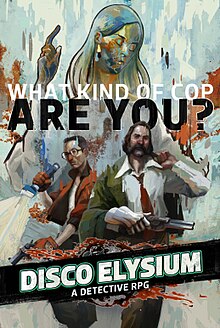 Disco Elysium: The Final Cut on Xbox Series X/S
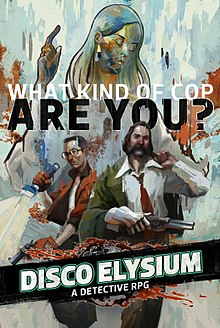 Disco Elysium: The Final Cut on PS5
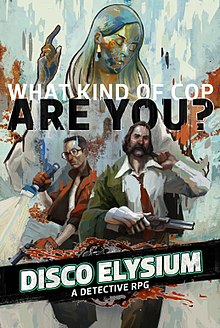 Disco Elysium on Switch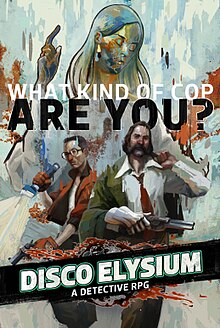










 Another SquareThought Site