

 Jan 2026
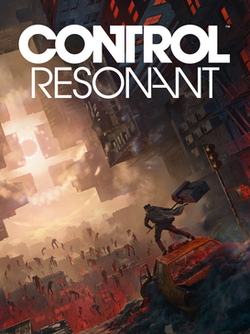

Control Resonant arrives with an optimistic checklist: a beloved studio, a curious shift in genre, and a protagonist who spent the last game being quietly broody in the background. Remedy has taken the strange, physics-bending cocktail that made Control feel like a lucid fever dream, poured it into a bigger flask, and added a dash of role-playing. If you enjoyed objects flinging themselves at your face last time, Resonant promises more of that in a city that thinks containment was optional. This is a review aimed at the PlayStation 5 edition based on what Remedy has announced and the generous margins of expectation that follow such a pedigree.
Resonant trades the third-person shooter stylings of the original for an action role-playing coat and, surprisingly, it fits. You play as Dylan Faden, a character who was previously excellent at being mysterious in the background and is now promoted to the centre of the chaos. His job description: find his missing sister Jesse and prevent cosmic reality from being excessively enthusiastic about expanding downtown Manhattan. Mechanically, Remedy is leaning hard into melee combat. The Aberrant, Dylan's main weapon, is a shapeshifting implement that sounds like it was named during a particularly creative staff meeting and is explicitly built to turn into multiple forms. In practical terms that means fewer pew-pew shooty moments and more up-close-and-personal improvisation with a thing that is alternately a bat, a blade, and whatever other ominous configuration the script needs at the time. The game is described as "open-ended", which in industry vernacular translates to "you can leave the main thread and wander like an anxious tourist through a city that is trying to unmake itself." There are optional quests and objectives, which suggests Remedy is expanding the earlier game's linear dramatic punch into something closer to an exploratory sandbox while keeping its storytelling chops intact. Player agency, exploration, and role-playing mechanics are listed as priorities, and that should make fans of slow-burn investigation and build-driven character progression intrigued. Remedy's statement that you do not need to have played the first Control to understand Resonant implies the sequel will aim for both continuity and accessibility - a sequel that waves at veterans and hands newcomers a map that says, "Yes, this will be weird, carry on." Combat emphasis on melee means the PS5's responsive controls and haptic feedback could elevate the feel of the Aberrant's transformations, assuming Remedy designs the input and animation transitions tightly. Expect encounter design to revolve around the interplay of Dylan's supernatural abilities and the Aberrant's forms, with enemy types likely engineered to punish single-minded approaches. Exploration is reportedly a bigger focus, so the joy of discovery - and the danger of optional side content that might be better left optional - should be a significant part of the loop. The game is single-player, so all of this chaos is yours to manage alone, which is both comforting and mildly terrifying depending on how you feel about eldritch funerals.
Control Resonant runs on Remedy's Northlight Engine, the same underlying architecture that handled the original game's uncanny blend of brutalist office design and reality-warping spectacle. While specifics about graphical features are scarce in the announcement material, Northlight's track record suggests a fondness for theatrical lighting, dramatic particle work, and environments that feel like sets designed by a committee of surrealist architects. On PS5 the expectation is that the engine will be able to push higher fidelity assets, smoother frame pacing, and faster load times than last generation hardware allowed. Remedy has always liked spectacle in service of story, so anticipate visual moments that double as narrative punctuation: a street folding into itself, an office chair pursuing you with prosecutorial intent, buildings rearranging like mood boards. The art direction will likely lean into noir-tinged, uncanny-city aesthetics rather than glossy realism, which fits the franchise's identity. Given the declared budget and the studio's stated intent to hold onto the "tenets of storytelling and spectacle" from the first game, Resonant's presentation should be more refined, maybe a touch grander, but still very much the kind of visual theater Remedy specialises in.
Control Resonant is shaping up to be a confident tonal pivot rather than a desperate reinvention. Swapping out the shooter backbone for action-RPG bones is risky in a market that adores labels and checklists, but Remedy seems to be doing so deliberately: to give the player more room to poke the city, to make melee and the Aberrant the centrepiece of set-piece fights, and to let Dylan carry, rather than shadow, the franchise's weight. The production story is notable too - Remedy reacquired the Control IP, attracted outside financing from Annapurna for half the development costs, and is operating with a meaningful budget and a clearly stated sales target to break even. Those are the kinds of adult decisions that, in theory, help the game get made without needing to sell their souls at auction. There are open questions: how well will the Aberrant's shapeshifting feel in sustained combat? Will an "open-ended" Manhattan be thoughtfully packed with meaningful content or rely on filler to hit the numbers it needs? Can the game keep the narrative punctuation and spectacle that made the original memorable while allowing players enough agency to make exploration feel rewarding? The inventive premise, Remedy's pedigree, and the technical base on PS5 lead to a cautiously optimistic score: 8 out of 10. That's not a promise that everything will be perfect - it is a promise that, if Resonant hits what's already on the pitch sheet, it will be a substantial, strange, and worth-your-time sequel. And if it doesn't, at least you'll have a shapeshifting weapon to console you while Manhattan quietly reconfigures your living room.
 Superhot: Mind Control Delete on PS4
 Control 2 on PS5
 Control: Ultimate Edition Cloud Version on Switch
 Combat Elite: WWII Paratroopers on PS2
 Onimusha: Dawn of Dreams on PS2
 Disney's Chicken Little: Ace in Action on PS2
 Tokyo Xanadu eX+ on PS4
 Control: Ultimate Edition on PS5
 Alan Wake II on PS5
 Alan Wake 2 on PS5Control: Ultimate Edition on Xbox Series X/S
 Alan Wake Remastered on PS4










 Another SquareThought Site