

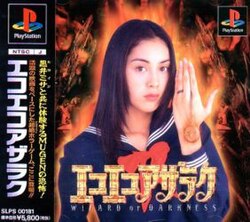

If you've ever wondered what would happen if a 1970s occult manga, a mid-90s J-horror flick and a PlayStation memory card had a slightly dramatic sleepover, Eko Eko Azarak: Wizard of Darkness is the awkward group photo. Based on the 1995 film (itself riffing on Shinichi Koga's cult manga), this visual/sound novel straps you into the sensible shoes of Misa Kuroi - a dark magician who, for reasons involving supernatural scent-detection and a love of school uniforms, transfers to a high school where the bizarre powers are apparently on sale that week. By the time the final bell rings, Misa and her classmates are locked inside, a mysterious magician is doing dramatic reveals, and classmates start dropping like cursed playing cards. It's moody, it's spooky, and it's the sort of game that expects you to bring both curiosity and a bookmark (literally).
This isn't an action romp where your thumbs earn a PhD in button-mashing. Eko Eko Azarak plays out like a 'sound novel' - think visual novel, but with sound and atmosphere taking center stage. The game's story is split into five chapters and it unfolds through text laid over background images. Every so often you're handed a choice, and that fork-in-the-night decides where Misa wanders next. The twist? There's a heartbeat mechanic. During some decisions you can hear a faint heartbeat ticking away; if you don't choose fast enough the game will do your indecisive brain a favour and pick for you. This is intended to inject panic into the narrative and make the stakes feel more immediate. In practice it makes you either feel like a dramatic heroine or a very expensive coin-operated machine. Bookmarks are the game's friendlier design choice. While you can only save at chapter endings, you can place bookmarks anywhere to return to moments you want to revisit. It's handy because the later chapters ratchet up the consequences: wrong choices can lead to sudden game over scenarios - and yes, people die. Fast. One of the more common complaints from contemporary reviewers was that characters are introduced, named, and murdered off so quickly that attaching any real emotional weight to their demise is tricky. If you're the sort of player who likes to get to know a cast like a set of new roommates before they mysteriously vanish, this game can feel like speed-reading a soap opera with a grudge. Length is another quirky quirk: reviewers at the time noted that the whole experience could be very short. One Dengeki PlayStation reviewer implied you could finish it in about half an hour. If you want a long branching epic you can lose sleep over, this isn't it. If you're into compact, tense bursts of narrative tension with a heavy reliance on audio cues, though, it scratches a particular itch. The design leans heavily on atmosphere and audio to deliver scares rather than puzzles or an abundance of branching content - which is exactly the point if you asked the game, but not always what everyone wanted in 1995 (or now, if we're honest).
Graphically the game is a collage of sources: it mixes Shinichi Koga's manga illustrations with footage from the film, and that's both charming and a little frustrating. The illustrations lend the experience an authentic manga-tinged flavour and the film clips feel like ghostly cameos, but the overall visual package is surprisingly sparse. Famitsu and other reviewers at the time pointed out a shortage of character images and full motion video sequences; names of classmates pop up and then vanish so quickly that you're left squinting at the text, trying to remember whether that body belonged to 'Kimiko' or 'That one kid who always chews gum.' Where the game really earns its keep is sound design. Critics repeatedly praised how audio weirdly does the heavy lifting here: eerie soundscapes, well-timed effects and that heartbeat mechanic contribute to a genuine sense of dread. The heartbeat is clever on paper - it adds tension during decision points - but some players found it unforgiving when they needed a second to think. The contrast between solid audio tension and comparatively minimalist visuals gives the game an odd, retro-chic vibe: it's like being scared by a well-told ghost story around a campfire while someone occasionally flashes a single Polaroid of a demon.
Eko Eko Azarak: Wizard of Darkness is an atmospheric, slightly lopsided relic from an era when PlayStation horror was experimenting with nerves rather than polygons. If you're a fan of the manga or the 1995 film, you'll appreciate the inclusion of Koga's artwork and the film snippets - it feels like a tie-in that actually tried to lean into the source material's strengths. The sound design is the real MVP: it creates tension in a way that the visuals purposely leave unresolved. That said, the game is short, sometimes too abrupt in its storytelling, and the heartbeat timer can make thoughtful choices feel more like timed pop quizzes from a ghostly substitute teacher. Contemporary reviews echoed these hits and misses: critics liked the atmosphere but found the story rushed and the presentation thin on imagery and branching depth. So who should play it? Pick this up if you enjoy vintage J-horror, like atmospheric soundscapes, or collect oddball PlayStation adaptations for nostalgia points. Skip it if you want deep character investment, long playtime, or a branching narrative that actually lets you savor each friendship before it becomes suspiciously small and quiet. It's not a masterpiece, but it's an interesting little experiment - a moody midnight short story of a game with a wicked soundtrack. Consider it a nifty curiosity for your retro shelf, or the perfect game to play when you want to be mildly unnerved and very efficient about it.
 Wizard with a Gun on PS5
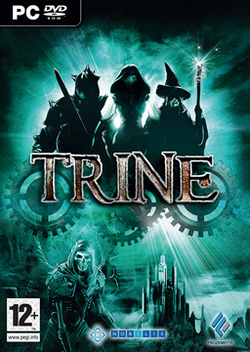
 Trine: Enchanted Edition on PS4
 Tokimeki Memorial Drama Series Vol. 3 Tabidachi no Uta on PlayStation
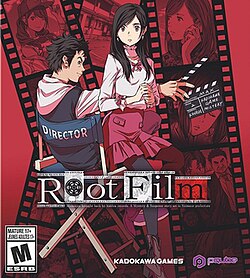
 Root Film on PS4
 Oshiete! Popotan on PS2
 White Album on PS3
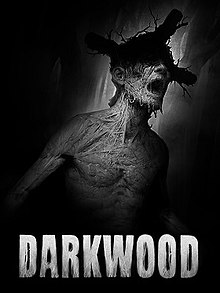
 Darkwood on PS4
 Demon's Tilt on PS4
 Lies of P on PS5
 Lies of P on Xbox Series X/S
 DJMax Respect V on Xbox Series X/S












 Another SquareThought Site