

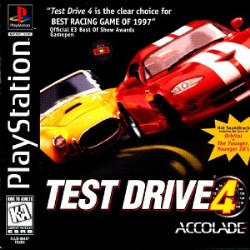

Test Drive 4 arrives like a leather-jacketed shout from the late '90s: fourteen licensed beasts, real-world locations, and a techno soundtrack trying very hard to be the wind in your hair. If you remember the era when polygonal cars still looked like they might sprout edges, TD4 is a representative specimen - ambitious, occasionally brilliant, and stubborn about teaching you the hard way. This review looks at the game through one lens only: how it challenges you, what skills it asks you to develop, and whether the learning curve is a rewarding climb or a faceplant into a telephone pole. The game trades multi-lap circuits for point-to-point courses across Kyoto, San Francisco, Bern, Washington D.C., and Keswick, Cumbria. The PS1 box boasts a Shelby Cobra and Dodge Viper on the front because nothing says "test your reflexes" like a pair of cars that can scold your overconfidence. There are traffic hazards, police interventions, oncoming cars, a ticking checkpoint timer that plays referee with your ego, and an AI that doesn't believe in personal space. In short: this is not a cruise down the arcade boulevard. It's a demanding little simulator wearing arcade shoes.
Test Drive 4's core design is simple on paper, fiendish in practice. Races are long, linear sprints along realistically modeled roads rather than tidy circuits. Each stage hands you a countdown: arrive at a banner before the Checkpoint Timer expires and you earn more time; miss it and the stage ends with a cold, unforgiving "nope." That mechanic alone turns every run into a rhythm challenge. You learn to parse the map like a metronome - accelerate here, feather the brake there, and always keep one eye on the next banner. It's time-management under velocity. Traffic and oncoming cars are placed not as scenery but as active obstacles. Their presence forces you to master spatial anticipation. The skillset needed goes beyond twitch throttle response: you must plot trajectories several seconds ahead, pick escape corridors, and accept that sometimes the optimal line is a polite lie. Oncoming traffic punishes blind optimism - commit to an inside apex and you might be treated to a surprise head-on rendezvous with a minivan. That keeps races tense and forces drivers to trade absolute speed for situational awareness. Police chases are Test Drive's mini-game within the race. Exceed the speed limit and a cop car will try to stop you. The game gives two blunt countermeasures: stop in front of the cop and hope the justice system is tired that day, or outrun it. This adds a layer of resource management; you have to decide whether to bleed time by slowing down or to gamble on your car's top speed and handling. It's a psychological duel: will you be a cautious pedestrian or a reckless myth? The choice also affects checkpoint planning, because pulling over can be cheaper than getting stopped far from the next banner. Controls are the part of TD4 that will separate casual joyriders from precision players. Critics at the time complained, and with reason: steering is sensitive, and the car's weight-shift response lacks the smoothness of later racers. In practice this means margin for error drops with speed. At 90+ mph, a small twitch can start a spin that feels like a physics teacher slapping your wrist. The necessary skills are fine throttle modulation and light, predictive steering inputs - you need to learn how much correction your chassis can accept before you become an involuntary ballet of smoke and bent fender. Because handling can feel 'all or nothing', players who succeed develop a mindset similar to sliding a delicate pint glass across a wobbling table: gentle, deliberate touches, not brute-force steering. Braking technique becomes your friend; mastering trail braking into short corners is often the difference between clipping a glancing crash and arriving with dignity. Similarly, selecting the right car for the situation matters. The game gives you a handful of vehicles to start, then asks you to either win or buy the rest. Muscle cars and modern supercars behave differently; learning the personality of each car and matching it to the track is a meta-skill TD4 rewards. AI opponents are a mixed bag but ultimately a useful tool in the game's educational toolbox. Some reviewers at the time found the AI "deranged" or aggressive, but that aggression doubles as training. They push you into realistic defensive driving situations: blocking lanes, bumping, trying to make room. You learn to exploit gaps and anticipate other drivers' desperation. Unlike predictable rubber-banding nonsense, these opponents feel like drivers who are trying to win at all costs. That can be annoying the first dozen times you're shoved into a guardrail, but it forces improvement. Besides the main races, TD4 offers Drag Races - a different skill set entirely. Launch timing, clutch-like instincts, and the mental discipline to keep the revs in the sweet spot are what win drag strips. If handling is chess, drag racing is reflex piano: it's about rhythm and timing rather than line. The inclusion of drag strips makes the game a broader test of car skills rather than a one-trick speed show. There's multiplayer if you have a Link Cable, which is a glorious throwback: nothing hones your skills like letting another human show you where your route planning is wrong. Two-player races expose your weaknesses instantly and push you to adapt dynamically rather than relying on memorized ideal lines. Difficulty-wise, Test Drive 4 is not apologetic. The checkpoint clock, traffic, police, sensitive handling, and aggressive AI chain together into a steep-but-fair training program. It's less about one impossible boss and more about a steady accumulation of small, precise demands: timing, anticipation, reflex moderation, and vehicle knowledge. If you enjoy being taught by repeat failure and incremental improvement, this is your kind of teacher. If you want to coast, expect to be unceremoniously dropped at the first checkpoint.
When evaluating TD4's visuals, critics were split and you will be too depending on your memory of PlayStation-era standards. On the plus side, the car models on the selection screens are lovingly detailed enough to be recognizable - the Viper and Cobra have personality in their still images. In-race models are less impressive, with detail and draw distance limitations that were common on the original PlayStation. Some reviewers praised it as one of the more detailed racers of its time; others found the in-race fidelity lacking compared to the car-select glamour shots. Track variety is a highlight visually because the game tries to capture real places: the hills of San Francisco, Kyoto's straighter urban stretches, and Washington D.C.'s avenues. That variety supports the gameplay by changing the kinds of challenges you face: tight, short corners in rural lanes demand a different skill set than sweeping urban highways. Frame rate and pop-in can bite during heavy traffic or at speed, which makes the game's already sensitive handling feel even more precarious. You learn quickly to trust the cues on the road rather than relying on distant detail. Sound and music received their share of debate as well. Test Drive 4 leans into techno and licensed tracks which some found energetic and appropriate, others found tired. The crucial audio feedback for speed, gear changes, and collisions is serviceable and helps you sense what the car is doing when visual polish falters. In short: the game looks like a late-90s console racer - some charm, some technical limits - and with gameplay that often asks you to close your eyes and feel the road more than admire the scenery.
Test Drive 4 is a learning-heavy racer wearing a late-90s outfit. Its main appeal is the collection of tightly intertwined challenges: checkpoint timing, traffic negotiation, police encounters, and handling that punishes sloppiness. These elements coalesce into a game that expects you to learn; it doesn't hand you victories. If you're the kind of player who enjoys incremental mastery - shaving tenths off times by better braking, learning where to risk outrunning the cop, or choosing the right muscle car for a winding countryside run - TD4 will scratch an itch most arcade racers leave untouched. The game isn't flawless. Steering sensitivity and occasionally inconsistent visuals can make triumphs feel less polished than they should, and the soundtrack won't convert everyone. But TD4's aggressive AI, real-world track variety, and the mental juggling of time, space, and speed create a satisfying training ground for driver skills both practical (anticipation, throttle control, braking) and meta (car selection, route memorization, risk calculation). Recommendation: play Test Drive 4 if you like your racing with a bit of stress-testing. It's challenging without being cruel, and every checkpoint reached feels like you earned it. For newcomers to classic racers, expect a learning curve. For veterans who liked the era's harsher lessons, TD4 delivers. Final tally: 7.0/10 - a solid, sometimes stubborn racer that teaches you to drive better by repeatedly making you look like you don't.
 Test Drive: Off-Road 2 on PlayStation
 Test Drive 6 on PlayStation
 Roary the Racing Car on DS
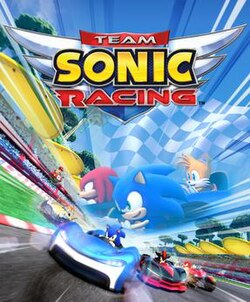
 Team Sonic Racing on Switch
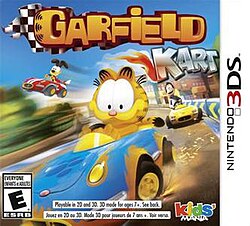
 Garfield Kart: Furious Racing on Switch
 Ben 10: Galactic Racing on PS3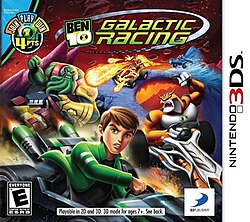
 Big Air on PlayStation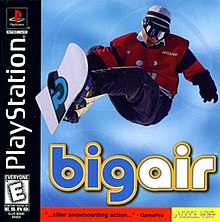












 Another SquareThought Site