

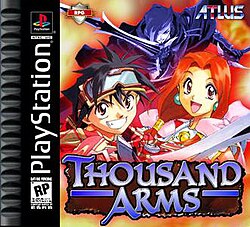

Thousand Arms is the sort of game that tries to be two things at once and mostly succeeds, the way a person who cooks and does taxes in the same afternoon succeeds in keeping a roof over their head. On one side it is a fairly conventional turn-based RPG set in a mildly steampunk world full of cyborgs, mechanical overlords, and sacred flames. On the other, it is a full-on dating sim where forging a relationship is literally the key to forging a better sword. The protagonist, Meis Triumph, is a 16-year-old Spirit Blacksmith whose résumé includes 'weapon reforging' and 'chronic flirtation'. You are encouraged, sometimes required, to woo ladies of varying temperaments in order to power up your party's equipment. If that sounds like a bizarre handshake between Final Fantasy and a dating website, congratulations: you have an accurate mental image of Thousand Arms.
At its core Thousand Arms is a slow-burning, traditional RPG with the occasional flirtation-induced detour. Dungeon crawling and exploration are present and serviceable: towns, train ships, pirate strongholds and libraries are all on the itinerary. The combat system is turn-based with a twist so subtle you might call it politely niche. You bring up to three party members into battle, but only the character in the front can actually deliver physical attacks. The two characters behind are support - they taunt, use items, and cast spells from the bench like caffeinated fans shouting encouragement. You can rotate your lead character with a support member mid-battle, which introduces modest tactical depth, but the single-attacker rule has the blunt effect of slowing encounters compared to parties where everyone swings their sword wildly at once. The real reason you will be paying attention, however, is the game's courtship economy. Meis is a Spirit Blacksmith: he can imbue weapons with spells and special effects, but only if he has a high intimacy level with one of the game's nine women. The game hands you a statue of the Goddess of Love in every town and encourages you to pick a date from that list. Dates are conversation-based events where you choose dialogue responses from a handful of options. Success raises intimacy; failure can end the date awkwardly or even lower the score. Dating minigames and gifts also factor in, because apparently in Thousand Arms the fastest route to a flaming sword is a bouquet and a thoughtful answer about 'my eyebrows'. Forging itself is one of the game's more inventive systems. You must first gather invisible 'spirits' scattered around the world. Then visit a town forge and fuse those spirits into a weapon while picking a woman's contribution for which spells or passive abilities the weapon will gain. The result is a tangible upgrade to your gear and often a legitimately useful special power. It neatly ties the dating sim mechanic into the RPG loop so that romancing is not merely cosmetic or optional fanservice; it is mechanically relevant. Hardcore RPGs might bristle at this design because some of the more powerful options are gated behind successful dating. If you ignore women, expect to be weaker in combat - which feels like a design choice and also a joke at the expense of anyone who declared emotional detachment 'efficiency'. This blend of social mechanics and combat is the game's signature move, and it mostly works. The dialogue choices range from charming to deliberately silly, occasionally breaking the fourth wall to remind you that the game is aware of its own rating and sensibilities. The party itself is a colourful bunch: Sodina, the red-haired brave type; Muza, the big-hearted knight with the social grace of a brick; Wyna, a bikini-and-eyepatch pirate daughter who enjoys adventure and apparently optical theatrics; Nelsha, whose outfits literally change her personality in battle; and Soushi, the proud samurai who wears a pink kimono and very firmly believes in his own charisma. That list reads like an audition for both a fighting troupe and a soap opera ensemble, and the game is never shy about exploiting both potentials. There are also RPG tropes aplenty: a mechanical Dark Acolyte organisation hunting down Sacred Flames, a Dark Emperor who converted his body into a machine to live forever, and a cast of enemies named after hardware parts as if someone left the villains' naming to a bored engineer. The result is predictable in structure but pleasing in execution; you know you will find the five flames, face an evil emperor, and probably have one emotionally awkward date between boss fights, and that predictability is oddly comforting. If you were hoping for deep systems-level complexity, Thousand Arms will not be your cult religion. It favours accessibility and charm over mind-bending mechanics. That is not a moral failing; it is a design choice. The dating system has enough consequence to make it interesting, the forging system is satisfying, and combat is slow but deliberate. Expect to spend time toggling between romance and smithing like some medieval artisan with commitment issues.
The visuals are a gentle time capsule of late 90s PlayStation ambition. Thousand Arms uses early CGI backgrounds with super-deformed (chibi) sprites for field characters, and more detailed anime-style portraits during conversations. Cutscenes employ traditional animation, which gives key story beats a pleasingly hand-drawn quality; it feels like watching an episode of an anime where everyone occasionally discusses metallurgy. Sprites move with the quirky stiffness of the era: charming rather than revolutionary. The environments are competent, not sumptuous. If you were expecting a graphical showcase, you did not buy this game for that reason; you bought it because an RPG that doubles as a dating sim is a niche so specific it needed a physical release. The soundtrack was marketed aggressively - sometimes bundled with the game - and even included a J-pop single by Ayumi Hamasaki as an opening theme on certain pressings. That is the video game equivalent of putting a designer scarf on a sword: it makes things feel both fancier and slightly confused about its own priorities. Voice clips are present in small doses, and the localization leans into the anime-y flair. The dialogue portraits are expressive, if a little melodramatic, which fits the tone. There are moments where animation and sound combine to create genuine charm; there are also moments where the budget-era limitations are obvious, but they rarely collapse the illusion. This is a game that depends more on personality than pixel-pushing, and it achieves that via a competent visual style and some memorable character art.
Thousand Arms is, at once, a slightly odd duck and an honest one. It does not pretend to be the deepest RPG of its generation, nor the most realistic dating sim. Instead, it plants a flag at the intersection of romance and reforging and declares that the two are probably connected in a way modern game designers have been too shy to admit. The dating mechanics are not a novelty tacked on for the sake of controversy; they are woven into the progression so that courting the right person results in stronger weapons and strategic options. If you find the idea of improving your gear by taking someone to a scenic overlook and selecting a socially acceptable response to their question both hilarious and sensible, this game will feel like destiny. Reception at the time was generally favorable, with aggregate scores settling in the high 70s percentile and a variety of critics praising the game's charm, animation, and willingness to mix genres. Some reviewers were put off by the sluggishness of combat and the gated nature of certain rewards behind dating success, but those are design choices more likely to provoke a smile than fury if you come in with reasonable expectations. Is Thousand Arms for everyone? No. If you require your RPGs to be militaristic spreadsheets of optimization and have a moral objection to narrative flirtation influencing combat, look elsewhere. If you enjoy quirky anime sensibilities, are amused by the idea of a blacksmith needing to be emotionally available to craft a fireball sword, and don't mind a combat system that prefers focus over flurry, then this is an unexpectedly warm little classic. It is a late-90s PlayStation game that wears its weirdness like a badge rather than an apology. That earns it credit. It is a little slow, a little dated, and a little ridiculous - which in this case is exactly the point. Score: 7.7 out of 10.
 Metal Arms: Glitch in the System on PS2
 Heave Ho on Switch
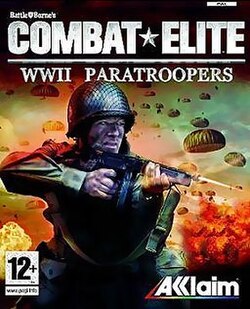
 Combat Elite: WWII Paratroopers on PS2
 Predecessor on PS4
 The Banner Saga 2 on PS4
 Arcania: The Complete Tale on PS3
 Scarlet Nexus on Xbox Series X/S
 Crisis Core: Final Fantasy VII Reunion on Xbox Series X/S
 Crisis Core: Final Fantasy VII Reunion on Switch
 Point Blank on PlayStation
 Point Blank 3 on PlayStation












 Another SquareThought Site