

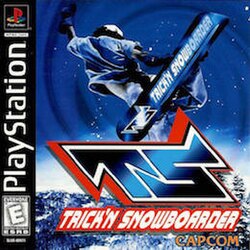

Trick'N Snowboarder is Cave's late-90s attempt to transplant arcade snowboarding swagger into the PlayStation living room. Packaged as a console follow-up to Cave's arcade-friendly Steep Slope Sliders and published by Capcom (with Virgin Interactive handling PAL distribution), the title arrives as a hybrid: part arcade stunt machine, part mission-driven challenge set. If you're expecting a hyper-real simulation, you're in the wrong chairlift; if you want a technical look at how a PS1-era sports game balances systems-level constraints and gameplay ambition, this is a neat case study. The game's Scenario Mode strings together ten goal-driven stages (Tony Hawk-style objectives are explicitly echoed), while the usual half-pipe, single-jump, and alpine events fill out the structure. Hidden in the roster like a magazine Easter egg are Resident Evil 2 cast-offs - Leon, Claire, and a Zombie Cop - which is more of a marketing shrug than an engineering feat, but it signals Capcom's willingness to mash IP for charm.
On a systems level Trick'N Snowboarder adheres to a simple, well-worn recipe: downhill tracks seeded with kicker ramps, grindable edges and obstacles, and pockets intended for chainable tricks. The control mapping is conservative for the era: one stick for steering and basic carving, face buttons for spin/tweak inputs and grabs, and context-sensitive inputs for lip tricks and rails. That conservatism is useful because it reduces required input state complexity-fewer simultaneous analog directions means less ambiguous animation blending for the PS1's limited bone/vertex budgets. The game's physics model is clearly on the arcade side of the spectrum. Rather than simulating detailed friction coefficients or wind resistance, it prioritizes predictability: velocity is mostly a function of slope geometry and jump impulses, while trick scoring multiplies on clean landings and combo continuity. This lowers the cognitive load for players who want to execute stylized trick chains without wrestling a flight simulator's control law. Scenario Mode is the main technical vehicle for the game's variety. Each of the ten stages defines success in terms of recorded tricks for in-game video shoots, or the occasional head-to-head score/time challenge. From a design perspective this is efficient: objectives act as directed playtests, implicitly guiding players toward mastering the trick-detection and scoring subsystems. The presence of three opponent challenges introduces an elementary AI scoring benchmark, but the article gives no evidence of sophisticated opponent pathfinding-these battles feel score-driven rather than behavioral, meaning opponents are useful as timers or score ghosts but not as cunning agents who hunt the same line as you. The trick detection itself is straightforward but serviceable. The system looks for discrete states-grab, spin, tweak, rail-then evaluates transitions and landing quality to compute scores. Replay saves and a title/logo edit function are small but technically meaningful additions: replay saves imply a lightweight serialization pipeline that stores positional and animation timelines for short segments, and the logo editor suggests a simple texture or palette editor baked into the UI. Multiplayer is present (split-screen or hot-seat modes common at the time), which imposes rendering and input-sharing constraints; the PS1's GPU bandwidth and VRAM meant that split-screen had to compromise on draw distance, texture sizes, or both, and that's reflected in visual downgrades during two-player modes. Where the game stumbles is in the depth of mechanics and longevity. The scoring meta encourages repeating the same high-yield tricks rather than exploring a highly emergent combo system, and the track designs, while competent, don't exploit procedural or dynamic events that might have stretched replayability. The inclusion of Resident Evil characters is cosmetic rather than mechanical, and while amusing, doesn't change character physics or frame data. For players and designers interested in input-to-output fidelity-how quickly an analog tilt results in a carved turn, how consistent animation transitions are between rotations and grabs-Trick'N Snowboarder is reliable but not exemplary. It demonstrates good engineering hygiene for the platform: predictable controls, modest animation blending, and clear objective telemetry, but it chooses robustness over technical curiosity.
Graphically the game sits squarely in the PlayStation era: polygonal characters and environments with low-resolution textures, visible affine distortion at oblique angles, and the customary use of fog and aggressive LOD (level-of-detail) swapping to mask the console's limited draw distance. Character models are serviceable-silhouettes read well for the trick recognition system, which is crucial for gameplay-but they lack high-detail rigging that would enable the nuanced joint animations you see in later generations. Animations prioritize clarity over realism: grab and spin animations trigger cleanly and return to stable land poses, which helps the scoring system judge 'clean' versus 'bumpy' landings without ambiguity. Environmental art uses contrast and color saturation pragmatically to guide sightlines; ramps, rails and key jump windows are visually prioritized so the player can plan trajectories. Texture memory is conserved through tile reuse across stages, and the result is a cohesive aesthetic that sometimes feels repetitive. Effects are minimalistic-simple bloom-like sprites for snow spray, sprite-based particle effects for landing impact-yet these are effective bandwidth-conscious techniques that enhance perceived speed and impact without overtaxing the GPU. The soundtrack is handled by Akari Kaida and Masami Ueda, whose compositions fit the high-energy tone of the game. From an audio-technical angle, the PS1's ADPCM sample constraints are managed competently-music loops and sound effects are clear, though not particularly sonically dense. Spatialization is basic stereo panning rather than any advanced HRTF-style processing, which was typical and appropriate for the platform. Overall the visual and audio engineering choices are consistent with a product that wants to maximize gameplay clarity while staying within PlayStation hardware limits.
Trick'N Snowboarder is a pragmatic PS1 snowboarding title: it makes intelligent engineering trade-offs to keep controls tight, scoring predictable, and objectives varied enough to support a Scenario Mode campaign. Technically, the developers prioritized deterministic input-to-animation pipelines and a lightweight replay/serialization system over experimental physics or procedural environments, which helps the game feel fair even if it never surprises you with deep emergent systems. Critical reception was mixed (GameRankings aggregated around 57%), and you can see why: the foundation is solid and the arcade sensibility is fun in short bursts, but the game lacks the mechanical depth and graphical polish to stand with the best of its era. If you care about analyzing how a late-90s sports game trades off GPU/CPU constraints against playability and UI clarity, Trick'N Snowboarder is worth a close look. If you simply want the deepest trick ladder or the most photoreal snow, you'll find it competent but not cutting-edge. Either way, it's an instructive snapshot of console game engineering when budgets for polygons and texture memory had to be negotiated on every frame.
 Meitantei Conan: Trick Trick Vol. 1 on PlayStation
 Tony Hawk: Ride on PS3
 Shaun White Snowboarding on DS
 Shaun White Snowboarding on PS3
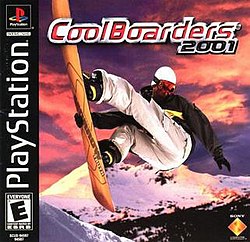
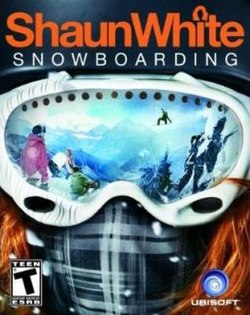 Cool Boarders 2001 on PS2
 Chill on PlayStation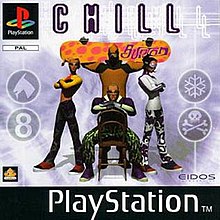
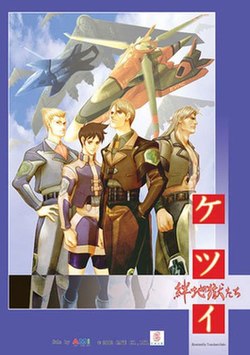
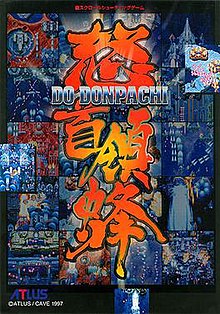 Ketsui Deathtiny: Kizuna Jigoku Tachi on PS4
 Espgaluda II on Switch
 Akai Katana Shin on Switch
 Deathsmiles I & II on PS4
 ESP Ra.De. Psi on PS4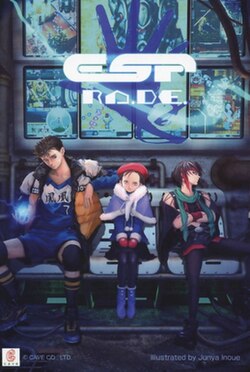












 Another SquareThought Site