

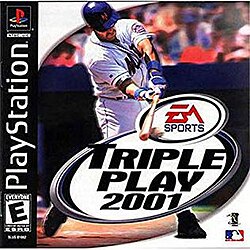

Imagine a clubhouse where every player has a personality card stapled to their uniform and the dugout smells faintly of nostalgia and pixelated sweat. Triple Play 2001 strolls onto the PlayStation field with the swagger of an arcade-friendly title and the roster of a simulator that kind of wants to be serious. Its cast isn't just the teams - it's a motley crew of archetypes: the Rookie (you, with a controller), the Veteran (the modern MLB roster), the Ancient Mentor (classic players added as a concession to our collective baseball memory), and the Announcers (Jim Hughson and Buck Martinez), who act like a hyperactive Greek chorus. On paper, the arcs look promising: you get season modes, playoffs, a Home Run Derby, team management and transfers. In practice, the drama is equal parts satisfying baseball and a soap opera with occasional stuttering film projector problems.
If Triple Play 2001 were a novel, its plot would be straightforward: the player starts small, makes choices, gets wins, and either retires to a life of managerial contentment or ends up a cautionary tale on the bench. The single-game mode is the one-night stand - quick, fun, and perfectly acceptable if all you want is a hit-and-run and a laugh. The season mode assumes the role of a bildungsroman: roster decisions matter, transfers sting a little like a betrayal subplot, and the mileage of a long campaign makes you care about stat lines the way a reader cares about a protagonist's growth. Playoffs inject pure melodrama - sudden-death innings that feel like the climax of an eight-chapter book where every at-bat is a reveal. The Home Run Derby? That's the training montage, the montage that suspends narrative realism for a few glorious rounds of spectacle. Controls are designed for immediacy. Batting, pitching, and fielding are approachable but not shallow - you can mash and have fun, yet the game rewards timing and a modicum of strategy. The team selection and transfer system is the game's subtle subplot: you can play Cinderella and build an underdog team, or act like a free-agent shark who tears down dynasties overnight. That mechanic gives players agency, and with agency comes the emotional investment that makes a season feel like yours. Commentary by Jim Hughson and Buck Martinez functions as the chorus and occasional comic relief. They narrate the action with the kind of earnestness you'd expect from seasoned announcers, their lines stitching together highlights and lowlights. Their presence transforms faceless baserunners into characters, which is an underrated storytelling trick in sports games. Classic players are introduced as cameo mentors; when you field them, you feel the ghost of baseball's past pulling a tiny, glove-worn string on your heart. It's a clever move by EA to give players both the thrill of modern rosters and the wistful tug of baseball legend. Not every arc in this game goes to plan. The engine struggled in places, and critics noted a regression in frame stability compared to previous outings. The framerate villain shows up like a third-act twist you didn't ask for: previously the series had corrected chopping to a smooth 30 FPS, but this installment occasionally stumbles, undermining cinematic diving plays and robbing some moments of their intended dramatic weight. For most players the pacing still feels arcade-perfect - fast, punchy, and fun - but for those who dream in smooth motion the stutter is a bruised ego. The emotional high points are real. The game makes crafting a season into something with actual narrative consequence. Transfers feel like betrayals, slumps become mini-crises, and the Home Run Derby provides catharsis. There's also an implicit arc in how the player learns to read pitchers, stalk defensive shifts, and orchestrate rallies - that transition from bumbling rookie to ruthless manager is satisfying enough to carry the whole experience through its imperfect technical moments.
Visually, Triple Play 2001 dresses the part. The PlayStation version earned praise for its aesthetic choices, featuring crisp player models (for the era), stadium atmospheres that actually felt alive, and animations that sell the athleticism of a diving shortstop or a towering swing. GamePro awarded the PlayStation build strong marks for graphics, and the sentiment rings true: on a CRT TV the game looks like an earnest tribute to baseball's theatrics. Crowd textures and lighting are often stylized rather than hyper-real, which matches the game's arcade-leaning personality and helps the action remain readable. The troublemakers, however, are technical. The previously mentioned framerate inconsistencies are the equivalent of a camera cutting to static during a sentimental scene. They don't ruin the story, but they clip the wings of the most cinematic plays. Some reviewers noted that this was a step back from a smoother past installment, which creates a narrative tension between expectation and delivery. Even so, the art direction keeps the characters - players and announcers alike - visually engaging, and the classic player rosters come with an aura of authenticity that's more emotional than technical. Graphical fidelity may not win any awards today, but in the context of its 2000 release on PlayStation, Triple Play 2001 looks competent, often charming, and frequently cinematic enough to fuel those big, late-inning moments.
Triple Play 2001 on PlayStation is less a flawless epic and more a sports drama with plenty of heart, a dependable supporting cast, occasional technical hiccups, and a few truly glorious innings. The character arcs - from your controller-wielding protagonist learning to manage rosters, to the veteran and classic players who punctuate moments with nostalgia, to Jim Hughson and Buck Martinez supplying the running commentary - give the game narrative heft that elevates it above a simple couch-pitcher. Critics largely favored the PlayStation version, and it's easy to see why: it nails fun, offers meaningful seasonal decisions, and gives players a satisfying sense of progression. If you approach it like an emotional baseball arcade with managerial ambitions rather than a hyper-realistic simulator, you'll find a lot to love. The framerate issues are the game's tragic flaw - the one that keeps it from being a classic - but the strong presentation, modes, and commentary make it a winning season overall. Consider this a reliable all-star who occasionally misses a step but still brings home the pennant. Recommended for PlayStation owners who want an engaging blend of arcade thrills and roster-driven storytelling.
 Triple Play Baseball on PlayStation
 Triple Play 99 on PlayStation
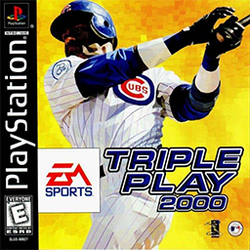
 Triple Play 2000 on PlayStation
 Accolade Sports Collection on Xbox Series X/S
 Deca Sports DS on DS
 Alan Hansen's Sports Challenge on PS2
 EA Sports MMA on PS3












 Another SquareThought Site