

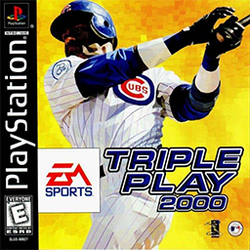

Triple Play 2000 arrives in an era when sports titles are judged as much by presentation as by the fidelity of their mechanics. Electronic Arts and EA Canada have bundled together rosters, broadcast-style presentation and enough modes to keep a baseball fan busy between spring training and the World Series. On PlayStation this entry was received well at the time, earning the favor of many critics and magazines who called it a polished, enjoyable representation of the national pastime. For players who wanted a complete, TV-like experience without the fuss of a full-blown simulation, Triple Play 2000 was hard to ignore. This review attempts to stand in the spirit of late-1990s console critique: measured, a little impatient with marketing bluster, and concerned above all with how the game behaves when you put the controller in your hands. The PlayStation version is the focus here, since it is the platform that most consistently drew praise and best exemplified what EA Sports intended for this series in 1999.
Triple Play 2000 wears its modes like a veteran player wears a well-worn glove. Exhibition matches, full seasons, playoffs and a home run derby are all present, as are the team selection and transfer options that let you tinker with rosters. The game ships with 1999 rosters and leans on 1998 statistics to seed player abilities; you get the feel of the era, complete with the long-ball feats of Sammy Sosa and Mark McGwire reflected in the numbers. For folks who liked their baseball with a modern scoreboard and a minimum of menu fuss, the package was satisfying. On the field the game strikes an effective balance between arcade accessibility and simulation seriousness. Batting uses a timing-based system that rewards patience and pitch-reading rather than frantic button-mashing; pitching lets you select pitch types and locations with a straightforward interface. Fielding is handled with conventional button-based control and contextual assists for throws and dives. The AI behaves competently - not infallibly, but smart enough that you rarely feel like you are exploiting holes in the system. It is worth noting that Triple Play 2000 does not reinvent the wheel; its ambitions are not to out-simulate hardcore PC offerings but to deliver a tight, responsive console baseball experience. Presentation, always an EA priority, gets its due. The game is built to be watched as much as played: broadcast-style camera angles, replay sequences and on-screen stat graphics are woven into the flow of a game. Commentary by Jim Hughson lends a familiar voice to play-by-play, and Buck Martinez provides color on the console versions where he appears. Those production touches transform routine innings into moments with context, a feature reviewers at the time repeatedly praised. Where Triple Play 2000 is strongest is in the combination of that broadcast sheen and solid core gameplay; it feels like watching highlights on SportsCenter that you can step into and control. If the title has flaws, they are mostly ones of ambition and iteration. Critics at the time observed that Triple Play 2000 offered little that was radically new compared to its predecessors; gaps between it and competing franchises were often matters of taste rather than clear superiority. Fans of ultra-deep managerial simulation will find the options here light, and there are occasional quirks in AI decision-making in tight situations. Still, for a player seeking immediate gratification - to load up, choose a team, and have a well-paced game in under five minutes - there are few better options on PlayStation in 1999.
Graphically, Triple Play 2000 represents PlayStation-era sports visuals at one of their better moments. Player models are blocky by modern standards but animated with a convincing economy: the swing, the throw, the catcher framing a pitch - these sequences read well in motion. Stadiums are presented with recognizable features and crowd backdrops that create atmosphere, if not photorealistic fidelity. Texture work is pragmatic and reserved; the emphasis is on readable uniforms, clear UI elements and camera staging rather than textural indulgence. Lighting and replay presentation are where the game earns its broadcast feel. Replays crop in from multiple angles, slow down at the right moments and are accompanied by stat overlays that would not be out of place during a real telecast. On PlayStation the frame rate is generally steady and the camera systems avoid the choppiness reported on other platforms, giving the impression of a finished product. There are compromises: substitution menus and some of the stat screens belong to the era of blocky fonts and simple transitions, but those niggles rarely interrupt the experience. In short, the game looks like a televised baseball game translated into polygons - competent, at times stylish, and consistently serviceable for gameplay.
In the crowded late-1990s field of baseball games Triple Play 2000 for PlayStation carved out a respectable niche. It is not a revolutionary title, nor does it pretend to be; instead it refines what EA Sports had already shown it could do: deliver a packaged, watchable, fun depiction of baseball that is accessible to casual players while holding enough depth to satisfy fans. The commentary and broadcast presentation lift the experience, and the gameplay fundamentals - batting, pitching and fielding - are tuned for immediate enjoyment. If you are a collector of baseball titles or someone who prefers the pick-up-and-play convenience of console sports games, Triple Play 2000 is an excellent choice on PlayStation. Serious sim purists may look elsewhere for exhaustive managerial detail, and players seeking revolutionary mechanics will be left wanting. For the rest, this is a polished, enjoyable season's worth of baseball that captures the feel of the sport in an era when sports games were becoming indistinguishable from the TV productions they emulated. Final verdict: a strong, well-produced baseball game on PlayStation that deserved the positive reception it received in 1999. Recommended for fans who want solid gameplay wrapped in broadcast-style presentation.
 Triple Play Baseball on PlayStation
 Triple Play 99 on PlayStation
 Accolade Sports Collection on Xbox Series X/S
 Deca Sports DS on DS
 Alan Hansen's Sports Challenge on PS2
 EA Sports MMA on PS3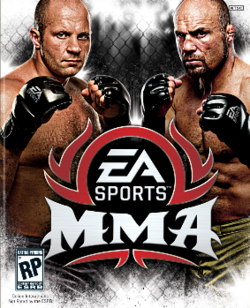
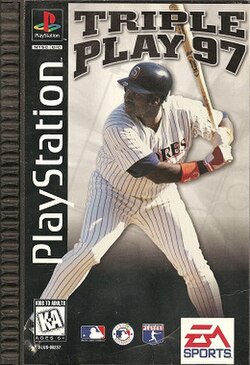 Def Jam Vendetta on PS2
 UEFA Euro 2008 on PS3
 Def Jam: Fight for NY on PS2
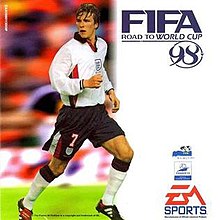
 FIFA: Road to World Cup 98 on PlayStation
 FIFA 2000 on PlayStation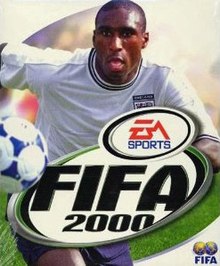












 Another SquareThought Site