


 Sep 2025


Vagrant Story is the kind of PlayStation game that smells faintly of old stone cathedrals, leather-bound grimoires and someone very politely refusing to let you buy a healing potion. Released in 2000 by Square and shepherded by Yasumi Matsuno (the brain behind Final Fantasy Tactics), it puts you in the boots of Ashley Riot - a Riskbreaker with a tragically brooding haircut and an unhealthy relationship with cursed cities. The game opens like a courtroom drama that then decides to moonlight as Gothic puzzle-platforming detective work, complete with a city that might be magical, haunted, or just very bad at urban planning. This isn't a comfortable JRPG with friendly towns and easy exits. There are no shops and almost no NPC chatter to distract you - Vagrant Story is a solo mission: explore the ruined city of Leá Monde, piece together a twisting narrative involving a cult, a duchy, and a man named Sydney who enjoys being ominous, and then spend far too long lovingly modding blades in dimly lit workshops. If you like story, atmosphere, and the feeling of slowly turning a broken sword into something that will utterly wreck a wyvern's day, you're in the right place.
Vagrant Story wears its complexity like a ridiculous hat - proudly, and a little dangerously. Movement is presented in a three-dimensional isometric field map with a surprising amount of platforming and puzzle-solving: Ashley can run, jump, push crates and wrestle with block puzzles that sometimes escalate into optional time-attack rooms called "Evolve, or Die!!". These little trials are the game reminding you that it loves puzzles, but also that it expects you to earn your bragging rights. Combat flips between field exploration and a pausable real-time "Battle Mode" that feels like someone mixed an action RPG with a rhythm game and then gave it a medieval scalpel. Tap the attack and a spherical targeting grid appears around Ashley; you can aim at specific body parts, chain attacks into flashy combos called Chain Abilities, and time button presses to keep the hits flowing. Defensive Abilities let you parry, reflect or shrug off nasty status effects. For when subtlety fails, Break Arts let Ashley trade his own HP for devastating damage - it's the video game equivalent of shouting "FOR SCIENCE!" and hitting harder. Then there's Risk. The Risk bar is the personality gauge of the entire game: the more you attack, chain, or generally flirt with danger, the higher Ashley's Risk climbs. High Risk improves your chance for criticals and bigger HP restorations, but also reduces accuracy and makes enemy hits singe like bad karaoke. It rewards aggressive, precise play, while politely reminding you that hubris has a price. Magic isn't a starting toy either. Grimoires - rare drops - teach spells which you then cast with MP like a normal RPG, but spells feel more measured: they can't be chained the way physical attacks can, yet they offer tactical options such as elemental tweaks, multi-target hits via a positioning sphere, and the ability to manage affinities. The game's signature twist is weapon crafting. There are no shops; instead you build and customize tools of destruction in workshops. Materials, affinities (elements and enemy-class matches), and combinations matter. Merge two pieces of kit and you might create a brand-new blade blessed by math and luck. This system is brilliant, occasionally merciless, and the main reason a single boss fight can be either trivial or a lesson in humility depending on whether you've built the right bit of metal with the right curse. Vagrant Story is not gentle with handholding. It expects you to read menus, experiment, and accept that some bosses demand very specific weapon types. New Game+ exists for the brave: finish the story, replay with your end-game gear, and unlock secret levels where the enemies laugh at your character sheet.
On the visual front, Vagrant Story was a little PlayStation flex: real-time polygons, painstakingly detailed backgrounds, and character models that never change between cutscene and gameplay - which means the story and the action feel like one continuous, slightly gothic play. The city of Leá Monde draws heavily on the architecture of southwest France (Saint-Émilion was explicitly inspirational), so the game looks more like a haunted European postcard than a standard JRPG stage. Every crumbling wall, cathedral niche and shaft-mined undercity area carries a weight that says "this place has a backstory". The audio is equally noteworthy. Hitoshi Sakimoto's score swings from brooding ambient atmospheres to full orchestral swells (there's even a real ensemble on one track), and the production steers away from the generic synth squeals of the era. Sound effects are layered to enhance the claustrophobic ruins and echoing halls - footsteps, distant clanks, and the satisfying *thunk* of a new blade hitting an enemy all help sell the mood. Critics at the time praised both the artistry and the audio, and it's easy to see why: Vagrant Story is one of those titles that uses every technical trick it has to make you feel small in a gnarly, beautiful world.
Vagrant Story is lovingly made, sometimes maddeningly obtuse, and frequently brilliant. It rewards curiosity and patience: players who dig into its crafting system, master the Risk dance, and accept its sparse NPCing will find a dense story, a unique combat loop, and some of the most evocative level design of the PlayStation era. The game's reputation is deserved - it received near-universal acclaim (including a perfect 40/40 from Famitsu) and remains one of Square's most idiosyncratic masterpieces. It isn't for everyone. If you want instant gratification, dozens of shops, or a tutorial that holds your hand through each weapon permutation, Vagrant Story will sass you right back. If you enjoy being a bit smarter than the average action RPG, investing time in weapon tinkering, and being slowly, deliciously rewarded for learning the rules, you'll probably call it a favorite. Also, who doesn't love a game that turns crafting into an emotional experience? Pick it up on PSN or hunt down a Greatest Hits disc, then prepare to lose whole evenings arguing with your Risk bar. It's worth it.
 Disney/Pixar Toy Story 3 on PS2
 Toy Story Racer on PlayStation
 Combat Elite: WWII Paratroopers on PS2
 Onimusha: Dawn of Dreams on PS2
 Disney's Chicken Little: Ace in Action on PS2
 Action Man: Operation Extreme on PlayStation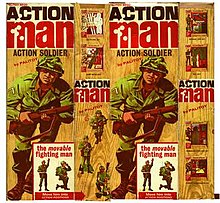










 Another SquareThought Site