

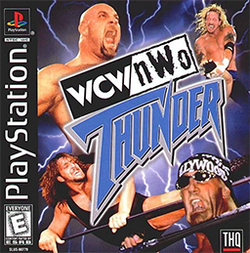

WCW/nWo Thunder arrived in the late 90s swinging towels, wearing leather, and generally smelling like pay-per-view fever. Billed as the sequel to WCW Nitro, Thunder promised an updated roster, more match types, and the sort of pixelated chaos that made wrestling video games an irresistible couch pastime. What the box copy didn't promise was whether the PlayStation would be able to keep up with the personalities on-screen. In short: Thunder is a competent, occasionally fun wrestling game with enough nostalgia and headlocks to keep you playing - at least until you notice how very familiar it all feels. It sold like hotcakes anyway, moving a million copies, but the critics were more mixed, and the aggregate opinion sits squarely in the 'could've been better' ring.
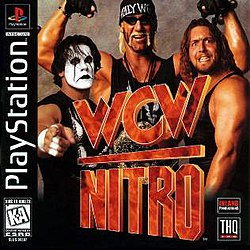
If you've ever played WCW Nitro, this will feel like putting on the same pair of boots but with shinier buckles. Thunder updates Nitro's blueprint rather than reinventing the sport of digital suplexing. The roster received a fresh sweep - pop culture staples like Goldberg, Diamond Dallas Page, Hollywood Hogan and The Giant appear on the cover and in the ring - and you can finally assign wrestlers to stables: WCW, nWo Hollywood, nWo Wolfpac, Raven's Flock, or The Four Horsemen. That might sound like a tiny management sim feature, but in practice it's a neat bit of fan service for people who enjoyed faction drama as much as flying elbows. Match variety was one of Thunder's selling points. The game adds cage matches, battle royals, and weapon use to the menu of mayhem, which spices up the usual collar-and-elbow routine. Multiplayer modes let you and a friend perform questionable teamwork and blame physics for botched finishers. Single-player options exist too, so you can slowly learn the moves, or at least memorise how to mash buttons until a finisher lands. The game has the crude charm of late-90s wrestling titles: moves feel weighty when they connect, there are satisfying thuds, and every throw screams 'this was a big deal in 1999'. Controls are a mixed bag, and your mileage will depend on how forgiving your thumbs are. Some reviewers called them clumsy, and on first impressions the responsiveness can feel inconsistent - one second you're executing a perfect Irish whip, the next you're accidentally performing a taunt and getting body-slammed for your hubris. Difficulty tuning was also uneven: opponents can be surprisingly easy in some modes, which makes the whole thing feel more like a power-trip fantasy than a demanding arcade challenge. That said, when the match clicks you get an addictive loop of trying one more pin attempt, one more creative weapon toss - the game knows how to keep you angry in a friendly way. Thunder doesn't revolutionise wrestling gameplay, but it's an upgrade in content from Nitro. The Windows and Nintendo 64 ports of Nitro received Thunder's roster updates, which is a sign that the developers were at least trying to keep the series current. If you're chasing roster variety, faction drama, and the thrill of using a steel chair on someone named Hogan, this game will scratch the itch. If you're after tight, modern mechanics or a deep simulation of grappling psychology, you might end matches early and look for greener, more complex pastures.
Graphically, Thunder resembles a 90s wrestling broadcast filtered through a PlayStation with a hangover. The character models are blocky, animations occasionally stutter, and the lighting does its best with limited hardware. Critics at the time weren't shy about pointing this out: many reviews complained that the visuals were too similar to Nitro and that Thunder didn't offer a significant aesthetic leap. Crowd models are cardboard cutouts pretending to cheer, and facial expressions are roughly in the 'stoic mannequin' range. On the plus side, the arenas are recognisably WCW: the feel of the ring, the ramps, and that distinctive late-90s production design come through, which helps sell the atmosphere even if the pixels are doing their best impression of muscle. The sound and presentation do a lot of the heavy lifting. Entrance music, announcer calls, and the general audio cues evoke Saturday-night wrestling energy, making up for some of the visual shortcomings. Composers Mike Cihak and Matt Scott helped the game sound like a televised brawl, and that matters. When a finisher finally connects and the audience roars (or at least plays the sample), the moment lands. Overall, Thunder looks the part for its era but would be embarrassed if you compared it to later-generation wrestling titles. That said, if you grew up in the 90s and have fond memories of polygonal giants, the visuals will probably trigger nostalgia faster than you can shout 'no-selling' at your TV.
WCW/nWo Thunder is a classic example of 'good enough with personality.' It isn't the most polished or innovative wrestling game on the block, but it delivers what the box promises: a larger roster, a few new match types, faction choices, and the kind of reckless multiplayer fun that made wrestling games party staples in the PS1 era. Critics were mixed, with scores hovering around the mid-range and an aggregate of about 58%, and many pointed at the uninspired graphics and uneven controls as downsides. Despite that, it sold a million copies, which tells you something important - fans wanted to be in the ring, even if the ring was made of low-res dreams. If you're a nostalgia hunter, a fan of 90s WCW drama, or you just want a simple, punch-em-up couch experience with friends, Thunder is worth a rental or a budget-bin pick-up. If you're chasing deep mechanics, crisp visuals, or a wrestling sim that will stand up to modern scrutiny, you'll probably sneer and go back to whatever contemporary wrestling title has better polish. Either way, Thunder is one of those games that captures an era: loud, messy, and unabashedly entertaining. Pop a soda, call a friend, and enjoy the chaos - just don't expect the PlayStation to keep up with Hulkamania's charisma.
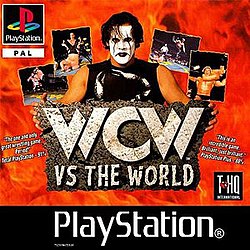 WCW Mayhem on PlayStation
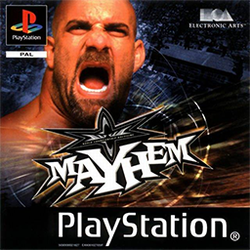 WCW Backstage Assault on PlayStation
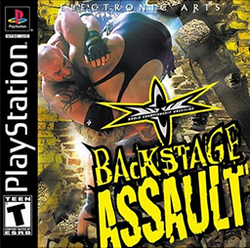 Accolade Sports Collection on Xbox Series X/S
 Deca Sports DS on DS
 Alan Hansen's Sports Challenge on PS2
 Olympic Games Tokyo 2020 - The Official Video Game on Switch
 Arctic Thunder on PS2












 Another SquareThought Site