

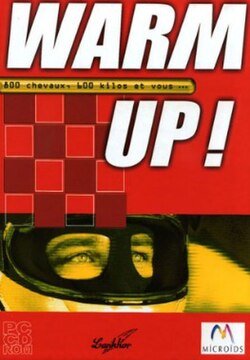

If you remember PlayStation-era racing games where realism was a promise and the controller was your confessor, Warm Up! GP 2001 is the kind of title that asks you to bring both patience and a helmet. Developed by French studio Lankhor and published by Microids in 2000, Warm Up! presents itself as a Formula 1-style racing simulator without the official license: think high-speed single-seaters, track knowledge, and a healthy disdain for sloppy driving. The game offers two faces - a simulation mode that courts precision and an arcade mode that hands you speed with fewer consequences. Critics were split: some reviewers lauded its realism and addictive nature, while others called it primitive and an insult to the simulator genre. That schism tells you everything you need to know about the skill investment this game demands. If you come in expecting modern hand-holding, you will be bemused; if you enjoy carving tenths off lap times with nothing but your thumbs and stubbornness, Warm Up! will either be your tutor or your tormentor.
Warm Up! wears its dual identity on its sleeve. On one hand, arcade mode gives you accessible speed and silly grin moments - slide into a corner late, and the game forgives you with an oversteer grin and a second chance. On the other hand, the simulation mode is where the real challenge hides like an angry engineer under the car. Here, the title wants consistency, line precision, and the kind of input timing that separates 'fast' from 'actually winning.' The core challenge is simple to state and hard to master: control momentum. Braking points are sacred, throttle application is a negotiation, and every corner is a small exam in weight transfer. Winning in sim mode is not about luck or flailing; it's about learning each track's rhythm, finding the right apex, and being boringly consistent lap after lap until your opponents make a mistake. This is a game that rewards discipline - roll in too fast, and the car will remind you it has laws of physics. Be timid in entry and you'll lose speed on exit. The sweet spot sits somewhere in the center, and it takes time to find it. Another unavoidable skill the game demands is spatial memory. The lack of an official F1 license doesn't change the fact that Warm Up! gives you circuits that all require learning. Memorize the cambered corners, blind crests, and late-braking zones or be prepared to kiss the barriers repeatedly. If you like learning tracks by trial and error and then shaving tenths like a barber with an obsessive streak, you'll appreciate how the game makes incremental improvement feel earned. Racecraft is tested too. Overtakes in Warm Up! aren't cinematic Hollywood edits; they're tactical gambits. You have to pick your moment, use slipstreams, manage your tires if the game's simulation settings penalize abuse, and sometimes sacrifice one corner to gain three more. Multiplayer exists, so the single-player discipline translates into human-versus-human tension: make one misstep and a human opponent will gladly take advantage. The controls are where the simulation mood is most pronounced. Whether you're using the DualShock pad or a steer wheel peripheral, Warm Up! expects precise inputs. The controller is your surgeon's scalpel, not a sledgehammer. Steering corrections need to be measured; throttle modulation through mid-corner is critical. Reflexes matter, but they are secondary to anticipation. You'll spend more time learning to read the track and set up corners than reacting to crises. That's great if you enjoy a thoughtful racing experience, less great if you want instant, arcade-style thrills. Finally, the game's split personality means there's a skill ceiling and a skill floor. Novices can have fun in arcade mode and laugh off a few spins, while veterans can hunker down in simulation settings and treat the game like a minimalist driving coach. The critical divide in reviews is understandable: if you judge Warm Up! purely as a polished sim with every modern convenience, it feels primitive. If you see it as a lean, sometimes unforgiving test of basic racing craft, it's quietly addictive.
Graphically, Warm Up! is firmly of its era - PlayStation-era polygons with a practical focus on readability over eye candy. The visuals do their job: track edges, corner markers, and the subtle cues you need to judge braking points are generally clear. Don't expect texture porn or photorealism; this is a time when frame rate and clarity trumped shiny distractions. The car models and cockpits capture the essential feel of single-seaters without fuss. The presentation leans toward functional minimalism, which suits the game's challenge-first attitude: fewer distracting chrome flares means more focus on apexes and lap times. That said, the visual simplicity feeds into the simulator experience for better and worse. When you're driving flat out, the clean graphics help you spot braking markers and judge distances, which is useful in a game that punishes sloppy inputs. However, some players - and certain reviewers - found the aesthetic underwhelming and used that as evidence of the 'primitive' label. If you come into Warm Up! looking for immersion through spectacle, you'll be disappointed. If you want a clear window onto the track where reading the racing line is priority number one, the graphics do exactly what they need to.
Warm Up! GP 2001 is a split personality: one half approachable and arcade-friendly, the other half stubborn, pedagogical sim. Its greatest strength is how it enforces old-school racing virtues - precision, patience, and track knowledge - and makes improvement feel like a personal triumph. The downsides are obvious to anyone expecting modern polish: the visuals are plain, the presentation minimal, and some critics found the simulation aspects undercooked compared to genre contemporaries. Scorewise, if you prioritize challenge and skill development in your driving games, Warm Up! is a compact tutor with personality; if you want instant thrills and cinematic spectacle, it will frustrate you. For players who love learning tracks, tightening lines, and savoring hard-earned lap gains, Warm Up! rewards the invested. For the rest, it's a charming but flawed relic that asks more of you than you might want to give.
 LMA Manager 2001 on PlayStation
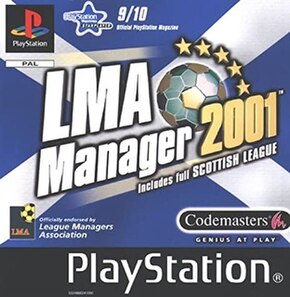 NHL FaceOff 2001 on PS2
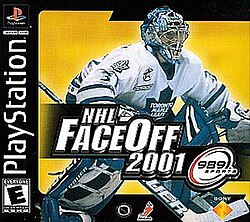 Roary the Racing Car on DS
 Team Sonic Racing on Switch
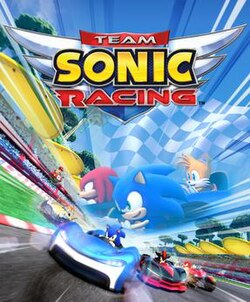 Garfield Kart: Furious Racing on Switch
 Ben 10: Galactic Racing on PS3












 Another SquareThought Site