

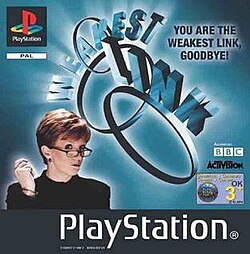

The Weakest Link for PlayStation is a console translation of the BBC quiz show, built by Traveller's Tales and published by Activision during that awkward era when full-motion video (FMV) and licensed hosts were the fastest route to game-shelf credibility. The English-language release features Anne Robinson in recorded footage peppered through the rounds; the core product is essentially a digital boardroom where timed Q&A, banking decisions and player elimination are the gameplay pillars. From a technical perspective the title is best read as a port of a format rather than an attempt at technological showboating: it's a software-first design that leans heavily on FMV and menus rather than simulation-level AI or flashy rendering.
Weakest Link attempts to faithfully replicate the structure of the TV game: a series of timed rounds with contestants answering questions to build a money chain, the option to 'bank' in order to secure accumulated funds, and the periodic vote to remove the perceived weakest link from the table. On PlayStation the game offers both single-player against AI-controlled contestants and local multiplayer, which is where the license actually earns its keep because watching your friends try to bluff their way past Anne Robinson's scorn is the whole point. From an interaction design standpoint the developers chose a deliberately lean control scheme. Everything you do - answer, bank, pass on voting - maps to simple face-button presses, which is sensible for a trivia title that needs to feel immediate. The menu hierarchy is shallow: start game, choose number of players/difficulty, then jump straight into rounds. This reduces friction, but it also exposes shortcomings in feedback loops. The UI provides the basic cues (timer, current chain value, contestants' names and avatars), yet it rarely goes beyond the essentials. There are no advanced analytics, no score breakdowns per question category, and the post-round stats are minimal. For a player used to modern quiz games that instrument every move, the absence of richer telemetry is notable. The game's AI opponents are serviceable for casual play but lightweight if you care about simulated contestant personalities. Their behavior is essentially probabilistic - a simple mix of correct/incorrect answer rates and occasional banking decisions - so you won't see emergent strategies or memorable rivalries. That said, from an engineering point of view this keeps CPU overhead tiny, an important consideration on the original PlayStation where cycles for game logic had to coexist with compressed FMV playback and audio decoding. Audio and timing mechanics feed directly into gameplay. Rounds are time-limited, and the game communicates urgency with a ticking countdown and short music stings. Those cues are well timed; latency between input and acknowledgement is minimal which is crucial because a trivia title is unforgiving of control lag. Load times are reasonable for the format - there are FMV transitions and loading between rounds, but they don't break the game's pace completely. Memory constraints mean the title uses short FMV clips and repeated animations rather than long, bespoke sequences, which keeps disc access predictable but also visually repetitive over extended play sessions. Multiplayer is a natural fit and technically sensible: because the mechanics are turn-based and input-sparse, the same machine can host several human players without complicated split-screen rendering or networking. For local parties, this design choice preserves performance and keeps the experience social. However, the lack of online features (a non-issue in 2001 for PlayStation) and limited customization of rules (no user-created questions, fixed timers per difficulty) reduce replayability for players who want to tune the experience. One small technical quirk worth mentioning is how the game handles incorrect answers and timeouts. Instead of a complex penalty system, the software uses immediate state transitions - chain broken, optional banking timeout, or automatic pass to the next contestant - which simplifies state management and decreases the likelihood of desynchronization bugs. In practice this makes the game robust: crashes and hard hangs are rare, and save/continue behaviors are straightforward, which is exactly what you want on a platform with limited persistent storage.
Graphically, Weakest Link is conservative by design. The PlayStation era's typical bottlenecks - limited VRAM, low polygon budgets and heavy reliance on FMV for licensed talent - are all present here. Anne Robinson's appearances are implemented as short compressed FMV segments; these are technically competent but faithful to the medium's constraints. Expect visible macroblocking, reduced color fidelity and a modest resolution, all artifacts of the MDEC-style video pipelines PlayStation titles used to shove licensed footage onto a CD-ROM. These artifacts don't ruin the experience because the clips serve a presentational purpose (host interplay and elimination drama) rather than acting as a gameplay-critical visual cue. The in-game set is rendered using simple 2D backdrops and low-polygon 3D models for contestant avatars. Animations are mostly canned and looped, which makes the table feel a bit static compared to contemporary, more ambitious titles. Particle effects are non-existent; lighting is basic and baked into textures rather than dynamic. From a technical reviewer's standpoint that's a conscious and defensible trade-off: CPU and GPU resources are conserved for FMV decoding and audio playback, improving overall stability at the expense of visual fidelity. UI text and HUD elements stay legible, which is critical for a game that places a premium on quick comprehension. Font choices and contrast are serviceable, and the designer-level decision to keep typography clear pays off during frantic final rounds. There is little in the way of graphical polish - no cinematic camera work, no dynamic camera culling - but the game never attempts to mislead players into thinking it's anything other than a quiz show app. When judged by its functional goals (clarity, legibility, consistent frame timing), the graphics do their job adequately.
The Weakest Link on PlayStation is a technically conservative adaptation of a TV format: it prioritizes reliability, clarity and faithful FMV presentation over ambitious AI or graphical spectacle. If you want an exacting simulation of the show's tension and banter, the presence of Anne Robinson's recorded footage and the faithful rule set deliver the core experience. Where the game falters is in depth and longevity: lightweight AI, repetitive FMV clips, and an almost Spartan UI mean that after a handful of sessions the novelty blunts. From a technical perspective the title is competent. Input latency is low, state transitions are deterministic, and the resource management choices (short FMVs, minimal 3D load, conservative audio) make sense for the PlayStation hardware. Critics at the time reflected that split: some reviewers appreciated the clean translation of a show into an interactive format, while others found the presentation 'drab' or the pacing slow, particularly on PC ports. If you approach Weakest Link as a tidy, social quiz engine rather than a deep single-player challenge, it lands. For single players seeking sophisticated contestant AI or a vast question customization toolkit, it's the weakest link in your collection - but not a broken one.
 Killing Floor 2 on PS4
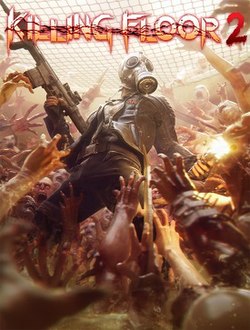 Pro Evolution Soccer 2015 on PS4
 Press Your Luck on PS3
 Coloball 2002 on PS2
 TV Show King on PS3
 Trivial Pursuit on PS3
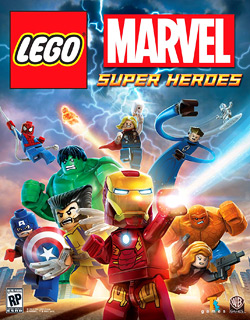
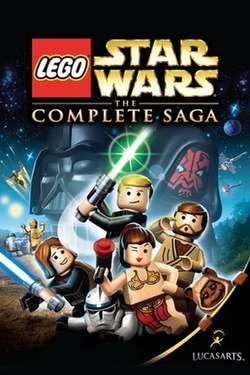 Lego Marvel Super Heroes on PS3
 Lego Harry Potter: Years 1–4 on PS3
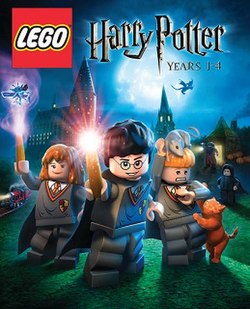
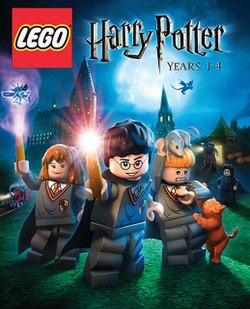 Lego Harry Potter: Years 1–4 on DS
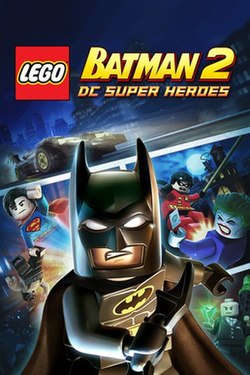
 Lego Batman 2: DC Super Heroes on PS3
 Lego Star Wars: The Skywalker Saga on PS5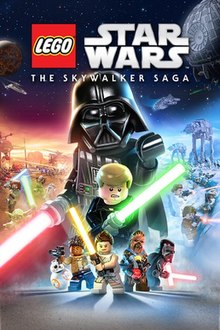












 Another SquareThought Site