

nintendo_ds.png)

In the halcyon days when print magazines still arrived on doorsteps with a satisfying thud, licensed game tie-ins were reliable fodder for scathing editorials and late-night chuckles. "Deal or No Deal" for the Nintendo DS arrives squarely in that tradition: a direct, hollow translation of an American TV game show whose primary mechanic is human psychology, sweat, and the vaguely malignant voice of a studio executive who thinks tension equals entertainment. Developed by Gravity-i and published in North America by DSI Games, the DS edition promises the thrill of opening glossy virtual suitcases and enduring the moral agony of taking the banker's bland offers. It instead delivers a plasticky, bug-prone facsimile of the program that mistakes repetition for depth and presentation for polish. The official pedigree reads like a roster card in a magazine foldout: the game is part of a multi-platform franchise spanning PC, Wii and DVD-player editions, and it even received a later "special edition." For DS owners this meant a compact experience built around stylus taps and menus, but the DS cartridge conceals more design poverty than the glossy box art hints at. If you grew up on handhelds that promised surprising creativity and tight design, this port will feel less like a faithful adaptation and more like an obligation fulfilled at quarter speed.
The core loop of "Deal or No Deal" is devilishly simple and therefore, in theory, well-suited to a handheld: pick a case, open other cases to eliminate values, receive an offer from the game's banker, then decide whether to accept or soldier on. Gravity-i faithfully reproduces this loop, and at first glance the elements are all present - the money board, suitcases, and a banker whose offers creep like an elevator you wish would stop. The promise is that psychology and probability will do the heavy lifting, and the DS might have been a charming way to play the social tension solo. Unfortunately the reality is that the game never manages to make the mechanic feel rewarding. A television show thrives on the interplay between host, contestant, and live audience. Those human intangibles - charisma, timing, the camera lingering on a contestant's trembling fingers - are brutally difficult to emulate in a menu-driven handheld title, and Gravity-i does not attempt anything to bridge that gap. There are canned lines and predictable musical stings, but the voice work is minimal and repetitive; moments that should build suspense simply loop thin audio clips until the tension dissolves into monotony. Beyond stale presentation the DS version was also criticized for technical lapses that verge on unforgivable. Prominent reviews at the time noted a bug in which, if the system is powered down, the next playthrough will see the in-game money returned to the same case from the previous session. This breaks the essential randomness and makes the experience trivially exploitable - an unforgivable oversight for a game whose entire raison d'être is blind chance. When a game about risk offers players a single, repeatable exploit, it fails its own premise. There are a few modes and cosmetic options: you can play as different contestants, flick through menus with the stylus, and attempt to chase the elusive million-dollar ending. But the available variety is superficial. There's no meaningful strategic depth beyond choosing whether to accept the banker's offers; the UI treats the player like a remote-control contestant rather than an engaged participant. Multiplayer, which could have salvaged some fun in a social circle, is absent in any meaningful form. Compared to other licensed games that at least tried to add minigames or inventive hooks, this DS port feels embarrassed by the idea of adapting its source material into anything more than a digital scoreboard. For those still tempted, there is a certain guilty-pleasure value in the raw ritual of rounds: pick, open, sweat, negotiate with a faceless banker. If you enjoy the TV show and have an inexhaustible tolerance for repetition and small graphical mediocrities, you might coax a handful of short sittings out of it. Otherwise, the gimmick cannot sustain long-term engagement.
The Nintendo DS is a capable little machine when developers choose to use it well; in the late 1990s and early 2000s a careful sprite or crisp UI could still impress magazine readers. Sadly, Gravity-i's visuals here are utilitarian to the point of indifference. The money board is clear enough to read, cases flip open with a smoke-and-sparkle effect, and the interface is serviceable for navigation with the stylus. None of this should be mistaken for artistry: textures are flat, character portraits are awkward, and the overall aesthetic has the plastic sheen of a budget TV-adaptation. Contemporary critics described the DS graphics as "dodgy," and the descriptor fits - elements that should shimmer with showmanship instead look like canned assets stretched into a meager runtime. The Wii version was mocked elsewhere for its grotesque character designs, but the DS avoids overt horror only by being painfully bland. Animation is minimal and repetitive, so the slight motion of a case opening becomes a reminder that the developers chose to reuse the same short loop rather than animate a single meaningful flourish. Audio fare fares no better. The soundtrack consists of staccato cues that attempt to evoke drama but land as polite elevator music. Voice lines from the presenter and banker are sparse, and when they do occur they loop with such frequency that their dramatic intent evaporates. In short, the production values are consistent with a title conceived as a quick, low-cost tie-in rather than a committed effort to make the DS sing.
If you are a completist who must possess every piece of licensed ephemera, or an unrepentant fan of the TV show who simply wants to fiddle with virtual suitcases between commercial breaks, this cart might offer a few minutes of nostalgic grinning. Serious players who expect a handheld experience to add something new - clever UI, surprising modes, tight polish - will be sorely disappointed. The DS "Deal or No Deal" fails on two important counts: it cannot replicate the social electricity of the show, and it is marred by technical and design choices that undermine its central gamble. Contemporaneous reviews were unforgiving for good reasons: aggregate scores landed near the bottom of the barrel, with outlets like IGN and GameSpot handing out scores in the mid-single digits out of ten and review aggregators placing the DS edition around the twenty-percent mark. Those numbers did not come from malice but from a straightforward appraisal: the game does the bare minimum and in some cases less than that. For a handheld catalogue crowded with inventive and lovingly made titles, this one reads like an apology for existing. I award it 2.0 out of 10 as a measure of its functioning core loop - the skeleton of the TV game is present - but the flesh that should make it interesting is absent, and the bugs leave it hollow. In the archives of licensed adaptations, this is the kind of cartridge that serves as a cautionary footnote rather than a fond memory.
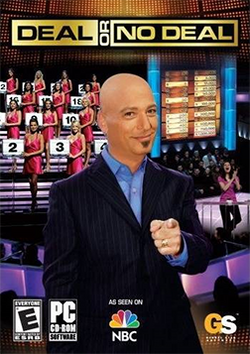 Deal or No Deal: Special Edition on DS
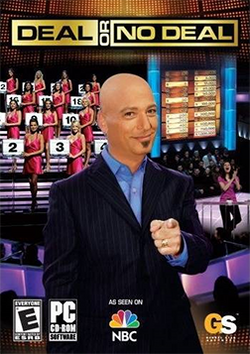 Cool Boarders 2001 on PS2
 Press Your Luck on PS3
 Coloball 2002 on PS2
 TV Show King on PS3
 Trivial Pursuit on PS3












 Another SquareThought Site